Ruthenium Price Trend Analysis 2026: Market Insights, Supply Demand Analysis, Latest News, Price Drivers & Historical Prices

Rakesh Nandi profile photo
Written ByRakesh Nandi

Procurement Resource Database

Laptop screen

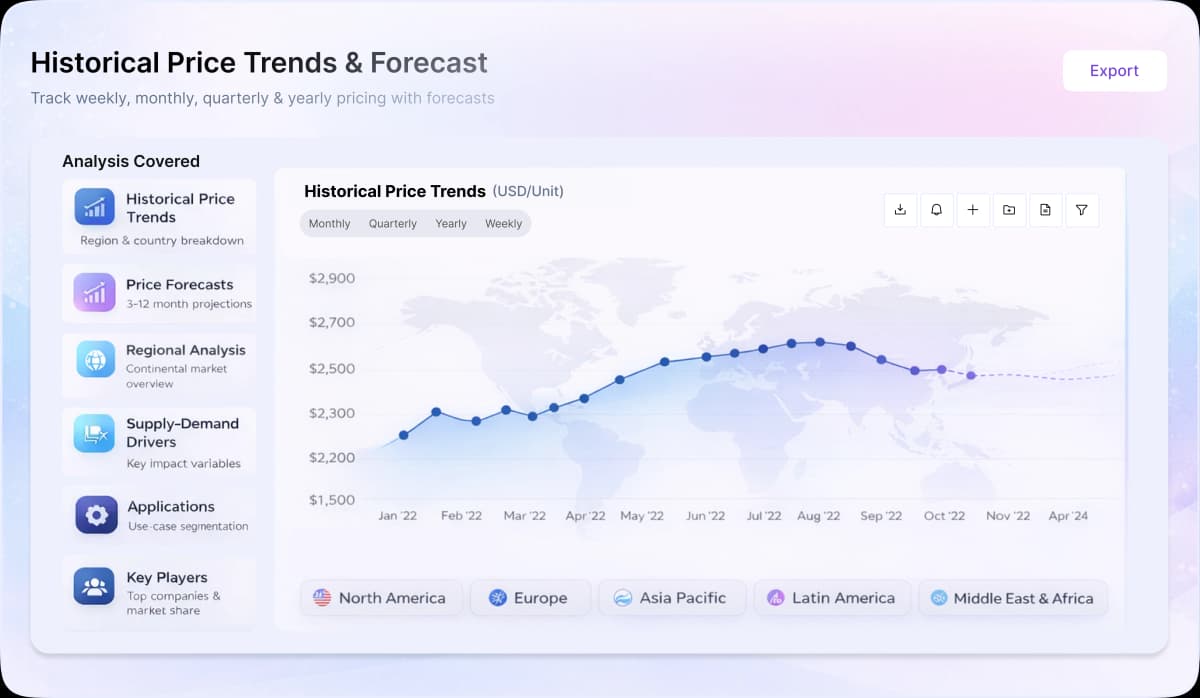
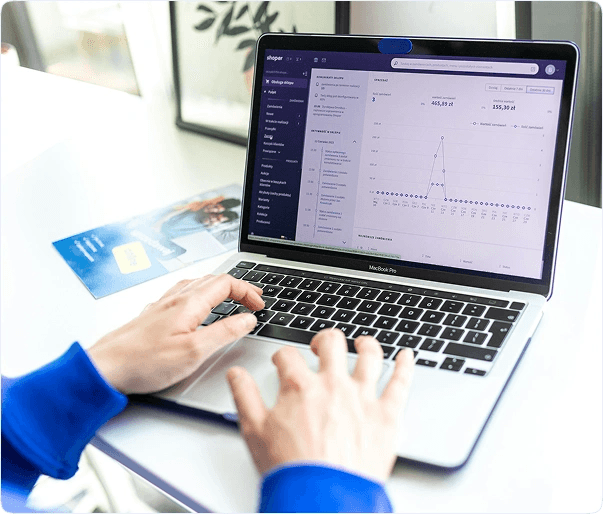
Turn price intelligence into action with the Procurement Resource Database. Log in or subscribe to unlock live price trends, historical charts, supplier databases, cost curves, and analyst-backed insights across chemicals, agriculture, energy, packaging, and more. Use these tools to benchmark your contracts, plan budgets with confidence, and stay ahead of market moves on every product you buy.

Ruthenium Dashboard Inclusions

Ruthenium Price Dasboard

0

+

Products

0

+

Regions

0

+

Subscriptions

The Ruthenium price trend in the second half of 2025 reflected a period of sustained upward movement, as the metal continued to outperform most of its platinum group metal peers. Demand from AI-driven data centre expansion and high-density hard disk drive production remained the dominant force shaping market conditions. Memory chip production recovery also contributed to increased consumption, further stretching an already tight supply picture.

Ruthenium price analysis pointed to a market operating under persistent structural pressure, with the metal entering the period in its seventh consecutive supply deficit. Supply remained constrained, as ruthenium was produced primarily as a byproduct of platinum and nickel refining operations. South Africa accounted for the majority of global primary output, while overall annual production stayed limited, leaving little room to absorb rising industrial demand. According to the Ruthenium price database, trade activity reflected urgency among industrial buyers, particularly in the electronics and semiconductor sectors, where the metal served critical roles in advanced memory devices, electrochemical applications, and catalytic processes. The absence of centralized exchanges and major stockpiles contributed to market opacity, which further influenced procurement behaviour among end-users.

About Ruthenium

Ruthenium is a chemical element belonging to the platinum group of the periodic table, which is one of the rare transition metals . Like the other metals of the platinum group, ruthenium is inert to the most other chemicals as well. Ruthenium is generally found as a minor component of platinum ores.

Ruthenium Product Detail

Chemical Formula

Ru

Cas Number
7440-18-8
Molecular Weight
101.1 g/mol
Industrial Uses

Electrical Applications, Industrial Appliances, Building or Construction Materials

Synonyms

Ruthenium Black, Rutenio

Supplier Database

Umicore N.V, BASF SE, Russian Platinum, Anglo American Platinum Limited, Johnson Matthey

Regional Coverage

Asia Pacific

China, India, Indonesia, Pakistan, Bangladesh, Japan, Philippines, Vietnam, Iran, Thailand, South Korea, Iraq, Saudi Arabia, Malaysia, Nepal, Taiwan, Sri Lanka, UAE, Israel, Hongkong, Singapore, Oman, Kuwait, Qatar, Australia, and New Zealand

Europe

Germany, France, United Kingdom, Italy,Spain, Russia, Turkey, Netherlands, Poland, Sweden, Belgium, Austria, Ireland Switzerland, Norway, Denmark, Romania, Finland, Czech Republic, Portugal and Greece

North America

United States and Canada

Latin America

Brazil, Mexico, Argentina, Columbia, Chile, Ecuador, and Peru

Africa

South Africa, Nigeria, Egypt, Algeria, Morocco

CurrencyUS$ (Data can also be provided in local currency)

Supplier Database AvailabilityYes

Customization ScopeThe report can be customized as per the requirements of the customer

Post-Sale Analyst Support360-degree analyst support after report delivery

Note: Our supplier search experts can assist your procurement teams in compiling and validating a list of suppliers indicating they have products, services, and capabilities that meet your company's needs.

Ruthenium Production Process

  • Production of Ruthenium Via Extraction as By-Product

Ruthenium, being a member of the platinum group metals, is derived as a by-product from nickel and copper and platinum metals ore processing. Further, it is refined before its commercial use.

Frequently Asked Questions

During Q1 2026, ruthenium prices showed mixed regional movement. In the USA, prices increased by ~5%, while in Germany they witnessed a ~4% decrease. The difference reflected regional buying patterns, inventory positioning, and delivery terms. Demand from electronics, catalysts, and specialty chemical applications supported the U.S. market, while Germany saw softer buyer activity and weaker spot momentum.

The ruthenium outlook for 2026 remains cautiously firm. Demand is expected to be supported by electronics, chemical catalysts, hydrogen-related technologies, and specialty industrial uses. However, supply remains closely tied to platinum-group metal mining in South Africa and Russia, so mine disruptions, power constraints, and refining bottlenecks can quickly affect availability. Substitution is limited in high-performance uses, which may support prices when supply tightens.
Ruthenium prices were influenced by both supply constraints and industrial demand. As a by-product of platinum-group metal (PGM) mining, availability depends largely on production and refining activity in South Africa and Russia. Demand from electronics, hard-disk drives, semiconductors, and chemical catalysts supported consumption, while expanding AI infrastructure and data-center investment increased demand for data-storage technologies containing ruthenium. Inventory levels and regional procurement patterns also affected pricing.
Ruthenium supply is dominated by countries that mine platinum-group metals, especially South Africa, Russia, Zimbabwe, Canada, and the United States. South Africa is the most important producer because its Bushveld Complex contains the world’s largest platinum-group metal resources and reserves. Russia is also important through nickel-copper-PGM deposits. Since ruthenium is recovered as part of broader PGM refining, its supply depends on platinum, palladium, and nickel mining economics.
Ruthenium is not typically mined as a standalone metal. It is recovered as a by-product during the extraction and refining of platinum-group metals (PGMs) and, in some cases, nickel-copper ores. Most supply originates from PGM-producing countries such as South Africa, Russia, Zimbabwe, Canada, and the United States. Because ruthenium production depends on broader PGM mining activity, supply can remain constrained even when ruthenium demand and prices increase.
Ruthenium demand is driven by electronics, chemical catalysts, electrochemical applications, aerospace, and emerging hydrogen-related technologies. In electronics, ruthenium is used in hard-disk and advanced circuit applications because it performs well in thin-film and high-reliability environments. In chemicals, it is valued for catalyst systems where small volumes can deliver high activity, selectivity, and durability under demanding operating conditions.
Recycling supports ruthenium availability, but recovery is more complex than for high-volume metals. Ruthenium can be recovered from spent catalysts, electronic scrap, and PGM-bearing residues, depending on concentration and refining economics. When primary mine output is constrained, recycled PGM streams become more important. However, small ruthenium volumes, technical separation difficulty, and long collection cycles can limit immediate supply response.
Ruthenium is generally traded through specialist metal suppliers, refiners, and industrial buyers rather than broad exchange-based contracts. Pricing often references spot assessments, producer offers, product purity, delivery location, and contract volume. Industrial users may use annual or quarterly supply agreements, especially for catalysts and electronics. Because the market is small and supply is concentrated, availability terms can matter as much as headline price.
Growing investment in AI infrastructure and data centers has emerged as a key driver for the ruthenium market. Expanding storage requirements for AI model training, cloud computing, and large-scale data processing have supported demand for advanced hard-disk drives, where ruthenium is used in magnetic storage technologies. With supply largely dependent on platinum-group metal production, rising technology-sector demand can tighten market availability and support prices.
Procurement Resource employs a structured methodology combining primary research, secondary market data, analytical models, and validation processes to assess ruthenium prices and trends. Price evaluations incorporate supply-demand dynamics, mining activities, trade flows, and value chain analysis, supported by continuous market monitoring to ensure accurate and reliable insights.

About the Author

Rakesh Nandi profile photo

Rakesh Nandi

Team Lead - Market Research

Leading procurement-focused market intelligence across chemicals, composites, advanced materials, aerospace & defense, and energy, delivering commodity forecasts, supply chain analysis, and competitive benchmarking to support sourcing decisions.

Our Price Analysis Methodology

Schedule Demo

Schedule a demo

Experience how Procurement Resource transforms raw material price data into clear, decision ready intelligence. Optimise your performance with reliable, expert market data and analysis. Schedule your demo today to experience a live walk-through where our experts will showcase interactive price charts, forecasted prices, and insights driving the prices for your key commodities, tailored to your workflows. Contact us now!

Our Team will be happy to assist you

We are just a text away

+1

Still Need Help?

Europe & Africa

+44 7573 171117

[email protected]

USA & Canada

+1 307 363 1045

[email protected]

APAC

+91 8850629517

[email protected]

Unlock full access to Procurement Resource's price databases, interactive charts, and short-term forecasts for thousands of commodities. Elevate your sourcing decisions by comparing prices across regions, downloading historical data, and layering in analyst-backed insights, all with our flexible plans that scale as your portfolio grows.

Still have any Questions

Contact Us
Mastercard
Wire
VISA
Stripe

Why Procurement Database

Commodity Market Intelligence

Commodity Market Intelligence

Track prices, market movements, supply-demand dynamics, and industry developments across hundreds of commodities through a centralized intelligence platform built for informed procurement decisions.

Price Forecasts & Market Outlooks

Price Forecasts & Market Outlooks

Understand market fluctuations using analyst-backed forecasts, historical pricing patterns, and evolving industry trends to strengthen sourcing strategies and budget planning.

Cost & Procurement Optimization

Cost & Procurement Optimization

Leverage cost models, pricing benchmarks, and procurement insights to evaluate purchasing opportunities, improve negotiations, and enhance operational efficiency.

Global & Regional Market Insights

Global & Regional Market Insights

Access region-specific price trends, trade activities, capacity changes, and supply chain developments influencing commodity markets worldwide.

1/4