Need latest Sodium Gluconate prices?
Get real-time price assessments, periodic trends, forecasts and price driver insights across key global markets.
Unlock Price Insights NowOur Clients
Asia
In 2025, sodium gluconate prices in Asia followed a mixed trajectory, with the market moving from early-year strength to softer conditions in the second half before stabilizing toward year-end. During the first quarter, prices rose steadily due to higher corn syrup costs, fluctuating caustic soda values, and limited availability caused by reduced operating rates during the Chinese spring festival. This supply tightness, coupled with delayed deliveries, kept sentiment firm across the region. In the second quarter, the market remained volatile with an upward bias, as rising corn prices and changing downstream demand from construction chemicals, detergents, and water treatment influenced pricing decisions. However, in Q3, improving feedstock availability and softer carbohydrate-based raw material costs pushed prices downward, while buyers maintained cautious, spot-based procurement strategies. By Q4, the market showed a mixed pattern, beginning on a softer note before recovering gradually due to better demand from construction admixtures, concrete chemicals, and export activity. Overall, Asia recorded a firm first half followed by a corrective and stabilizing second half.
Europe
European sodium gluconate prices in 2025 largely mirrored Asian trends, with import dependence and feedstock costs shaping the market direction. In the opening quarter, prices increased as importers faced delayed shipments from Asia, rising corn syrup costs, and tight spot availability. Buyers responded with precautionary restocking, especially for industrial and high-purity grades. During Q2, prices displayed mixed movement, initially easing on softer caustic soda values before rising again as corn-linked costs and logistics changes influenced supplier offers. In the third quarter, prices declined due to lower glucose and carbohydrate feedstock costs, while demand from detergents, industrial cleaning, and construction chemicals remained steady but price-sensitive. By the fourth quarter, the market softened initially before partially recovering as distributors returned to moderate restocking activity.
North America
In North America, sodium gluconate prices remained responsive to global feedstock shifts and regional demand patterns throughout 2025. Prices rose in the first half due to higher corn-related costs, logistics disruptions, and stronger buying from concrete admixtures and detergents. In Q3, improving feedstock availability led to a broad decline, while Q4 brought a mild recovery supported by selective replenishment and firmer replacement costs. Overall, the market remained balanced yet cautious.
Analyst Insight
According to Procurement Resource, sodium gluconate's future movements are likely to remain closely linked to corn price trends and downstream demand from construction, water treatment, and food-grade applications.
Related Report
Get real-time price assessments, periodic trends, forecasts and price driver insights across key global markets.
Unlock Price Insights NowOur Clients

Turn price intelligence into action with the Procurement Resource Database. Log in or subscribe to unlock live price trends, historical charts, supplier databases, cost curves, and analyst-backed insights across chemicals, agriculture, energy, packaging, and more. Use these tools to benchmark your contracts, plan budgets with confidence, and stay ahead of market moves on every product you buy.

0
+Products
0
+Regions
0
+Subscriptions
Asia
The Asia Pacific sodium gluconate market followed a fluctuating yet largely stable trend during Q4’24, influenced by upstream cost dynamics and supply-side developments. Early in the quarter, production constraints in China’s chlor-alkali sector, driven by environmental regulations and maintenance shutdowns, indirectly supported cost structures across chemical chains. Additionally, typhoon-led logistical disruptions tightened regional availability, particularly in Southeast Asia. However, as the quarter progressed, demand from downstream construction, textile, and water treatment sectors softened amid seasonal slowdown, leading to cautious procurement. By December, improving supply conditions and weaker industrial activity resulted in price stabilization, with market sentiment turning balanced.
Europe
In Europe, sodium gluconate prices exhibited mixed-to-soft trends during Q4’24, shaped by subdued industrial demand and increasing import availability. Early firmness was supported by steady consumption from chemical processing and construction-linked applications; however, rising imports from Asia and weak performance in automotive and construction sectors weighed on sentiment. Seasonal slowdown further limited buying interest, prompting conservative procurement strategies. While mainland Europe experienced a gradual softening, relatively stable domestic demand in select markets such as the UK helped maintain limited price resilience.
North America
The North American sodium gluconate market displayed an initial firm trend followed by stabilization in Q4’24. Early quarter support stemmed from supply constraints linked to maintenance turnarounds and hurricane-related disruptions along the Gulf Coast, alongside steady demand from water treatment and construction sectors. However, as winter approached, reduced industrial activity and stable inventory levels moderated market momentum. Export activity remained steady, but easing freight rates and balanced supply-demand fundamentals curtailed further price increases, resulting in a stable to slightly softened market outlook.
Sodium Gluconate is a sodium salt of gluconic acid, commonly used in various industrial applications. It is produced through the fermentation of glucose, followed by neutralization with sodium hydroxide. As a versatile chelating agent and concrete admixture, sodium gluconate finds use in the construction, pharmaceutical, and food industries.

C6H11NaO7
Food and Beverage, Construction, Pharmaceuticals, Textiles, Water Treatment
Sodium salt of gluconic acid
Roquette Frères, Jungbunzlauer Suisse AG, Airedale Chemical Company Limited , PMP Fermentation Products, Inc., Xiwang Group Co. Ltd., Amorphos Chemicals Pvt. Ltd
CurrencyUS$ (Data can also be provided in local currency)
Supplier Database AvailabilityYes
Customization ScopeThe report can be customized as per the requirements of the customer
Post-Sale Analyst Support360-degree analyst support after report delivery
Note: Our supplier search experts can assist your procurement teams in compiling and validating a list of suppliers indicating they have products, services, and capabilities that meet your company's needs.
In the fermentation method of sodium gluconate production, bacterial strains like pseudomonas or acetobacter are used to ferment glucose in carbohydrate-rich materials like corn syrup into gluconic acid, which is then neutralized using sodium hydroxide gives sodium gluconate and water.
Our Price Analysis Methodology

Experience how Procurement Resource transforms raw material price data into clear, decision ready intelligence. Optimise your performance with reliable, expert market data and analysis. Schedule your demo today to experience a live walk-through where our experts will showcase interactive price charts, forecasted prices, and insights driving the prices for your key commodities, tailored to your workflows. Contact us now!
Our Team will be happy to assist you
We are just a text away
Still Need Help ?
Unlock full access to Procurement Resource's price databases, interactive charts, and short-term forecasts for thousands of commodities. Elevate your sourcing decisions by comparing prices across regions, downloading historical data, and layering in analyst-backed insights, all with our flexible plans that scale as your portfolio grows.
Still have any Questions
Contact Us


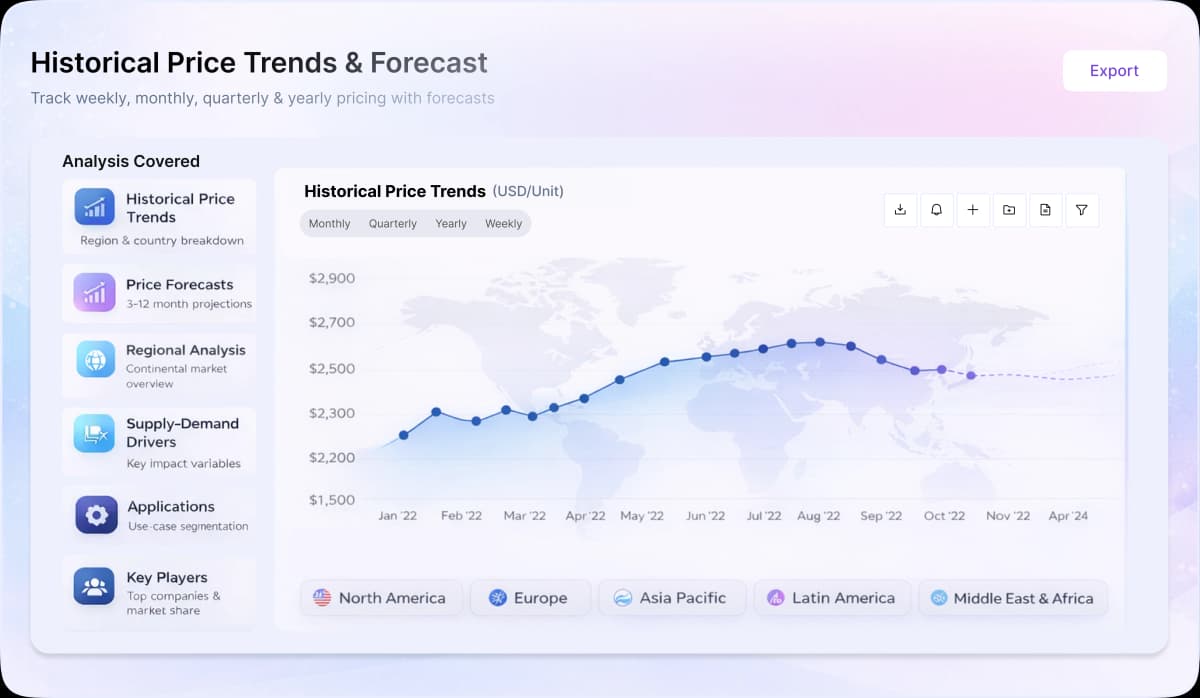
Price Trend Dashboard - What's Included
Price trends across a diverse portfolio of categories and products, spanning board to niche chemicals
Coverage extendable to grade-specific chemicals based on procurement requirements
Regular price tracking supported by robust historical datasets
News, policy updates, and key market drivers impacting price movements
Short-term and long-term price outlooks and forecasts
Supply–demand dynamics and capacity-driven market analysis