New Phosphoric Acid Plant to Double Capacity
Gujarat Alkalies has begun construction of a 33,870‑TPA phosphoric acid facility, expected to double domestic supply and reduce reliance on imports, likely easing market prices.

Gujarat Alkalies has begun construction of a 33,870‑TPA phosphoric acid facility, expected to double domestic supply and reduce reliance on imports, likely easing market prices.
GSFC received board approval to build a 600 MTPD phosphoric acid plant at its Sikka unit in Jamnagar, Gujarat. The expansion aims to boost internal supply and reduce reliance on imported phosphoric acid. Increased domestic supply is expected to ease upward price pressure on the commodity.
| Product | Region | Incoterm Basis | Price | Last Updated Month |
|---|---|---|---|---|
| Sodium Hexametaphosphate | China | FOB | USD 1,459.06/MT | August 2026 |
| Sodium Hexametaphosphate | India | CIF | USD 1,550.06/MT | August 2026 |
| Sodium Hexametaphosphate | Germany | CIF | USD 1,573.06/MT | August 2026 |
| Sodium Hexametaphosphate | Australia | CIF | USD 1,554.06/MT | August 2026 |
| Sodium Hexametaphosphate | Brazil | CIF | USD 1,601.06/MT | August 2026 |
| Sodium Hexametaphosphate | China | FOB | USD 1,468.14/MT | July 2026 |
| Sodium Hexametaphosphate | India | CIF | USD 1,574.95/MT | July 2026 |
| Sodium Hexametaphosphate | Germany | CIF | USD 1,601.77/MT | July 2026 |
| Sodium Hexametaphosphate | Australia | CIF | USD 1,566.60/MT | July 2026 |
| Sodium Hexametaphosphate | Brazil | CIF | USD 1,639.75/MT | July 2026 |
Stay updated with the latest Sodium Hexametaphosphate prices, historical data, and tailored regional analysis
Asia
The Asian market for Sodium Hexametaphosphate experienced variable price dynamics throughout the year, primarily influenced by caustic soda cost fluctuations. Early in the year, prices moved upward as feedstock costs strengthened due to supply chain stability and reduced inventory levels, with production maintenance at major facilities temporarily tightening availability. However, as output normalized and inventories accumulated, the market entered a consolidation phase. Downstream demand from water treatment and food processing sectors showed mixed purchasing patterns. The second quarter brought initial softening as oversupply conditions developed, though this reversed as suppliers exercised greater supply discipline. Phosphoric acid markets remained balanced, providing moderate cost support. By mid-year, the market stabilized as downstream industries adopted cautious procurement strategies. The latter part saw gradual strengthening as inventory levels tightened, though margin pressures tempered buying enthusiasm toward the final quarter.
Europe
European Sodium Hexametaphosphate pricing displayed measured movements throughout 2025, shaped by caustic soda availability and demand patterns from industrial consumers. The year opened with moderate increases as downstream sectors resumed operations following seasonal holidays, though this proved temporary as production constraints eased and phosphoric acid supplies normalized. Demand from detergents, ceramics, and industrial applications remained steady but price-sensitive. The mid-year period was characterized by range-bound trading, with initial weakness giving way to gradual recovery supported by tighter supply management. Regional dynamics were additionally influenced by evolving trade frameworks affecting import-export flows, creating procurement hesitation among buyers. The second half maintained stability as supply remained consistent and downstream sectors pursued moderate consumption patterns.
North America
North American markets reflected supply-demand equilibrium adjustments throughout the year. The opening period saw preliminary softening attributed to elevated inventory positions and surplus caustic soda stocks. This reversed as maintenance shutdowns and logistical constraints tightened immediate availability, creating temporary upward pressure. However, conservative downstream purchasing behavior prevented sustained increases. Mid-year developments brought oscillating trends, with initial weakness transitioning to firmer pricing as demand from textiles and chemical processing improved. Phosphoric acid costs remained relatively stable, providing consistent input support. The latter months displayed continued stability with localized pressure points, as uneven demand signals created mild softness while manageable inventory levels maintained baseline support.
Analyst Insight
According to Procurement Resource, the near-term outlook suggests continued stability with regional variations, as feedstock costs remain balanced and downstream consumption patterns stay moderate.
Related Report
Need Latest Sodium Hexametaphosphate Prices?
Get real-time price assessments, periodic trends, forecasts and price driver insights across key global markets.
Our Clients































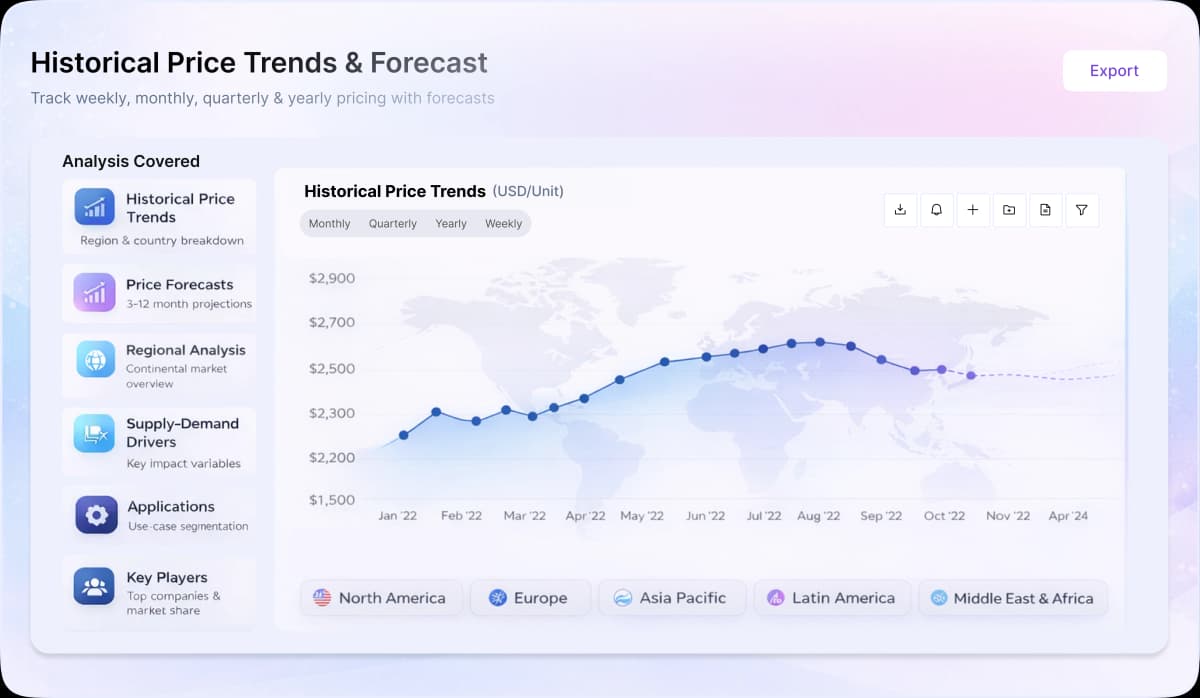
Turn price intelligence into action with the Procurement Resource Database. Log in or subscribe to unlock live price trends, historical charts, supplier databases, cost curves, and analyst-backed insights across chemicals, agriculture, energy, packaging, and more. Use these tools to benchmark your contracts, plan budgets with confidence, and stay ahead of market moves on every product you buy.
0
+Products
0
+Regions
0
+Subscriptions
Asia
The Asian market for Sodium Hexametaphosphate displayed moderate stability during the second half, with price movements closely tracking caustic soda dynamics. The third quarter saw relatively stable conditions as feedstock supplies tightened marginally due to equipment maintenance and plant outages. Low inventory levels and slight improvements in downstream demand from water treatment and food processing applications provided baseline support. Phosphoric acid markets maintained adequate availability throughout this period. The fourth quarter introduced greater volatility as production cuts intensified across China, where environmental regulations and maintenance shutdowns at chlor-alkali facilities constrained material availability. Logistical disruptions from typhoons delayed shipments and created temporary shortages in Southeast Asian markets. However, as supply conditions normalized toward year-end, the market transitioned toward stabilization.
Europe
European Sodium Hexametaphosphate markets experienced limited price movement during the second half, reflecting subdued industrial activity and balanced supply conditions. The third quarter witnessed marginal increases followed by consolidation, as weak demand prevented manufacturers from operating at full capacity. Caustic soda production declined slightly in response to tepid consumption from detergents, ceramics, and industrial processing sectors. Phosphoric acid supplies remained adequate, providing consistent cost support. The fourth quarter brought mixed regional dynamics, with mainland markets initially maintaining firm values before softening due to weaker industrial activity and increased imports. However, the UK market demonstrated greater resilience, with sustained pricing supported by stable domestic demand throughout the period, remaining largely insulated from import pressures affecting continental markets.
North America
North American markets experienced notable price strengthening during the third quarter, driven by reduced production rates and supply disruptions from the hurricane season. Limited inventories and container shortages compounded supply constraints, while hurricane damage to Gulf Coast facilities triggered force majeure declarations and additional maintenance closures affecting caustic soda availability. Phosphoric acid markets remained relatively stable during this period. The fourth quarter followed a similar trajectory, with prices rising initially before stabilizing as supply constraints gradually eased. Strong demand from alumina and water treatment sectors provided continued support. However, seasonal slowdowns in manufacturing and construction, combined with stable inventory levels, led to price consolidation toward year-end. Export activity remained steady, though stabilizing freight rates and recovering production prevented further appreciation.
Sodium Hexametaphosphate is a white crystalline salt of sodium with high solubility in water. It acts as a base, and on addition of water makes an alkaline solution. In water treatment and detergent industries, it prevents the formation of scales and thus serves as a valuable ingredient in these sectors. Further, it also has the ability to act as a dispersing agent, emulsifier, and stabilizer in a number of industrial processes.
(NaPO3)6
Food industry, Water treatment, Detergents, Oil drilling, Textile industry
ICL Performance Products, Mexichem, Chengxing Group, Norwest Chemical, Nandian Chemical, Weifang Huabo, Zhenhua Industry
CurrencyUS$ (Data can also be provided in local currency)
Supplier Database AvailabilityYes
Customization ScopeThe report can be customized as per the requirements of the customer
Post-Sale Analyst Support360-degree analyst support after report delivery
Note: Our supplier search experts can assist your procurement teams in compiling and validating a list of suppliers indicating they have products, services, and capabilities that meet your company's needs.
Our Price Analysis Methodology

Business Insights Analyst
Helping procurement and sourcing teams navigate complex markets through data-driven research, category intelligence, and actionable insights - with a focus on identifying market trends, analyzing supply-side developments, and delivering clear intelligence that supports informed business decisions.
Experience how Procurement Resource transforms raw material price data into clear, decision ready intelligence. Optimise your performance with reliable, expert market data and analysis. Schedule your demo today to experience a live walk-through where our experts will showcase interactive price charts, forecasted prices, and insights driving the prices for your key commodities, tailored to your workflows. Contact us now!
Our Team will be happy to assist you
We are just a text away
Still Need Help?
Unlock full access to Procurement Resource's price databases, interactive charts, and short-term forecasts for thousands of commodities. Elevate your sourcing decisions by comparing prices across regions, downloading historical data, and layering in analyst-backed insights, all with our flexible plans that scale as your portfolio grows.
Still have any Questions
Contact Us



Price Trend Dashboard - What's Included
Price trends across a diverse portfolio of categories and products, spanning board to niche chemicals
Coverage extendable to grade-specific chemicals based on procurement requirements
Regular price tracking supported by robust historical datasets
News, policy updates, and key market drivers impacting price movements
Short-term and long-term price outlooks and forecasts
Supply–demand dynamics and capacity-driven market analysis

Track prices, market movements, supply-demand dynamics, and industry developments across hundreds of commodities through a centralized intelligence platform built for informed procurement decisions.

Understand market fluctuations using analyst-backed forecasts, historical pricing patterns, and evolving industry trends to strengthen sourcing strategies and budget planning.

Leverage cost models, pricing benchmarks, and procurement insights to evaluate purchasing opportunities, improve negotiations, and enhance operational efficiency.
Access region-specific price trends, trade activities, capacity changes, and supply chain developments influencing commodity markets worldwide.
