

















Spandex Price Trend Analysis 2026: Latest News, Market Insights, Historical Prices, Price Drivers & Supply Demand Analysis

Udeesha Tomar profile photo
Written ByUdeesha Tomar

Procurement Resource Database

Laptop screen

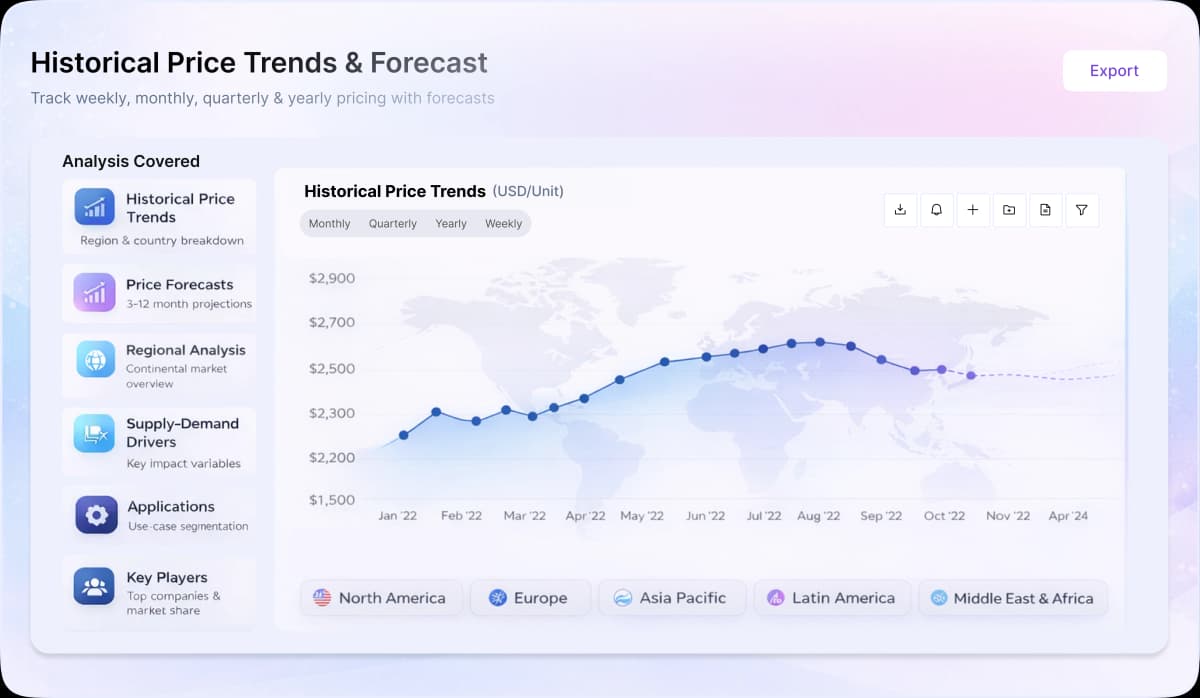
Turn price intelligence into action with the Procurement Resource Database. Log in or subscribe to unlock live price trends, historical charts, supplier databases, cost curves, and analyst-backed insights across chemicals, agriculture, energy, packaging, and more. Use these tools to benchmark your contracts, plan budgets with confidence, and stay ahead of market moves on every product you buy.

Spandex Dashboard Inclusions

Spandex Price Dasboard

0

+

Products

0

+

Regions

0

+

Subscriptions

During the second half of 2025, the Asian spandex market gradually shifted toward a firmer trajectory as production discipline, operating rate adjustments, and inventory destocking improved overall supply-demand fundamentals. In China, several producers reduced output amid prolonged margin pressure, which helped ease inventory accumulation and tighten spot availability across select deniers. Demand from activewear, winter fabrics, circular knitting, and warp knitting segments improved seasonally during the second half of the year, supporting stronger downstream procurement activity compared to H1. Market sentiment also strengthened as inventories reportedly declined steadily across major production hubs, encouraging suppliers to increase offers after an extended period of losses. While structural overcapacity continued to cap aggressive gains, improved textile order flows and tighter prompt supply supported moderate price recovery across the regional spandex market. Nevertheless, buyers remained cautious regarding long-term commitments amid ongoing macroeconomic uncertainty and competitive pressure within the global textile value chain.

About Spandex

Spandex is a synthetic polymer of polyglycol, di isocyanate and polyurethane. It is an elastomer better than rubber in terms of strength and elasticity. It can be stretched multiple times but recoil to the same shape when released. It is resistant to most acids and alkalis. It is used mainly for making fabric.

Spandex Product Detail

Industrial Uses

Athletic wear, stretch pants, skinny jeans, socks, swimsuits, motion capture suits.

Synonyms

polyurethane fibers, Lycra, elastane

Supplier Database

Hyosung, DuPont de Nemours, Inc., TK Chemical Corp., Taekwang Industrial Co. Ltd.

Regional Coverage

Asia Pacific

China, India, Indonesia, Pakistan, Bangladesh, Japan, Philippines, Vietnam, Iran, Thailand, South Korea, Iraq, Saudi Arabia, Malaysia, Nepal, Taiwan, Sri Lanka, UAE, Israel, Hongkong, Singapore, Oman, Kuwait, Qatar, Australia, and New Zealand

Europe

Germany, France, United Kingdom, Italy,Spain, Russia, Turkey, Netherlands, Poland, Sweden, Belgium, Austria, Ireland Switzerland, Norway, Denmark, Romania, Finland, Czech Republic, Portugal and Greece

North America

United States and Canada

Latin America

Brazil, Mexico, Argentina, Columbia, Chile, Ecuador, and Peru

Africa

South Africa, Nigeria, Egypt, Algeria, Morocco

CurrencyUS$ (Data can also be provided in local currency)

Supplier Database AvailabilityYes

Customization ScopeThe report can be customized as per the requirements of the customer

Post-Sale Analyst Support360-degree analyst support after report delivery

Note: Our supplier search experts can assist your procurement teams in compiling and validating a list of suppliers indicating they have products, services, and capabilities that meet your company's needs.

Spandex Production Processes

In spandex production, firstly, Monomer units are formed by mixing macro glycol with di-isocyanate, giving a prepolymer which is then reacted with di amine, followed by its dilution with a solvent to produce a spinning solution, which is then passed through spinnerets to give solid fibres which are then bundled and twisted to form spandex which is finally treated with finishing textile chemicals.

About the Author

Udeesha Tomar profile photo

Udeesha Tomar

AVP - Strategy and Solutions

Leading procurement research solutions across chemicals, materials, and food & beverages, with expertise in price forecasting and market analytics.

Our Price Analysis Methodology

Schedule Demo

Schedule a demo

Experience how Procurement Resource transforms raw material price data into clear, decision ready intelligence. Optimise your performance with reliable, expert market data and analysis. Schedule your demo today to experience a live walk-through where our experts will showcase interactive price charts, forecasted prices, and insights driving the prices for your key commodities, tailored to your workflows. Contact us now!

Our Team will be happy to assist you

We are just a text away

+1

Still Need Help?

Europe & Africa

+44 7573 171117

[email protected]

USA & Canada

+1 307 363 1045

[email protected]

APAC

+91 8850629517

[email protected]

Unlock full access to Procurement Resource's price databases, interactive charts, and short-term forecasts for thousands of commodities. Elevate your sourcing decisions by comparing prices across regions, downloading historical data, and layering in analyst-backed insights, all with our flexible plans that scale as your portfolio grows.

Still have any Questions

Contact Us
Mastercard
Wire
VISA
Stripe

Why Procurement Database

Commodity Market Intelligence

Commodity Market Intelligence

Track prices, market movements, supply-demand dynamics, and industry developments across hundreds of commodities through a centralized intelligence platform built for informed procurement decisions.

Price Forecasts & Market Outlooks

Price Forecasts & Market Outlooks

Understand market fluctuations using analyst-backed forecasts, historical pricing patterns, and evolving industry trends to strengthen sourcing strategies and budget planning.

Cost & Procurement Optimization

Cost & Procurement Optimization

Leverage cost models, pricing benchmarks, and procurement insights to evaluate purchasing opportunities, improve negotiations, and enhance operational efficiency.

Global & Regional Market Insights

Global & Regional Market Insights

Access region-specific price trends, trade activities, capacity changes, and supply chain developments influencing commodity markets worldwide.

1/4