Stearic Acid Price Trend Analysis 2026: Market Insights, Price Drivers, Latest News, Historical Prices & Supply Demand Analysis

Shriya Singh profile photo
Written ByShriya Singh

Procurement Resource Database

Laptop screen

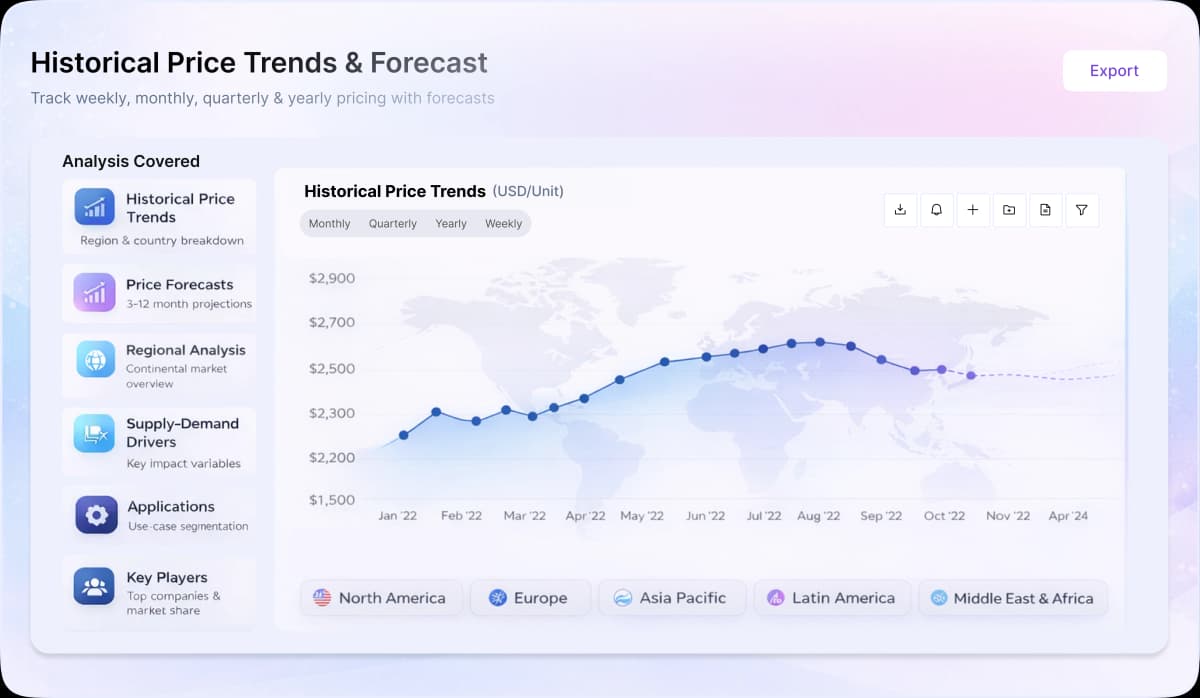
Turn price intelligence into action with the Procurement Resource Database. Log in or subscribe to unlock live price trends, historical charts, supplier databases, cost curves, and analyst-backed insights across chemicals, agriculture, energy, packaging, and more. Use these tools to benchmark your contracts, plan budgets with confidence, and stay ahead of market moves on every product you buy.

0

+

Products

0

+

Regions

0

+

Subscriptions

  • Global stearic acid prices followed a firm upward trend in Q1’26, largely tracking the strength in palm oil markets as tight supply conditions supported cost-driven price increases across regions.
  • Feedstock pressure remained the primary driver, as reduced output from key palm oil producing countries tightened availability and strengthened pricing sentiment across the oleochemical chain.
  • Downstream demand improved moderately, supported by consumption in soaps, personal care, rubber processing, and candles, alongside restocking activity in key Asian markets.

Asia

In Asia, stearic acid prices moved upward in line with rising palm oil values, as tighter feedstock availability from major exporting regions strengthened production costs. In China, firm palm oil supply and improved demand from the food sector and routine restocking supported the oleochemical market, translating into higher stearic acid prices. In India, steady import-side purchasing and strong edible oil demand maintained bullish sentiment, as palm oil remained competitively priced compared to other vegetable oils. Additionally, downstream demand from rubber processing, personal care, and industrial applications remained stable, supporting consumption. However, price gains were moderated by cautious buying behaviour and sufficient inventory levels in some segments.

Europe

In Europe, stearic acid prices remained firm, driven primarily by strong global palm oil sentiment and constrained feedstock availability. The region relied heavily on imported palm-based feedstock, and tight supply conditions in exporting countries directly elevated production costs. Demand from key downstream sectors such as personal care, cosmetics, and industrial applications remained stable, while biofuel-linked vegetable oil demand supported the overall oleochemical chain. However, cautious procurement strategies limited sharper price escalation despite firm cost support.

North America

In North America, stearic acid prices followed a stable-to-firm trend, supported by strength in the global vegetable oils complex. Feedstock cost pressure from palm oil markets remained the dominant factor influencing pricing. Demand from end-use industries, including rubber, plastics, and personal care, remained steady, providing consistent consumption support. However, balanced supply conditions and measured purchasing behaviour prevented significant price spikes, keeping the market relatively stable compared to Asia and Europe.


About Stearic Acid

Stearic Acid is a well-known saturated long-chain fatty acid with an 18-carbon backbone. Stearic Acid is found in different animal and plant fats and is a major component of cocoa butter and shea butter. In appearance, Stearic Acid is a white solid with a mild odour.


Stearic Acid Product Detail

Chemical Formula

C18H36O2

Molecular Weight
284.5 g/mol
Industrial Uses

Adhesives and sealant chemicals, Adsorbents and absorbents, Agricultural chemicals (non-pesticidal), Anti-adhesive agents, Corrosion inhibitors and anti-scaling agents, Curing activator and polymer, Defoamer manufacture, Fillers, Finishing agents, Fuels and fuel additives, Ingredient in rubber compound, Intermediates, Lubricants and lubricant additives, Paint additives and coating additives , Pigments, Plasticisers, Plating agents and surface treating agents, Rubber component, Sizing agent used to impart hydrophobicity to paper product

Synonyms

Fatty Acid C18, Octadecanoic Acid, Octadecanoic Acid, n-Octadecanoic acid

Supplier Database

Eastman Chemical Company, BASF SE, Oleon NV, Pacific Oleochemicals Sdn Bhd, Colgate-Palmolive Company, Longyan Zhuoyue New Energy Co. Ltd.

Regional Coverage

Asia Pacific

China, India, Indonesia, Pakistan, Bangladesh, Japan, Philippines, Vietnam, Iran, Thailand, South Korea, Iraq, Saudi Arabia, Malaysia, Nepal, Taiwan, Sri Lanka, UAE, Israel, Hongkong, Singapore, Oman, Kuwait, Qatar, Australia, and New Zealand

Europe

Germany, France, United Kingdom, Italy,Spain, Russia, Turkey, Netherlands, Poland, Sweden, Belgium, Austria, Ireland Switzerland, Norway, Denmark, Romania, Finland, Czech Republic, Portugal and Greece

North America

United States and Canada

Latin America

Brazil, Mexico, Argentina, Columbia, Chile, Ecuador, and Peru

Africa

South Africa, Nigeria, Egypt, Algeria, Morocco

CurrencyUS$ (Data can also be provided in local currency)

Supplier Database AvailabilityYes

Customization ScopeThe report can be customized as per the requirements of the customer

Post-Sale Analyst Support360-degree analyst support after report delivery

Note: Our supplier search experts can assist your procurement teams in compiling and validating a list of suppliers indicating they have products, services, and capabilities that meet your company's needs.

Stearic Acid Production Processes

  • Production of Fatty Acid- C18 from Oil or Fat via Hydrolytic or Lipolytic Splitting

In general, the production process of Fatty Acid involves hydrolytic or lipolytic splitting (reaction with water using high pressure and temperature or enzymes) of any oil or fat to finally obtain Fatty Acid as the product.

Our Price Analysis Methodology

About the Author

Shriya Singh profile photo

Shriya Singh

Business Insights Analyst

Helping procurement and sourcing teams navigate complex markets through data-driven research, category intelligence, and actionable insights - with a focus on identifying market trends, analyzing supply-side developments, and delivering clear intelligence that supports informed business decisions.

Schedule Demo

Schedule a demo

Experience how Procurement Resource transforms raw material price data into clear, decision ready intelligence. Optimise your performance with reliable, expert market data and analysis. Schedule your demo today to experience a live walk-through where our experts will showcase interactive price charts, forecasted prices, and insights driving the prices for your key commodities, tailored to your workflows. Contact us now!

Our Team will be happy to assist you

We are just a text away

+1

Still Need Help?

Europe & Africa

+44 7573 171117

[email protected]

USA & Canada

+1 307 363 1045

[email protected]

APAC

+91 8850629517

[email protected]

Unlock full access to Procurement Resource's price databases, interactive charts, and short-term forecasts for thousands of commodities. Elevate your sourcing decisions by comparing prices across regions, downloading historical data, and layering in analyst-backed insights, all with our flexible plans that scale as your portfolio grows.

Still have any Questions

Contact Us
Mastercard
Wire
VISA
Stripe

Why Procurement Database

Commodity Market Intelligence

Commodity Market Intelligence

Track prices, market movements, supply-demand dynamics, and industry developments across hundreds of commodities through a centralized intelligence platform built for informed procurement decisions.

Price Forecasts & Market Outlooks

Price Forecasts & Market Outlooks

Understand market fluctuations using analyst-backed forecasts, historical pricing patterns, and evolving industry trends to strengthen sourcing strategies and budget planning.

Cost & Procurement Optimization

Cost & Procurement Optimization

Leverage cost models, pricing benchmarks, and procurement insights to evaluate purchasing opportunities, improve negotiations, and enhance operational efficiency.

Global & Regional Market Insights

Global & Regional Market Insights

Access region-specific price trends, trade activities, capacity changes, and supply chain developments influencing commodity markets worldwide.

1/4