Structural Steel Price Trend Analysis 2026: Market Insights, Latest News, Price Drivers, Historical Prices & Supply Demand Analysis

Procurement Resource Database

Laptop screen

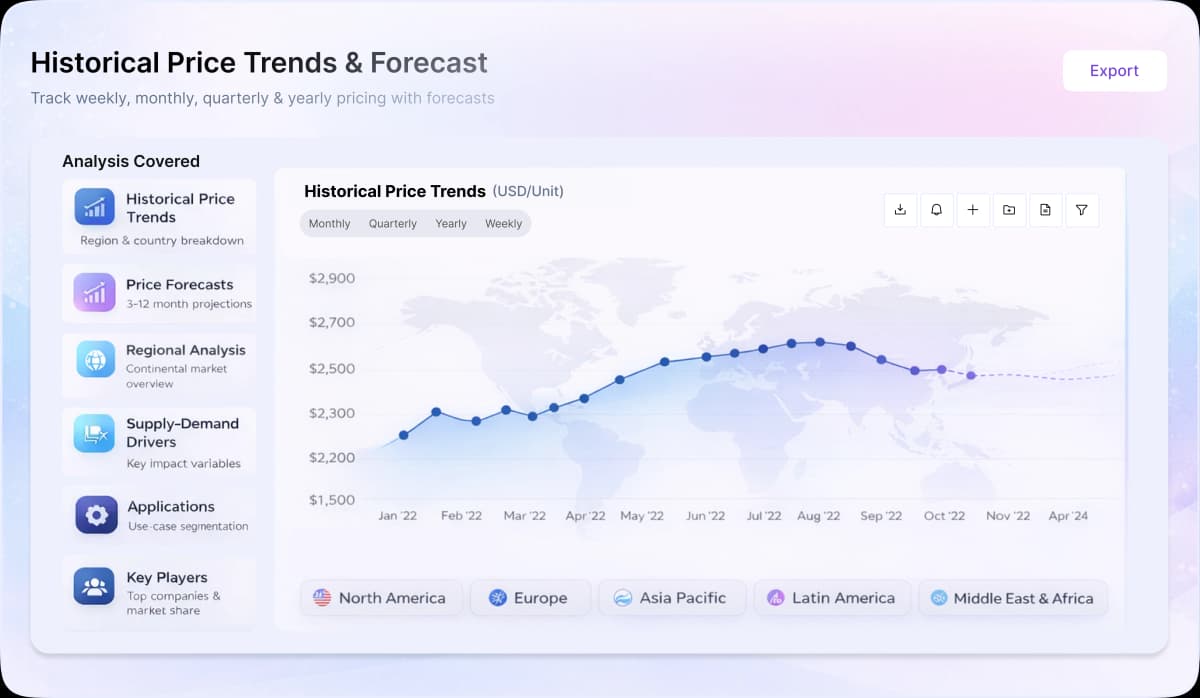
Turn price intelligence into action with the Procurement Resource Database. Log in or subscribe to unlock live price trends, historical charts, supplier databases, cost curves, and analyst-backed insights across chemicals, agriculture, energy, packaging, and more. Use these tools to benchmark your contracts, plan budgets with confidence, and stay ahead of market moves on every product you buy.

Structural Steel Dashboard Inclusions

Structural Steel Price Dasboard

0

+

Products

0

+

Regions

0

+

Subscriptions

About Structural Steel

Structural steel is a high-strength iron-based alloy specifically manufactured for load-bearing construction applications. It is produced in standardized shapes such as beams, columns, channels, angles, and hollow sections that provide structural support in buildings and infrastructure. Due to its strength-to-weight ratio, durability, weldability, and recyclability, structural steel is widely used in commercial buildings, industrial facilities, bridges, transportation infrastructure, and energy projects.

Structural Steel Product Detail

Hs Code
7216
Supplier Database

Arcelor Mittal, Nippon Steel Corporation, POSCO, Baowu Steel Group, Tata Steel, JSW Steel

Synonyms

Construction Steel, Structural Metal, Structural Carbon Steel, Structural Sections, Structural Steel Sections, Building Steel

Regional Coverage

Asia Pacific

China, India, Indonesia, Pakistan, Bangladesh, Japan, Philippines, Vietnam, Iran, Thailand, South Korea, Iraq, Saudi Arabia, Malaysia, Nepal, Taiwan, Sri Lanka, UAE, Israel, Hongkong, Singapore, Oman, Kuwait, Qatar, Australia, and New Zealand

Europe

Germany, France, United Kingdom, Italy, Spain, Russia, Turkey, Netherlands, Poland, Sweden, Belgium, Austria, Ireland Switzerland, Norway, Denmark, Romania, Finland, Czech Republic, Portugal and Greece

North America

United States and Canada

Latin America

Brazil, Mexico, Argentina, Columbia, Chile, Ecuador, and Peru

Africa

South Africa, Nigeria, Egypt, Algeria, Morocco

CurrencyUS$ (Data can also be provided in local currency)

Supplier Database AvailabilityYes

Customization ScopeThe report can be customized as per the requirements of the customer

Post-Sale Analyst Support360-degree analyst support after report delivery

Note: Our supplier search experts can assist your procurement teams in compiling and validating a list of suppliers indicating they have products, services, and capabilities that meet your company's needs.

Production Process

Structural steel is produced by reducing iron ore in a blast furnace to generate molten iron, which is subsequently refined in a basic oxygen furnace to remove impurities and adjust chemical composition. Alternatively, recycled steel scrap may be melted in an electric arc furnace. The molten steel is continuously cast into billets, blooms, or slabs and then hot-rolled into structural shapes such as I-beams, H-beams, channels, and angles before finishing and quality inspection.

Structural steel Industrial Uses

Structural steel is extensively used in the construction, infrastructure, transportation, energy, and manufacturing sectors. Common applications include building frameworks, bridges, warehouses, factories, airports, railway stations, transmission towers, offshore platforms, and industrial equipment supports. Its high load-bearing capacity, design flexibility, and durability make it a preferred material for large-scale engineering projects requiring long service life and structural reliability.

Frequently Asked Questions

During Q1 2026, structural steel prices remained generally firm as infrastructure activity, industrial construction, and commercial projects supported demand. In India, government-led capital expenditure and transportation projects continued to support steel consumption, although competitive pricing from imported Chinese steel products increased pressure on some domestic markets toward the end of the quarter.
The structural steel outlook for 2026 remains cautiously positive. According to the World Steel Association, global steel demand is expected to grow by 0.3% to approximately 1.724 billion tonnes in 2026, with stronger growth anticipated in 2027. Demand from infrastructure, industrial construction, transport projects, and manufacturing investment is expected to support structural steel consumption, particularly in emerging economies such as India.
Structural steel prices and demand during Q1 2026 were influenced by construction activity, infrastructure spending, fabrication demand, import competition, and steelmaking costs. Iron ore, coking coal, energy, and freight expenses affected production economics, while government-funded infrastructure programs supported steel consumption. Market participants also monitored Chinese export activity because competitively priced imports influenced procurement decisions and regional pricing dynamics.
China, India, the United States, Japan, and major European economies remain key structural steel markets because of their large construction, infrastructure, and industrial bases. India showed strong momentum, with crude steel output rising ~10.4% to 164.9 million tonnes in 2025. Worldsteel also projected India’s steel demand to grow around ~9% in 2026.
A notable development in the structural steel market was U.S. Steel's decision to restart a blast furnace at its Granite City Works facility in Illinois. The restart, which included the addition of approximately 400 employees, was linked to expectations of stronger steel demand in 2026. The move increased domestic steelmaking capacity and reflected improving confidence in construction, manufacturing, and industrial steel consumption.
Structural steel is produced through blast furnace-basic oxygen furnace (BF-BOF) or electric arc furnace (EAF) routes using iron ore, scrap steel, and direct reduced iron as primary inputs. The steel is then cast, rolled, fabricated, coated, transported, and installed in buildings, bridges, industrial facilities, and infrastructure projects. Costs and disruptions at any stage of this value chain can influence structural steel pricing and availability.
Construction remains the largest consumer of structural steel, followed by infrastructure projects, industrial facilities, warehouses, transport systems, energy projects, and commercial buildings. Demand is closely linked to public investment, industrial expansion, logistics infrastructure, and commercial development. Growth in these sectors is expected to support structural steel consumption as global steel demand gradually recovers.


Changes to U.S. Section 232 tariff measures in 2026 increased attention on steel sourcing, compliance, and procurement strategies. The revised framework affected certain steel-containing imports and increased uncertainty surrounding imported steel costs. For structural steel buyers, these changes reinforced the importance of domestic sourcing and long-term procurement planning when evaluating project costs and supply availability.
Structural steel contracts commonly use fixed price bids, supply agreements, and project-based fabrication contracts. Since steel prices can move between bidding and procurement, many contracts include escalation clauses, short quote-validity periods, index-linked adjustments, early material purchasing, and documentation requirements. These clauses help share price risk between contractors and owners when steel costs rise beyond agreed thresholds during long construction schedules.
Procurement Resource employs a structured methodology combining primary research, secondary market data, analytical models, and validation processes to assess structural steel prices and trends. Price evaluations incorporate supply-demand dynamics, feedstock movements, trade flows, and value chain analysis, supported by continuous market monitoring to ensure accurate and reliable insights.

Our Price Analysis Methodology

Schedule Demo

Schedule a demo

Experience how Procurement Resource transforms raw material price data into clear, decision ready intelligence. Optimise your performance with reliable, expert market data and analysis. Schedule your demo today to experience a live walk-through where our experts will showcase interactive price charts, forecasted prices, and insights driving the prices for your key commodities, tailored to your workflows. Contact us now!

Our Team will be happy to assist you

We are just a text away

+1

Still Need Help?

Europe & Africa

+44 7573 171117

[email protected]

USA & Canada

+1 307 363 1045

[email protected]

APAC

+91 8850629517

[email protected]

Unlock full access to Procurement Resource's price databases, interactive charts, and short-term forecasts for thousands of commodities. Elevate your sourcing decisions by comparing prices across regions, downloading historical data, and layering in analyst-backed insights, all with our flexible plans that scale as your portfolio grows.

Still have any Questions

Contact Us
Mastercard
Wire
VISA
Stripe

Why Procurement Database

Commodity Market Intelligence

Commodity Market Intelligence

Track prices, market movements, supply-demand dynamics, and industry developments across hundreds of commodities through a centralized intelligence platform built for informed procurement decisions.

Price Forecasts & Market Outlooks

Price Forecasts & Market Outlooks

Understand market fluctuations using analyst-backed forecasts, historical pricing patterns, and evolving industry trends to strengthen sourcing strategies and budget planning.

Cost & Procurement Optimization

Cost & Procurement Optimization

Leverage cost models, pricing benchmarks, and procurement insights to evaluate purchasing opportunities, improve negotiations, and enhance operational efficiency.

Global & Regional Market Insights

Global & Regional Market Insights

Access region-specific price trends, trade activities, capacity changes, and supply chain developments influencing commodity markets worldwide.

1/4