

Prakhar Panchbhaiya
Assistant Manager: Business Insights and Content
Supporting procurement teams with category intelligence, market research, price trends, supply-demand analysis, and strategic sourcing insights across key industries.

Triacetin, produced by esterifying glycerol with acetic acid and also known as glyceryl triacetate, serves food and pharmaceuticals, personal care and cosmetics, plastics and synthetic rubbers, and tobacco processing. Because it derives primarily from glycerine, itself a co-product of biodiesel refining and vegetable oil processing, its dynamics remain tied to the broader oleochemical chain.
Across Asia in H1 2026, glycerine availability stayed comfortable, underpinned by sustained Southeast Asian biodiesel output and steady palm oil processing generating adequate co-product volumes. Food grade and pharmaceutical excipient demand recovered only at a measured pace, so buyers procured hand to mouth rather than building strategic inventory, while shifting freight dynamics constrained cross regional flows and moderated recovery. In Europe and North America, domestic glycerine supply bore the imprint of biodiesel blending mandates, which shape co-product availability and feedstock costs. Demand from plasticizer and cosmetic ingredient applications improved gradually as consumer spending firmed through Q2, and the tobacco sector, a relatively inelastic anchor, maintained consistent offtake that offset macroeconomic and currency uncertainty. Across both regions prompt availability was ample, so negotiations centred on delivery timing rather than securing volume, and Asian export offers stayed competitive throughout the half.
Analyst Insight
According to Procurement Resource, triacetin prices should track the glycerine feedstock chain through H2 2026, with biodiesel policy, palm oil supply cycles, and gradually improving downstream demand setting the tone. Direction will hinge on the pace of normalisation in pharmaceutical and food demand alongside policy shifts that alter glycerine co-product availability.
Related Report
Need Latest Triacetin Prices?
Get real-time price assessments, periodic trends, forecasts and price driver insights across key global markets.
Our Clients































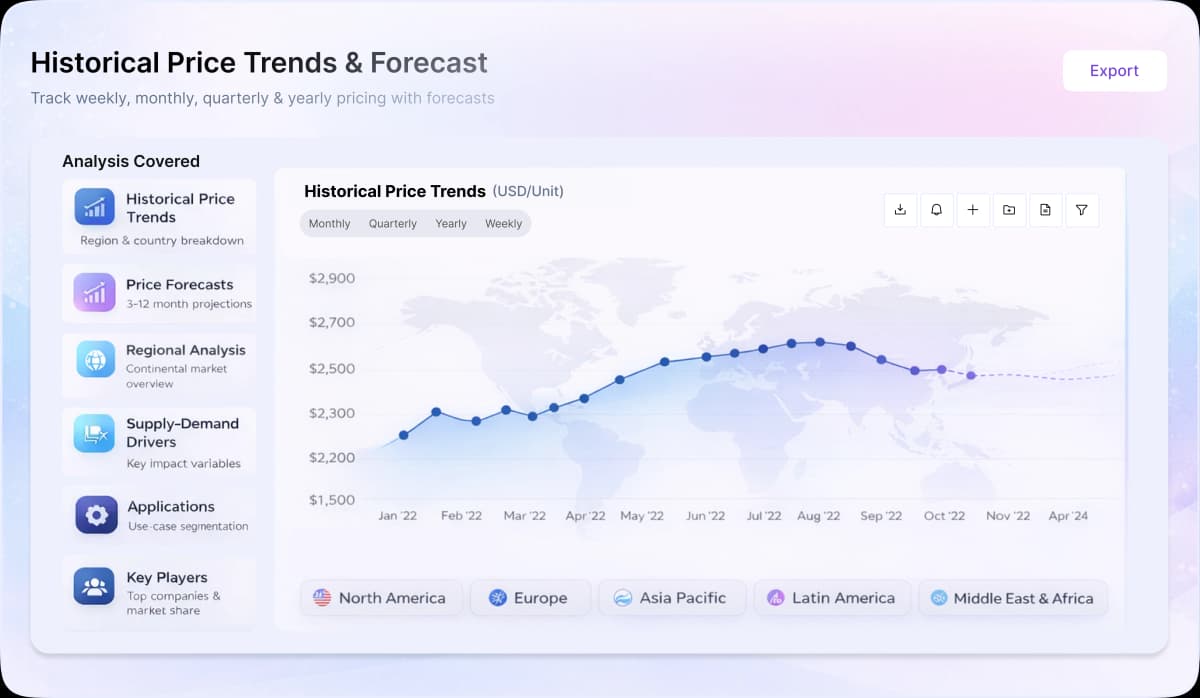
Turn price intelligence into action with the Procurement Resource Database. Log in or subscribe to unlock live price trends, historical charts, supplier databases, cost curves, and analyst-backed insights across chemicals, agriculture, energy, packaging, and more. Use these tools to benchmark your contracts, plan budgets with confidence, and stay ahead of market moves on every product you buy.
0
+Products
0
+Regions
0
+Subscriptions
Asia
In the first quarter of 2024, the triacetin market experienced fluctuations largely driven by trends in its primary feedstock, glycerine. In Asia, particularly China, triacetin prices initially rose due to higher glycerine prices but stabilized as palm oil prices rebounded. However, the weak downstream demand and fluctuating condition of market drivers limited support for further price increases.
Additionally, cautious purchasing behavior and the depreciating Chinese Yuan against the US dollar reflected low consumer confidence. The trading challenges, including disruptions from Houthi attacks and issues with the Panama Canal, further hampered triacetin export rates from Asia, affecting the overall pricing pattern of triacetin.
Europe
In Europe, the triacetin market saw a significant downturn, leading to extreme measures by the trading community. Seasonal demand fluctuations in key importing regions, such as Indonesia, Malaysia, and Thailand, resulted in a surplus of glycerine and subsequent price reductions in the triacetin market.
Increased production levels and a sudden drop in domestic demand created an oversupply situation. Additionally, declining palm oil and soybean prices, along with subdued market transactions ahead of the Spring Festival, further contributed to the price decline. The traders also noted reduced profit margins from export volumes as downstream industries turned to domestic markets amid rising freight charges and shipment delays, impacting the triacetin price trend.
North America
In North America, abundant glycerine supplies limited the price growth of triacetin despite a reduction in the US biodiesel production capacity. Continued robust biodiesel production in Indonesia and its influx into the American markets countered the reduction in domestic biodiesel production.
The popularity of US glycerine in the Asian market declined as these markets struggled to destock existing inventories, significantly reducing export rates. Rising costs of feedstock chemicals and crude oil added further pressure on trading and manufacturing sectors, depreciating the overall momentum of the North American triacetin price trend.
Analyst Insight
According to Procurement Resource, the price of Triacetin is expected to bear the consequences of changes in its feedstock market momentum along with oscillations in consumer confidence.
Triacetin, also known as glyceryl triacetate, is a clear, oily liquid with a mild, pleasant odor. It is a triglyceride formed from glycerol and acetic acid. Triacetin is valued for its versatility and stability, making it useful across various industries. It acts as a plasticizer, enhancing the flexibility and durability of plastics and synthetic rubbers. In the food and pharmaceutical sectors, it serves as a solvent and excipient. Additionally, triacetin is used as a fixative in perfumes and as an emollient in cosmetics. It is also employed to stabilize and maintain moisture in tobacco products.
C9H14O6
Food Industry, Plastics and synthetic rubbers, Pharmaceuticals, Cosmetics
Daicel Corporation, Eastan Chemical Company, Jiangsu Lemon Chemical & Technology Co. Ltd., WeylChem Group, Celanese Corporation, Muby Chemicals
CurrencyUS$ (Data can also be provided in local currency)
Supplier Database AvailabilityYes
Customization ScopeThe report can be customized as per the requirements of the customer
Post-Sale Analyst Support360-degree analyst support after report delivery
Note: Our supplier search experts can assist your procurement teams in compiling and validating a list of suppliers indicating they have products, services, and capabilities that meet your company's needs.
Our Price Analysis Methodology
Assistant Manager: Business Insights and Content
Supporting procurement teams with category intelligence, market research, price trends, supply-demand analysis, and strategic sourcing insights across key industries.
Experience how Procurement Resource transforms raw material price data into clear, decision ready intelligence. Optimise your performance with reliable, expert market data and analysis. Schedule your demo today to experience a live walk-through where our experts will showcase interactive price charts, forecasted prices, and insights driving the prices for your key commodities, tailored to your workflows. Contact us now!
Our Team will be happy to assist you
We are just a text away
Still Need Help?
Europe & Africa
+44 7573 171117
Sales@procurementresource.com
USA & Canada
+1 307 363 1045
Sales@procurementresource.com
APAC
+91 8850629517
Sales@procurementresource.com
Unlock full access to Procurement Resource's price databases, interactive charts, and short-term forecasts for thousands of commodities. Elevate your sourcing decisions by comparing prices across regions, downloading historical data, and layering in analyst-backed insights, all with our flexible plans that scale as your portfolio grows.
Still have any Questions
Contact Us



Price Trend Dashboard - What's Included
Price trends across a diverse portfolio of categories and products, spanning board to niche chemicals
Coverage extendable to grade-specific chemicals based on procurement requirements
Regular price tracking supported by robust historical datasets
News, policy updates, and key market drivers impacting price movements
Short-term and long-term price outlooks and forecasts
Supply–demand dynamics and capacity-driven market analysis

Track prices, market movements, supply-demand dynamics, and industry developments across hundreds of commodities through a centralized intelligence platform built for informed procurement decisions.

Understand market fluctuations using analyst-backed forecasts, historical pricing patterns, and evolving industry trends to strengthen sourcing strategies and budget planning.

Leverage cost models, pricing benchmarks, and procurement insights to evaluate purchasing opportunities, improve negotiations, and enhance operational efficiency.
Access region-specific price trends, trade activities, capacity changes, and supply chain developments influencing commodity markets worldwide.