

Udeesha Tomar
AVP - Strategy and Solutions
Leading procurement research solutions across chemicals, materials, and food & beverages, with expertise in price forecasting and market analytics.

Vinylidene Chloride (VDC), a highly reactive chlorinated monomer derived primarily by dehydrochlorination of 1,1,2-trichloroethane, is a critical intermediate for polyvinylidene chloride copolymers and specialty polymers. End uses span barrier packaging and food contact films, protective coatings, adhesives, fire retardant materials, and textiles, leaving pricing sensitive to packaging and industrial chemical demand as well as ethylene and chlorine costs.
Through H1 2026, VDC retained the cautious tone inherited from the prior year, with pricing range bound to softly declining across key regions. Ethylene and chlorine costs held in a stable but unsupportive range, providing a modest floor without upward pressure. Supply stayed comfortable as major producers in Asia, Europe, and North America ran at measured rates, balancing inventory control against market share. Barrier packaging and specialty coatings demand stayed restrained, with buyers running lean and drawing down stock rather than purchasing forward. In China, a brief post Lunar New Year restocking burst lifted Q1 sentiment before momentum faded in Q2 as export conditions softened and trade policy uncertainty added caution. European offtake stayed subdued on sluggish industrial output and limited construction activity, while North American packaging and coatings demand remained muted.
Analyst Insight
According to Procurement Resource, VDC prices should stay cautious and range bound through H2 2026, with recovery dependent on sustained improvement in barrier packaging and specialty coatings demand, firmer ethylene and chlorine signals, and a steadier trade environment that restores confidence in forward procurement planning.
Related Report
Need Latest Vinylidene Chloride Prices?
Get real-time price assessments, periodic trends, forecasts and price driver insights across key global markets.
Our Clients































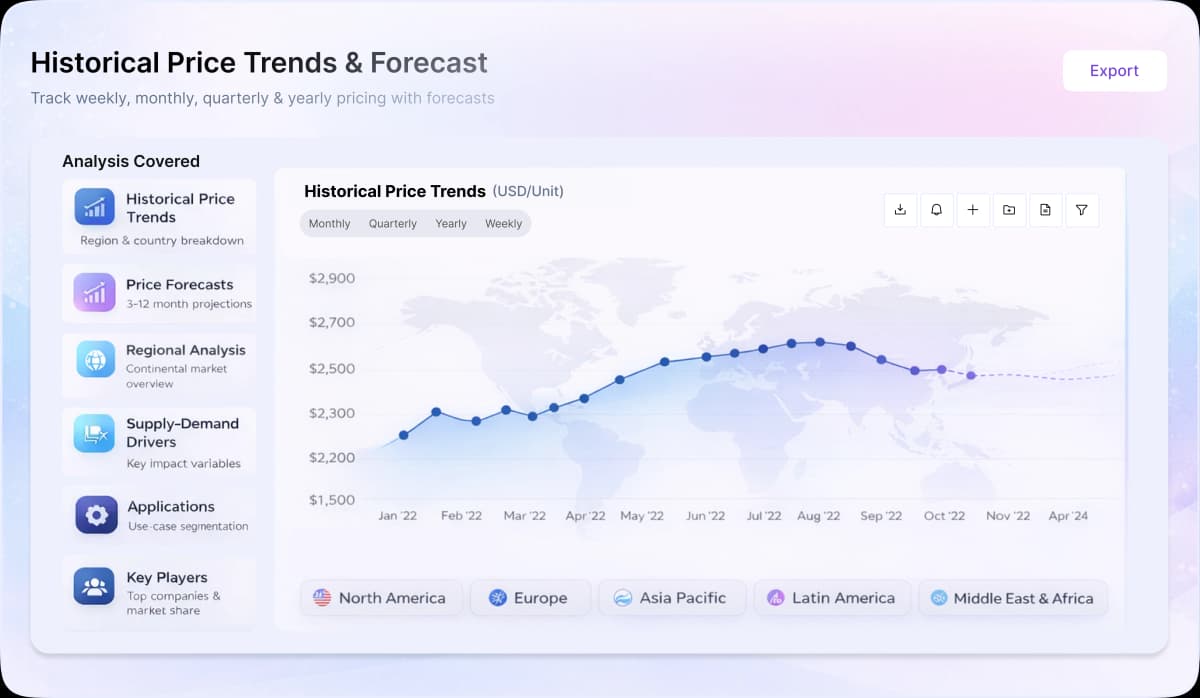
Turn price intelligence into action with the Procurement Resource Database. Log in or subscribe to unlock live price trends, historical charts, supplier databases, cost curves, and analyst-backed insights across chemicals, agriculture, energy, packaging, and more. Use these tools to benchmark your contracts, plan budgets with confidence, and stay ahead of market moves on every product you buy.
0
+Products
0
+Regions
0
+Subscriptions
Asia
In the first quarter of 2025, Vinylidene Chloride prices in Asia moved downward, mainly due to weak demand and high inventories across the region. Much like other chlorinated derivatives, VDC saw sluggish consumption from downstream sectors, especially packaging and barrier film applications. After the Lunar New Year, there was a short-lived increase in procurement activity, but it quickly tapered off as buyers remained cautious.
Feedstock costs, including Ethylene and Chlorine, softened during the quarter, reducing production costs and contributing to the downward pressure on prices. Ample supply, coupled with lower freight rates, kept market sentiment bearish, and several producers scaled back operations to avoid overstocking, which further reduced overall trading activity.
Europe
In Europe, VDC prices remained under pressure throughout Q1’25. Demand from downstream sectors such as specialty plastics and barrier packaging stayed weak, particularly as the winter season dampened construction and industrial activities. The market was also affected by competitive pricing from imported chlorinated derivatives, which increased supply-side pressure.
European producers continued operating steadily, but without strong end-use demand, there was limited pricing power. Additionally, lower feedstock costs aligned with broader global trends, contributing to the soft pricing environment. With buyers focused on maintaining lean inventories, most transactions took place through long-term contracts rather than spot deals.
North America
North America saw a similar trend, with VDC prices declining across the first quarter. The slowdown in key downstream industries like packaging and coatings, alongside lingering inflation and tight financing conditions, weighed on overall demand. Export challenges—partly due to trade restrictions and logistics delays—led to excess availability in the domestic market.
At the same time, production costs dropped as raw material prices moved lower. Major manufacturers operated at reduced rates to balance supply, but the soft demand kept market activity limited. Even announcements of price stabilization failed to gain traction amid the weak macroeconomic environment.
Vinylidene chloride is a flammable, colorless compound with a pleasant scent. Because of its unsaturated double bond, it is highly reactive and easily polymerized. The main application of vinylidene chloride is in the synthesis of copolymers, particularly in conjunction with vinyl chloride, which yields materials with high moisture and gas barrier qualities. These copolymers are widely used in adhesives, coatings, fire-retardant materials, and food packaging.
C2H2Cl2
Polymer production, Extraction of natural gas, Textiles, Coatings and adhesives, Fuel additive
Dow, Asahi Kasei, Solvay, Shandong XingLu Chemical, Juhua Group, Jiangsu Huatewei, Nantong Repair-air
CurrencyUS$ (Data can also be provided in local currency)
Supplier Database AvailabilityYes
Customization ScopeThe report can be customized as per the requirements of the customer
Post-Sale Analyst Support360-degree analyst support after report delivery
Note: Our supplier search experts can assist your procurement teams in compiling and validating a list of suppliers indicating they have products, services, and capabilities that meet your company's needs.
Vinylidene chloride is obtained as the final product of the process, which starts with the dehydrochlorination reaction of 1,1,2-trichloroethane with caustic soda. This reaction removes hydrogen chloride molecules from the base chemical, 1,1,2-trichloroethane, and then yields vinylidene chloride.
Our Price Analysis Methodology
AVP - Strategy and Solutions
Leading procurement research solutions across chemicals, materials, and food & beverages, with expertise in price forecasting and market analytics.
Experience how Procurement Resource transforms raw material price data into clear, decision ready intelligence. Optimise your performance with reliable, expert market data and analysis. Schedule your demo today to experience a live walk-through where our experts will showcase interactive price charts, forecasted prices, and insights driving the prices for your key commodities, tailored to your workflows. Contact us now!
Our Team will be happy to assist you
We are just a text away
Still Need Help?
Unlock full access to Procurement Resource's price databases, interactive charts, and short-term forecasts for thousands of commodities. Elevate your sourcing decisions by comparing prices across regions, downloading historical data, and layering in analyst-backed insights, all with our flexible plans that scale as your portfolio grows.
Still have any Questions
Contact Us



Price Trend Dashboard - What's Included
Price trends across a diverse portfolio of categories and products, spanning board to niche chemicals
Coverage extendable to grade-specific chemicals based on procurement requirements
Regular price tracking supported by robust historical datasets
News, policy updates, and key market drivers impacting price movements
Short-term and long-term price outlooks and forecasts
Supply–demand dynamics and capacity-driven market analysis

Track prices, market movements, supply-demand dynamics, and industry developments across hundreds of commodities through a centralized intelligence platform built for informed procurement decisions.

Understand market fluctuations using analyst-backed forecasts, historical pricing patterns, and evolving industry trends to strengthen sourcing strategies and budget planning.

Leverage cost models, pricing benchmarks, and procurement insights to evaluate purchasing opportunities, improve negotiations, and enhance operational efficiency.
Access region-specific price trends, trade activities, capacity changes, and supply chain developments influencing commodity markets worldwide.