Barley prices fall 3.4% in June
The FAO Cereal Price Index declined 3.5% in June, with international barley prices dropping 3.4% amid improved production outlooks and spillover weakness from maize and wheat markets.

The FAO Cereal Price Index declined 3.5% in June, with international barley prices dropping 3.4% amid improved production outlooks and spillover weakness from maize and wheat markets.
| Product | Region | Incoterm Basis | Price | Last Updated Month |
|---|---|---|---|---|
| Barley | China | CIF | USD 234.57/MT | May 2026 |
| Barley | India | FOB | USD 228.06/MT | May 2026 |
| Barley | USA | FOB | USD 254.71/MT | May 2026 |
| Barley | Germany | FOB | USD 215.04/MT | May 2026 |
| Barley | Australia | FOB | USD 218.49/MT | May 2026 |
| Barley | China | FOB | USD 234/MT | April 2026 |
| Barley | India | FOB | USD 219/MT | April 2026 |
| Barley | USA | FOB | USD 256/MT | April 2026 |
| Barley | Germany | FOB | USD 219/MT | April 2026 |
| Barley | Australia | FOB | USD 219/MT | April 2026 |
Stay updated with the latest Barley prices, historical data, and tailored regional analysis
In China, the monthly average Barley price was around RMB 1.59/kg in April and approx. RMB 1.59/kg in the subsequent month, showing stable prices. The market remained balanced due to comfortable global supplies and stable feed demand. In India, the monthly average Barley price was ~INR 20.90/kg in April and around INR 21.72/kg in the subsequent month, showing an increase of approximately 3.9%, supported by steady feed consumption and firm domestic demand. In the United States, the monthly average Barley price was ~USD 255.86/MT in April and about USD 254.71/MT in the subsequent month, showing a decrease of ~0.4%, reflecting ample grain supplies and subdued buying activity. In Germany, the monthly average Barley price was ~EUR 0.19/kg in April and about EUR 0.19/kg in the subsequent month, showing a decrease of around 1.6%, as healthy crop conditions and adequate moisture supported expectations of at least an average harvest. In Australia, the monthly average Barley price was approx. AUD 0.32/kg in April and around AUD 0.32/kg in the subsequent month, showing an increase of ~0.5%, with futures trading in a narrow range and indicating no immediate supply concerns. Ukraine's barley production is forecast to rise modestly in 2026, maintaining its position as a competitive exporter into MENA and Asian markets, while global barley supplies remain comfortable.
Analyst Insight
According to Procurement Resource, in the near term, accelerating Northern Hemisphere harvests and abundant exportable supplies are expected to keep barley prices sideways to slightly softer, with regional logistics and basis movements driving short-term price differences.
Related Report
Need latest Barley price?
Get real-time price assessments, periodic trends, forecasts and price driver insights across key global markets.
Unlock Price Insights NowOur Clients































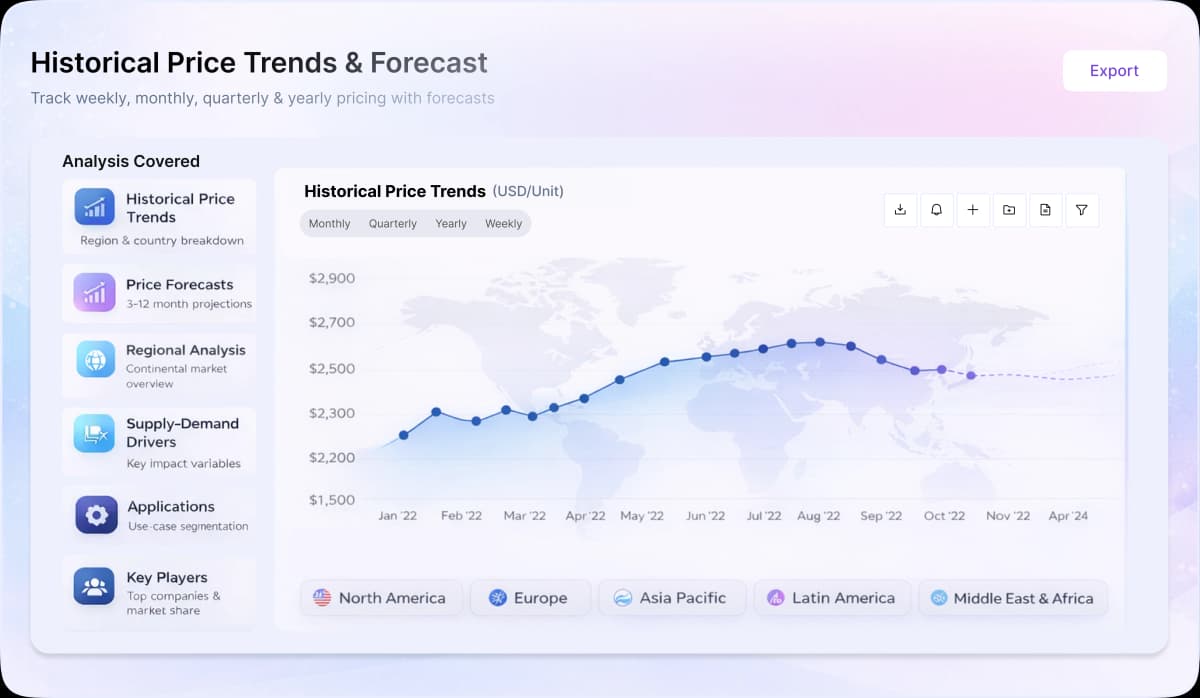
Turn price intelligence into action with the Procurement Resource Database. Log in or subscribe to unlock live price trends, historical charts, supplier databases, cost curves, and analyst-backed insights across chemicals, agriculture, energy, packaging, and more. Use these tools to benchmark your contracts, plan budgets with confidence, and stay ahead of market moves on every product you buy.
0
+Products
0
+Regions
0
+Subscriptions
In the Indian markets, the barley price curve saw moderate stability over the course of the first quarter of 2026. The acreage of barley in India increased by 11.6 percent to 6.78 lakh hectares compared to last year. Despite that, over the course of the quarter, the production trends were not entirely positive as farmers focused on cultivating wheat rather than other crops due to the expectation of higher revenue from wheat during the rabi season. In addition to that, the weather was also favourable for the cultivation of barley, and farmers were optimistic regarding yield rates. Apart from a few weather-related issues, no major problems arose in the growing season. However, the fertilizer costs increased by the end of the quarter due to disruptions in shipping through the Strait of Hormuz. However, it had a very limited effect on the prices of barley during the period.
Barley is a well-known member of the grass family. It is a major cereal grain that is often grown in temperate climates all over the globe. In 2017, barley production stood at volume of around 149 million tonnes, making it fourth among grains (maize, rice and wheat respectively) in terms of production quantity. Barley, being rich in protein contents, competes with corn and sorghum as a feed grain.
Production of malt, Brew industry, Alcohols, Non-alcoholic beverages
Hordeum Vulgare
Crisp Malt, Grain Millers, Inc., Fornazor International Inc., Imperial Malts Limited, DHN International.
CurrencyUS$ (Data can also be provided in local currency)
Supplier Database AvailabilityYes
Customization ScopeThe report can be customized as per the requirements of the customer
Post-Sale Analyst Support360-degree analyst support after report delivery
Note: Our supplier search experts can assist your procurement teams in compiling and validating a list of suppliers indicating they have products, services, and capabilities that meet your company's needs.
Barley can be cultivated both as a summer or winter crop and hence, is grown in tropical as well as subtropical climatic condition. It demands approximately 12-15°C temperature during growing period and nearly 30-32°C at maturity. Further, Barley exhibits extreme sensitivity to frost at any stage of growth.
Our Price Analysis Methodology

Senior Business Insights Analyst
Delivering price trend analysis and procurement market insights at Procurement Resource, with expertise in identifying commodity patterns, supporting purchasing strategies, and improving cost efficiency through actionable market intelligence.

Experience how Procurement Resource transforms raw material price data into clear, decision ready intelligence. Optimise your performance with reliable, expert market data and analysis. Schedule your demo today to experience a live walk-through where our experts will showcase interactive price charts, forecasted prices, and insights driving the prices for your key commodities, tailored to your workflows. Contact us now!
Our Team will be happy to assist you
We are just a text away
Still Need Help?
The study offers a detailed cost analysis of Feed Barley Production via Harvesting, Drying, Crushing, Hulling, Flaking and Pelleting. In addition, the report incorporates the manufacturing process with detailed process and material flow, operating costs along with financial expenses and depreciation charges.
The study offers a detailed cost analysis of Barley Production via Cleaning, Bleaching, Hulling, and Polishing. In addition, the report incorporates the manufacturing process with detailed process and material flow, operating costs along with financial expenses and depreciation charges.
Unlock full access to Procurement Resource's price databases, interactive charts, and short-term forecasts for thousands of commodities. Elevate your sourcing decisions by comparing prices across regions, downloading historical data, and layering in analyst-backed insights, all with our flexible plans that scale as your portfolio grows.
Still have any Questions
Contact Us



Price Trend Dashboard - What's Included
Price trends across a diverse portfolio of categories and products, spanning board to niche chemicals
Coverage extendable to grade-specific chemicals based on procurement requirements
Regular price tracking supported by robust historical datasets
News, policy updates, and key market drivers impacting price movements
Short-term and long-term price outlooks and forecasts
Supply-demand dynamics and capacity-driven market analysis

Track prices, market movements, supply-demand dynamics, and industry developments across hundreds of commodities through a centralized intelligence platform built for informed procurement decisions.

Understand market fluctuations using analyst-backed forecasts, historical pricing patterns, and evolving industry trends to strengthen sourcing strategies and budget planning.

Leverage cost models, pricing benchmarks, and procurement insights to evaluate purchasing opportunities, improve negotiations, and enhance operational efficiency.
Access region-specific price trends, trade activities, capacity changes, and supply chain developments influencing commodity markets worldwide.