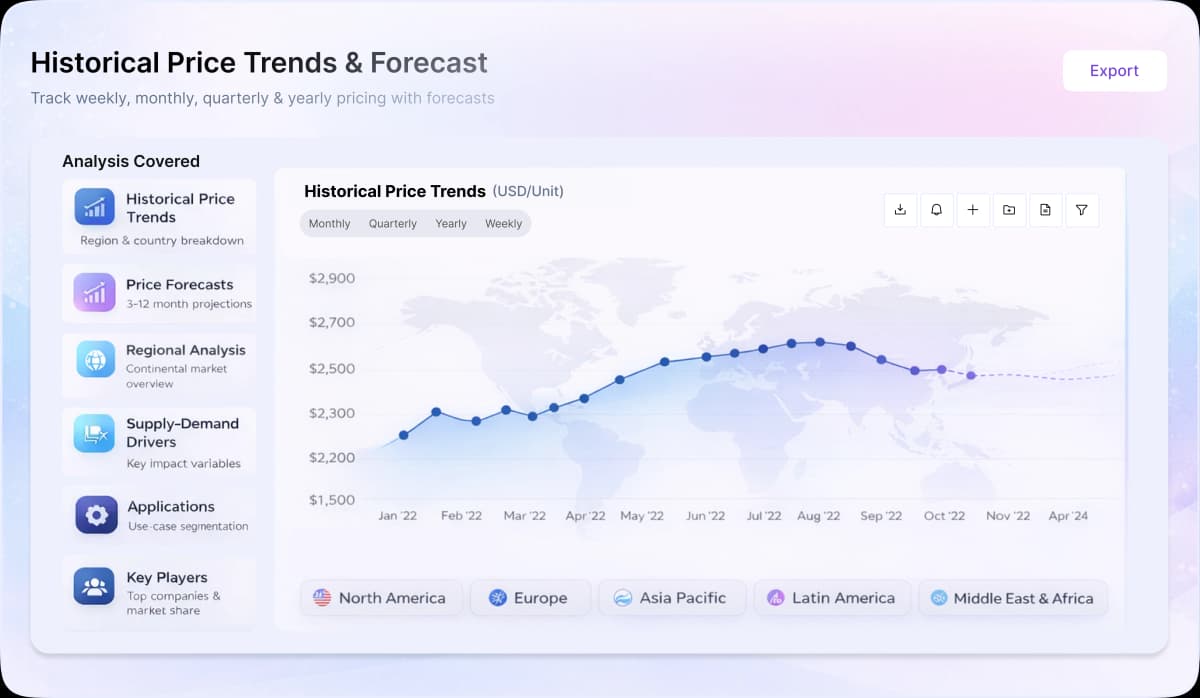
- Global boric acid prices showed a slightly declining trend in Q1 2026, with stable supply conditions but weak demand and cautious procurement across regions.
- Feedstock conditions remained balanced, as steady production and availability kept cost pressures limited, preventing strong upward movement.
- Downstream demand from glass, ceramics, detergents, and agriculture remained moderate, with buyers focusing on inventory control rather than aggressive purchasing.
Asia
In Asia, boric acid prices moved slightly downward during Q1 2026 due to sufficient supply and cautious demand. In China, prices declined from RMB 8.09/kg in January to RMB 7.79/kg in March, down 2.59%, as stable availability and weak downstream consumption limited buying interest. Demand from the glass, ceramics, and detergent sectors remained steady but not strong enough to support price gains. In Southeast Asia, a similar trend was observed, with Vietnam prices easing from VND 29,764.24/kg in January to VND 29,569.50/kg in March, reflecting a 0.88% decline due to stable imports and balanced supply-demand conditions.
Europe
In Europe, boric acid prices remained largely stable with a slight softening bias during the first quarter of 2026. The market was supported by steady demand from insulation, ceramics, and specialty chemical applications, but limited growth in industrial activity kept procurement cautious. Supply conditions remained adequate, preventing any strong upward movement, while buyers continued to rely on short-term purchasing strategies.
North America
In Q1’26, prices followed a declining trend, falling from 800 USD/MT in January to 775 USD/MT in March, down by 3.13% in the North American region. The decline was driven by weaker downstream demand and sufficient supply availability, which reduced the need for aggressive procurement. Demand from agriculture, detergents, and industrial applications remained stable but subdued.