Chocolate Liquor Price Trend Analysis 2026: Historical Prices, Supply Demand Analysis, Price Drivers, Latest News & Market Insights

Siddharth David profile photo
Written BySiddharth David

Procurement Resource Database

Laptop screen

Turn price intelligence into action with the Procurement Resource Database. Log in or subscribe to unlock live price trends, historical charts, supplier databases, cost curves, and analyst-backed insights across chemicals, agriculture, energy, packaging, and more. Use these tools to benchmark your contracts, plan budgets with confidence, and stay ahead of market moves on every product you buy.

0

+

Products

0

+

Regions

0

+

Subscriptions

In 2024, the price trend for chocolate liquor continued strong, with most price movements being upward. This was attributed to the low supply of cocoa, which is used in the production of chocolate liquor, and the higher production costs. This was evident in the first half of the year, where prices for chocolate liquor went up due to a decline in cocoa production in West Africa, which was caused by bad weather, diseases, and old trees. This resulted in a reduction in the quality of crops, which was also caused by heavy rainfall followed by hot weather, thereby impacting the availability of cocoa beans used in the production of chocolate liquor.

In the second quarter, the market was tight, and Ghana and Côte d’Ivoire, which are major producers of cocoa, produced less than expected. Also, logistics issues, coupled with increased freight costs, posed a problem. The demand for premium and specialty chocolates also remained favorable, which contributed to the increase in chocolate liquor prices.

In the second half of the year, prices remained high even though there was a slight correction in the prices, which had previously hit a peak. The harvest was poor, and there was also a problem of illegal mining in Ghana, which contributed to the pressure on the supply of chocolate. The chocolate manufacturers, however, increased the cost of chocolate liquor, which remained high during the year.


About Chocolate Liquor

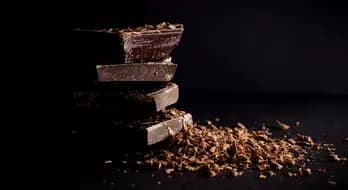
Chocolate Liquor or the cocoa liquor is basically pure cocoa mass in solid or semi-solid form. It is a smooth liquid form of chocolate. Chocolate Liquor is composed of both cocoa solids as well as cocoa butter in roughly equal proportion, just like the cocoa beans (nibs) from which it is prepared. It is the primary ingredient in the production of chocolates.

Chocolate Liquor Product Detail

Synonyms

Cocoa Liquor, Cocoa Paste, Cocoa Mass

Industrial Uses

Dark Chocolate, White Chocolate, Milk chocolate, Chocolate Bars, Chocolate Powders

Supplier Database

Guan Chong Berhad (GCB), Wuxi Huadong Cocoa Food Co.,Ltd, Lotus Chocolate Co. Ltd, Olam International

Regional Coverage

Asia Pacific

China, India, Indonesia, Pakistan, Bangladesh, Japan, Philippines, Vietnam, Iran, Thailand, South Korea, Iraq, Saudi Arabia, Malaysia, Nepal, Taiwan, Sri Lanka, UAE, Israel, Hongkong, Singapore, Oman, Kuwait, Qatar, Australia, and New Zealand

Europe

Germany, France, United Kingdom, Italy,Spain, Russia, Turkey, Netherlands, Poland, Sweden, Belgium, Austria, Ireland Switzerland, Norway, Denmark, Romania, Finland, Czech Republic, Portugal and Greece

North America

United States and Canada

Latin America

Brazil, Mexico, Argentina, Columbia, Chile, Ecuador, and Peru

Africa

South Africa, Nigeria, Egypt, Algeria, Morocco

CurrencyUS$ (Data can also be provided in local currency)

Supplier Database AvailabilityYes

Customization ScopeThe report can be customized as per the requirements of the customer

Post-Sale Analyst Support360-degree analyst support after report delivery

Note: Our supplier search experts can assist your procurement teams in compiling and validating a list of suppliers indicating they have products, services, and capabilities that meet your company's needs.

Chocolate Liquor Production Process

  • Production of Chocolate Liquor via Roasting and Grinding

Chocolate Liquor is derived from the cocoa beans which have been fermented, cleansed, dried, and separated from their outer shells. The obtained cocoa nibs are then roasted and ground to a very fine, liquid mass, thus producing Chocolate Liquor. Thereafter, this liquor can either be processed into two components, that is, cocoa powder and cocoa butter, or can be used directly in chocolates as an ingredient.


Frequently Asked Questions

The chocolate liquor outlook remains tied to West African cocoa crop conditions, since Côte d'Ivoire and Ghana together supply most global cocoa bean output. Heavy rains, flooding, or dry weather in these origins can disrupt output and lift prices, while supply recovery from Ecuador and softening chocolate product demand tend to provide an offsetting effect. Deterioration in West African crop conditions or renewed demand strength would shift the outlook toward higher prices, while continued crop recovery and stable demand would support a steadier trajectory.
West African cocoa crop conditions in Côte d'Ivoire and Ghana are the central driver of chocolate liquor prices, since heavy rains, flooding, or crop disease there can tighten feedstock supply and push prices higher, especially against a backdrop of broader chocolate demand. Dry weather and fears of low crop quality can re-tighten supply even after an initial improvement. Chocolate product demand sets the pace on the consumption side: weakening purchases tend to ease prices, while improved crop output from West Africa and increased supply from Ecuador can offset tight periods.
Chocolate liquor production relies on cocoa beans from Côte d'Ivoire and Ghana, with Ecuador's additional output helping stabilize the market during periods of West African shortfall. Key processors include Cargill, Barry Callebaut, Olam Group, Mars, Ferrero, Guan Chong Berhad, Wuxi Huadong Cocoa Food, and Lotus Chocolate. Consumption spans Asia-Pacific, Europe, and North America, with Asia-Pacific the fastest-growing market. Concentrated supply among a few global processors leaves the chain vulnerable to West African weather shocks and crop-quality disruptions.
Chocolate liquor is produced from cocoa pods as its sole raw material. Pods are picked and split to extract beans, which are fermented, dried, and roasted before being cracked into cocoa nibs. These nibs are milled and ground into a liquid mass, chocolate liquor, a thick paste of roughly equal parts cocoa solids and cocoa butter. It serves as the foundational ingredient for dark, milk, and white chocolate, and is further processed into cocoa butter and cocoa powder for use across confectionery, bakery, ice cream, and beverage applications.
Chocolate liquor demand is driven primarily by chocolate manufacturers producing dark, milk, and white chocolate bars and confectionery products. Ice cream, candy, and coffee-based beverage producers also rely on it for flavor. When chocolate and confectionery demand rises, it tightens supply and pushes prices higher, particularly when strong demand coincides with West African crop shortages; conversely, weakening purchases allow prices to ease even when supply is otherwise stable.
West African cocoa harvest seasonality is the central seasonal driver of chocolate liquor input costs, since heavy rains in Côte d'Ivoire and Ghana during growing periods can reduce crop output and tighten supply. Dry weather and low crop-quality concerns can reverse harvest expectations and cause export delays and buyer caution, keeping prices volatile. Improved output from West Africa and Ecuador tends to ease supply concerns, while downstream chocolate demand strength or weakness determines how much of that supply-side movement passes through to prices.
Chocolate Liquor is offered under several interchangeable grade names, including Cocoa Liquor, Cocoa Paste, and Cocoa Mass, each referring to the same semi-solid product of milled cocoa nibs. It is classified by cocoa solids and cocoa butter content, which together make up roughly equal proportions of the mass. Higher-solids grades are favored for dark chocolate and premium confectionery, while standard grades serve baking, ice cream, and beverages. Premium buyers require tighter compositional consistency and traceability, whereas industrial processors prioritize cost-efficient bulk supply with reliable flavor delivery.
No EU regulatory standard applies specifically to chocolate liquor as a distinct category. EU regulations govern cocoa and chocolate products traded in the European market, and compliance is required throughout the supply chain for market access. For detailed EU compositional standards, documentation requirements, or approved grade specifications, buyers should consult the relevant EU food-safety and labeling regulations directly.
Procurement Resource assesses chocolate liquor prices through a structured, data-driven methodology. Analysts engage directly with producers, suppliers and traders for primary market intelligence, supplemented by secondary market data. Feedstock and input costs are continuously monitored alongside trade flows and inventory levels. Exchange and spot benchmarks are tracked and cross-validated, then translated into a transparent price assessment and outlook. The detailed methodology is available on the Procurement Resource website.

Our Price Analysis Methodology

About the Author

Siddharth David profile photo

Siddharth David

Manager - Market Research

Delivering market research and procurement intelligence at Procurement Resource with a focus on economic forecasting, commodity analysis, and client advisory to help sourcing teams make data-backed purchasing decisions.

Schedule Demo

Schedule A Demo

Experience how Procurement Resource transforms raw material price data into clear, decision ready intelligence. Optimise your performance with reliable, expert market data and analysis. Schedule your demo today to experience a live walk-through where our experts will showcase interactive price charts, forecasted prices, and insights driving the prices for your key commodities, tailored to your workflows. Contact us now!

Our Team will be happy to assist you

We are just a text away

+1

Still Need Help?

Europe & Africa

+44 7573 171117

Sales@procurementresource.com

USA & Canada

+1 307 363 1045

Sales@procurementresource.com

APAC

+91 8850629517

Sales@procurementresource.com

Other Related Reports

Chocolate Coated Almonds Production from Panning process

This report shows the cost structure of chocolate coated almonds production from the panning process. In this process, a large drum is used, which is set at a set rotation to avoid the spilling of inner material.

Chocolate Liquor Production from Milling/ Grinding Process

This report provides the cost structure of chocolate liquor production from the milling process. Cocoa pods(fruits) are picked from the cocoa trees.

White Chocolate Production from Cocoa Butter

This report provides the cost structure of white chocolate production from cocoa butter. Cocoa butter is separated from the whole cocoa mass to make a press cake of cocoa beans.

Dark Chocolate Production from Conching and Tempering

This report provides the cost structure of dark chocolate production from conching and tempering processes. The cocoa beans are fermented to bring out the full flavour potential of the cocoa beans.

Unlock full access to Procurement Resource's price databases, interactive charts, and short-term forecasts for thousands of commodities. Elevate your sourcing decisions by comparing prices across regions, downloading historical data, and layering in analyst-backed insights, all with our flexible plans that scale as your portfolio grows.

Still have any Questions

Contact Us
Mastercard
Wire
VISA
Stripe

Related News

View All

Why Procurement Database

Commodity Market Intelligence

Commodity Market Intelligence

Track prices, market movements, supply-demand dynamics, and industry developments across hundreds of commodities through a centralized intelligence platform built for informed procurement decisions.

Price Forecasts & Market Outlooks

Price Forecasts & Market Outlooks

Understand market fluctuations using analyst-backed forecasts, historical pricing patterns, and evolving industry trends to strengthen sourcing strategies and budget planning.

Cost & Procurement Optimization

Cost & Procurement Optimization

Leverage cost models, pricing benchmarks, and procurement insights to evaluate purchasing opportunities, improve negotiations, and enhance operational efficiency.

Global & Regional Market Insights

Global & Regional Market Insights

Access region-specific price trends, trade activities, capacity changes, and supply chain developments influencing commodity markets worldwide.

1/4