Copper Foil (Battery Grade) Price Trend Analysis 2026: Market Insights, Latest News, Price Drivers, Historical Prices & Supply Demand Analysis

Written ByVikas Jha

Procurement Resource Database

Laptop screen

Turn price intelligence into action with the Procurement Resource Database. Log in or subscribe to unlock live price trends, historical charts, supplier databases, cost curves, and analyst-backed insights across chemicals, agriculture, energy, packaging, and more. Use these tools to benchmark your contracts, plan budgets with confidence, and stay ahead of market moves on every product you buy.

Copper Foil (Battery Grade) Dashboard Inclusions

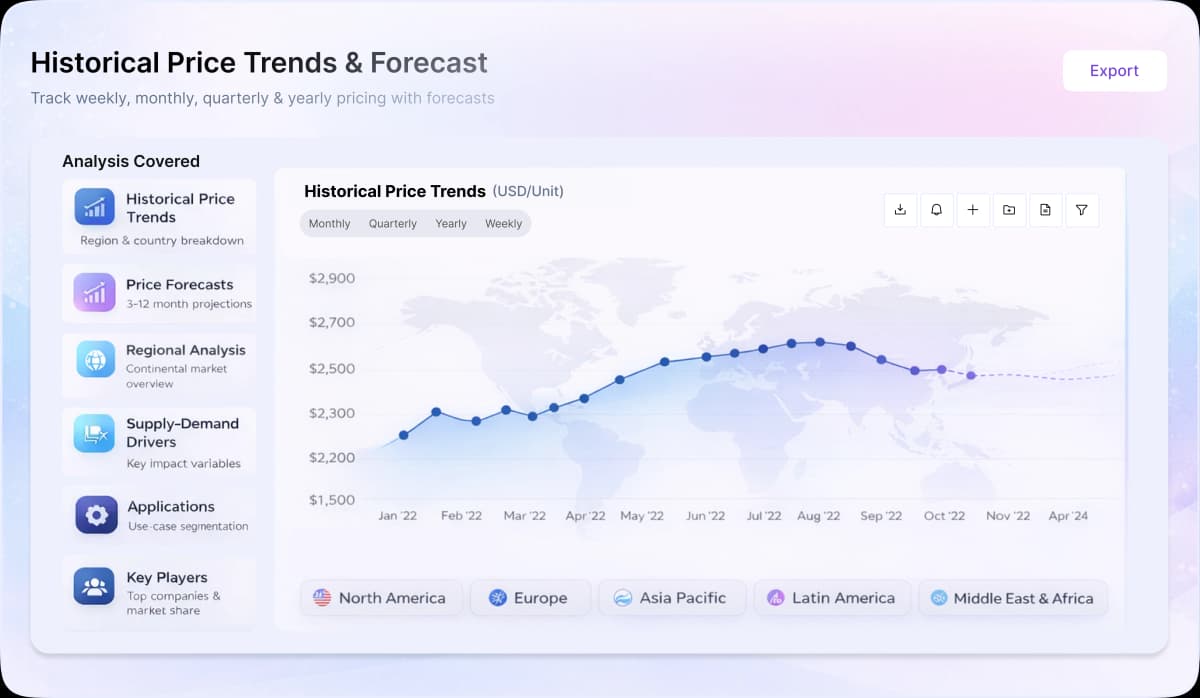
Copper Foil (Battery Grade) Price Dasboard

0

+

Products

0

+

Regions

0

+

Subscriptions

About Copper Foil (Battery Grade)

Battery-grade copper foil is an ultra-thin, high-purity copper material used as the anode current collector in lithium-ion batteries. Typically ranging from 4–12 microns in thickness, it provides excellent electrical conductivity, mechanical strength, and electrochemical stability. The material plays a critical role in electric vehicle batteries, energy storage systems, and consumer electronics, where it enables efficient electron transport and improves battery performance, cycle life, and energy density.

Copper Foil (Battery Grade) Product Detail

Hs Code
7410
Chemical Formula

Cu

Cas Number
7440-50-8
Molecular Weight
63.55 g/mol
Supplier Database

SK Nexilis, Solus Advanced Materials, Mitsui Mining & Smelting, JX Advanced Metals, Furukawa Electric

Synonyms

Battery Copper Foil, Electrolytic Copper Foil, Lithium-Ion Battery Copper Foil, Anode Copper Foil

Regional Coverage

Asia Pacific

China, India, Indonesia, Pakistan, Bangladesh, Japan, Philippines, Vietnam, Iran, Thailand, South Korea, Iraq, Saudi Arabia, Malaysia, Nepal, Taiwan, Sri Lanka, UAE, Israel, Hongkong, Singapore, Oman, Kuwait, Qatar, Australia, and New Zealand

Europe

Germany, France, United Kingdom, Italy,Spain, Russia, Turkey, Netherlands, Poland, Sweden, Belgium, Austria, Ireland Switzerland, Norway, Denmark, Romania, Finland, Czech Republic, Portugal and Greece

North America

United States and Canada

Latin America

Brazil, Mexico, Argentina, Columbia, Chile, Ecuador, and Peru

Africa

South Africa, Nigeria, Egypt, Algeria, Morocco

CurrencyUS$ (Data can also be provided in local currency)

Supplier Database AvailabilityYes

Customization ScopeThe report can be customized as per the requirements of the customer

Post-Sale Analyst Support360-degree analyst support after report delivery

Note: Our supplier search experts can assist your procurement teams in compiling and validating a list of suppliers indicating they have products, services, and capabilities that meet your company's needs.

Production Process

Battery-grade copper foil is produced through an electrolytic electrodeposition process. High-purity copper is dissolved in a sulfuric acid electrolyte and deposited onto a rotating titanium or stainless-steel drum under controlled current density. The deposited copper layer is peeled from the drum, surface-treated to improve adhesion, heat-treated, slit to required widths, and wound into rolls.

Copper Foil Industrial Uses

Battery-grade copper foil is primarily used in lithium-ion batteries for electric vehicles, hybrid vehicles, energy storage systems, smartphones, laptops, tablets, and power tools. It serves as the anode current collector, supporting active materials such as graphite and silicon-based anodes. The foil is also utilized in advanced battery technologies requiring high conductivity, low thickness, and superior tensile strength to enhance energy density and charging efficiency.

Frequently Asked Questions

During Q1 2026, battery-grade copper foil prices strengthened as higher copper cathode prices increased production costs and demand from lithium-ion battery manufacturers remained supportive. Growth in electric vehicle and energy storage installations continued to support procurement activity, while producers focused on supplying high-performance and thinner foil grades used in advanced battery applications. Rising copper prices remained the most important pricing driver during the quarter.
The outlook for battery-grade copper foil remains positive in 2026, supported by continued growth in electric vehicle production, battery energy storage systems, and advanced lithium-ion battery manufacturing. Producers are increasingly developing thinner, higher-strength foils with improved surface-treatment characteristics to support higher-energy-density batteries. Demand growth is expected to remain strongest in Asia-Pacific, although North America and Europe continue expanding domestic battery supply chains.
Battery-grade copper foil prices and demand were primarily influenced by copper cathode prices, battery production activity, capacity utilization rates, and demand for thinner foil specifications. Because copper accounts for the majority of production costs, fluctuations in refined copper prices directly affect foil pricing. Demand remained supported by growth in electric vehicles, battery energy storage systems, and advanced lithium-ion cell manufacturing, while producers continued investing in higher-performance foil technologies.
China dominates Copper Foil (Battery Grade) supply because it has the largest battery manufacturing base and extensive copper foil production capacity. South Korea and Japan are also major suppliers due to advanced battery material producers and established electronics supply chains. Asia Pacific remains the largest regional market, while North America and Europe are expanding local battery supply chains to reduce import dependence.
In March 2026, SK Nexilis announced that it would showcase next-generation copper foil solutions at InterBattery 2026 in Seoul. The company highlighted copper foil technology for future battery applications, reflecting growing competition around ultra-thin, high-strength, and high-performance foils. Such developments show that producers are prioritizing product performance alongside capacity expansion.
Battery-grade copper foil is generally produced from high-purity copper through electrolytic or rolled foil processes. The foil is made into micron-level thickness, surface-treated, slit, inspected, and supplied to battery electrode manufacturers. It is mainly used as the current collector for lithium-ion battery anodes. The supply chain includes copper mining, refining, foil production, battery cell manufacturing, EV assembly, and energy storage deployment.
Electric vehicles remain the largest source of demand for battery-grade copper foil because lithium-ion batteries require copper foil as the anode current collector. Battery energy storage systems are another rapidly growing demand segment as utilities and grid operators expand storage capacity. Consumer electronics, power tools, and other rechargeable battery applications also contribute to consumption, although EV and energy-storage markets remain the primary growth drivers.
Policy developments in 2026 continued to emphasize supply-chain security for battery materials and critical minerals. The FY2026 U.S. National Defense Authorization Act (NDAA) expanded restrictions related to advanced batteries and foreign entities of concern, encouraging greater scrutiny of sourcing, traceability, and supply-chain resilience. While not directed specifically at copper foil, these measures reinforced interest in localized battery-material supply chains and diversified sourcing strategies.
Copper Foil (Battery Grade) procurement commonly uses annual supply agreements, index-linked pricing, spot purchases, offtake contracts, and long-term battery-material supply deals. Contracts often link foil pricing to copper cathode benchmarks, conversion premiums, thickness grade, quality specifications, and delivery schedules. Buyers may also include take-or-pay volumes, audit rights, and traceability clauses because battery makers need stable supply and strict material consistency.
Procurement Resource employs a structured methodology combining primary research, secondary market data, analytical models, and validation processes to assess Copper Foil (Battery Grade) prices and trends. Price evaluations incorporate supply-demand dynamics, feedstock movements, trade flows, and value chain analysis, supported by continuous market monitoring to ensure accurate and reliable insights.

About the Author

Vikas Jha profile photo

Vikas Jha

Vice President - Sales and Operations

Driving growth and operational excellence at Procurement Resource by partnering with global enterprises on procurement consulting and client solutions, with expertise in scaling research operations and delivering actionable commodity intelligence.

Our Price Analysis Methodology

Schedule Demo

Schedule a demo

Experience how Procurement Resource transforms raw material price data into clear, decision ready intelligence. Optimise your performance with reliable, expert market data and analysis. Schedule your demo today to experience a live walk-through where our experts will showcase interactive price charts, forecasted prices, and insights driving the prices for your key commodities, tailored to your workflows. Contact us now!


Our Team will be happy to assist you

We are just a text away

+1

Still Need Help?

Europe & Africa

+44 7573 171117

[email protected]

USA & Canada

+1 307 363 1045

[email protected]

APAC

+91 8850629517

[email protected]

Unlock full access to Procurement Resource's price databases, interactive charts, and short-term forecasts for thousands of commodities. Elevate your sourcing decisions by comparing prices across regions, downloading historical data, and layering in analyst-backed insights, all with our flexible plans that scale as your portfolio grows.

Still have any Questions

Contact Us
Mastercard
Wire
VISA
Stripe

Why Procurement Database

Commodity Market Intelligence

Commodity Market Intelligence

Track prices, market movements, supply-demand dynamics, and industry developments across hundreds of commodities through a centralized intelligence platform built for informed procurement decisions.

Price Forecasts & Market Outlooks

Price Forecasts & Market Outlooks

Understand market fluctuations using analyst-backed forecasts, historical pricing patterns, and evolving industry trends to strengthen sourcing strategies and budget planning.

Cost & Procurement Optimization

Cost & Procurement Optimization

Leverage cost models, pricing benchmarks, and procurement insights to evaluate purchasing opportunities, improve negotiations, and enhance operational efficiency.

Global & Regional Market Insights

Global & Regional Market Insights

Access region-specific price trends, trade activities, capacity changes, and supply chain developments influencing commodity markets worldwide.

1/4