Crude Futures Firm on Spot Demand
Crude oil futures firmed amid firm spot demand, with both major global benchmarks edging higher in trade. Increased positioning by market participants reflected continued underlying demand support.
Crude oil futures firmed amid firm spot demand, with both major global benchmarks edging higher in trade. Increased positioning by market participants reflected continued underlying demand support.
Strait of Hormuz closure continues to constrain global oil supply, with observed output remaining significantly below year-ago levels. IEA revised its demand forecast downward as inventories fell to multi-decade lows, reinforcing upward price pressure and market volatility.
Asia
In Asia, Ethylene Acrylic Elastomer moved firm as upstream ethylene chains came under pressure from naphtha disruption. Asia sources roughly 4 million metric tons, or 36 million barrels, of Middle East naphtha monthly, making regional elastomer feedstocks highly exposed to Hormuz-linked shipping delays. Supply pressure deepened when a South Korean naphtha-fed cracker cut operations by 20.0%, lowering rates to 63.0%-65.0% as of March 4 from 83.0%-85.0% in February. This supported firmer AEM sentiment even as downstream buying stayed controlled.
Europe
Europe also saw firmer AEM conditions as naphtha-linked ethylene moved higher after the Middle East conflict. The March ethylene contract settlement rose by EUR50/mt from February, with confirmation from several buyers and sellers. Since AEM depends on ethylene and acrylic ester chains, the higher ethylene settlement increased replacement-cost pressure for specialty elastomers. Downstream demand from automotive, sealing, and wire-and-cable applications remained steady, but buyers limited purchases to immediate needs.
North America
North America stayed more balanced due to local ethylene availability and stronger Gulf Coast logistics. Polymer transactions from Asia and the Middle East to the Americas were paralyzed on March 2, which reduced import liquidity and supported domestic supply positions. At the same time, chemical container exports from the US Gulf Coast rose 12.0% in March, with 20.0% surge capacity available for disruptions.
Analyst Insight
According to Procurement Resource, near-term AEM trends may stay firm if freight uncertainty and feedstock risk continue, with Asia and Europe more exposed than North America.
Need latest Ethylene Acrylic Elastomer price?
Get real-time price assessments, periodic trends, forecasts and price driver insights across key global markets.
Unlock Price Insights NowOur Clients































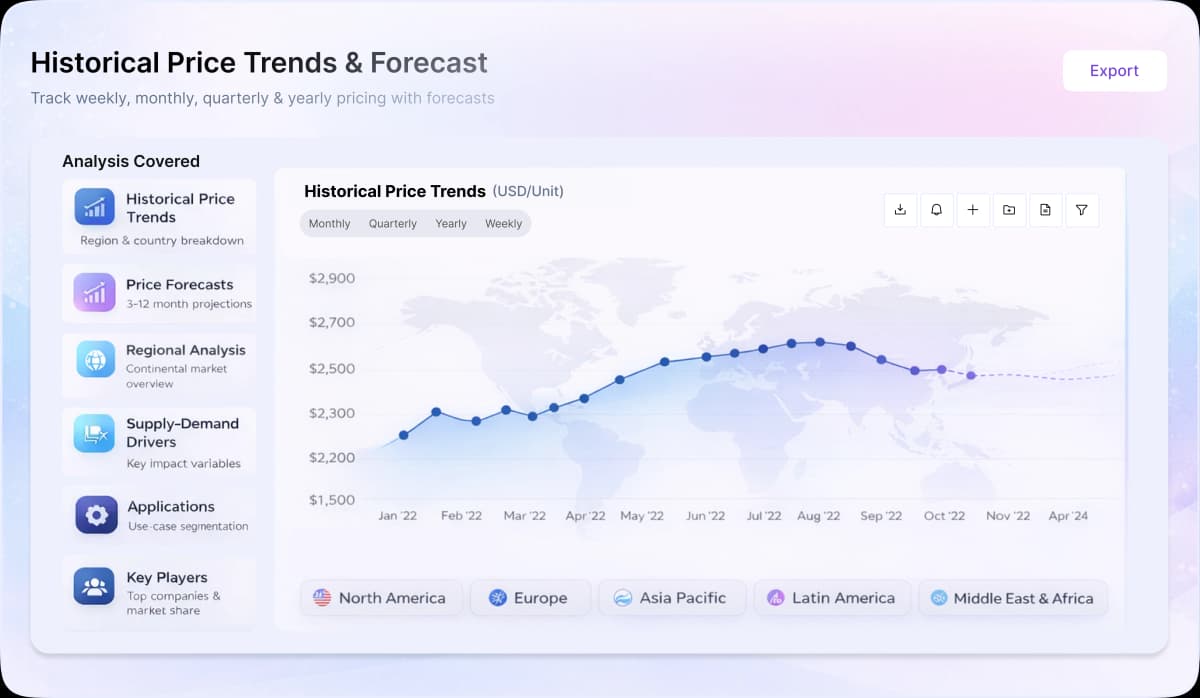
Turn price intelligence into action with the Procurement Resource Database. Log in or subscribe to unlock live price trends, historical charts, supplier databases, cost curves, and analyst-backed insights across chemicals, agriculture, energy, packaging, and more. Use these tools to benchmark your contracts, plan budgets with confidence, and stay ahead of market moves on every product you buy.
0
+Products
0
+Regions
0
+Subscriptions
Ethylene Acrylic Elastomer is a specialty synthetic rubber made from ethylene and acrylic ester monomers, commonly methyl acrylate. Commercial AEM grades may also contain a small amount of cure-site monomer to support vulcanization. The material offers good resistance to heat, ozone, weathering, oils, lubricants, and several automotive fluids. It also provides useful low-temperature flexibility and good long-term sealing performance. Ethylene Acrylic Elastomer is mainly used in applications that require balanced heat resistance, oil resistance, and durability.
(C2H4·C4H6O2)n
Celanese Corporation, Denka Company Limited, Zeon Corporation, BASF SE, NOK Corporation, Trelleborg Group, Kuraray Co., Ltd., Sichuan Dowhon New Materials Co., Ltd.
Ethylene acrylic elastomer, AEM rubber, ethylene acrylate rubber, ethylene-methyl acrylate elastomer, ethylene methyl acrylate copolymer, acrylic ethylene copolymer, Vamac-type elastomer, EA rubber.
CurrencyUS$ (Data can also be provided in local currency)
Supplier Database AvailabilityYes
Customization ScopeThe report can be customized as per the requirements of the customer
Post-Sale Analyst Support360-degree analyst support after report delivery
Note: Our supplier search experts can assist your procurement teams in compiling and validating a list of suppliers indicating they have products, services, and capabilities that meet your company's needs.
Ethylene Acrylic Elastomer Production by High-Pressure Free-Radical Copolymerization : Ethylene Acrylic Elastomer is produced by copolymerizing ethylene with methyl acrylate or other acrylic ester monomers. In many commercial grades, a small quantity of cure-site monomer is added to allow amine or peroxide curing. The polymerization is generally carried out under high pressure in an autoclave or tubular reactor using a free-radical initiator. After polymerization, the elastomer is recovered, stabilized, pelletized or baled, and then compounded with fillers, plasticizers, antioxidants, curing agents, and processing aids.
Ethylene Acrylic Elastomer is used in automotive seals, gaskets, turbocharger hoses, oil cooler hoses, air ducts, boots, cable jackets, wire insulation, engine components, transmission-fluid seals, O-rings, molded rubber parts, vibration-control parts, industrial hoses, diaphragms, and sealing components used in high-temperature and oil-exposed environments.
Our Price Analysis Methodology

Vice President - Sales and Operations
Driving growth and operational excellence at Procurement Resource by partnering with global enterprises on procurement consulting and client solutions, with expertise in scaling research operations and delivering actionable commodity intelligence.
Experience how Procurement Resource transforms raw material price data into clear, decision ready intelligence. Optimise your performance with reliable, expert market data and analysis. Schedule your demo today to experience a live walk-through where our experts will showcase interactive price charts, forecasted prices, and insights driving the prices for your key commodities, tailored to your workflows. Contact us now!
Our Team will be happy to assist you
We are just a text away
Still Need Help?
Unlock full access to Procurement Resource's price databases, interactive charts, and short-term forecasts for thousands of commodities. Elevate your sourcing decisions by comparing prices across regions, downloading historical data, and layering in analyst-backed insights, all with our flexible plans that scale as your portfolio grows.
Still have any Questions
Contact Us



Price Trend Dashboard - What's Included
Price trends across a diverse portfolio of categories and products, spanning board to niche chemicals
Coverage extendable to grade-specific chemicals based on procurement requirements
Regular price tracking supported by robust historical datasets
News, policy updates, and key market drivers impacting price movements
Short-term and long-term price outlooks and forecasts
Supply-demand dynamics and capacity-driven market analysis

Track prices, market movements, supply-demand dynamics, and industry developments across hundreds of commodities through a centralized intelligence platform built for informed procurement decisions.

Understand market fluctuations using analyst-backed forecasts, historical pricing patterns, and evolving industry trends to strengthen sourcing strategies and budget planning.

Leverage cost models, pricing benchmarks, and procurement insights to evaluate purchasing opportunities, improve negotiations, and enhance operational efficiency.
Access region-specific price trends, trade activities, capacity changes, and supply chain developments influencing commodity markets worldwide.
