Glutamic Acid Price Trend Analysis 2026: Historical Prices, Latest News, Market Insights, Supply Demand Analysis & Price Drivers

Udeesha Tomar profile photo
Written ByUdeesha Tomar

Procurement Resource Database

Laptop screen

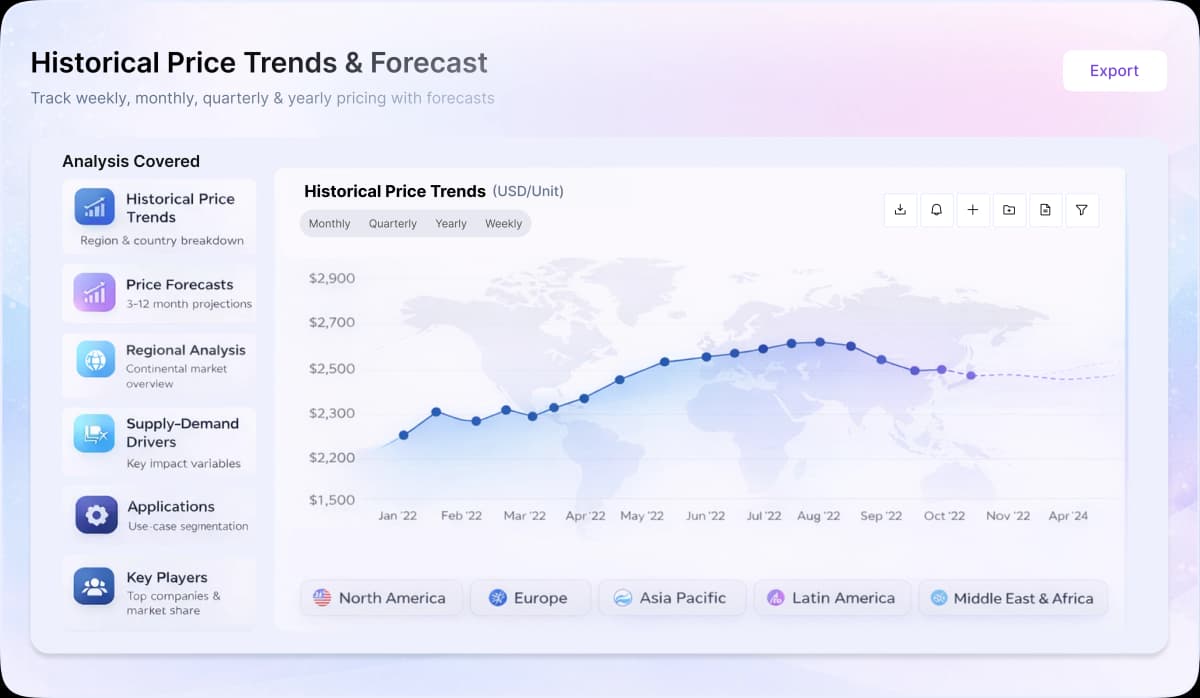
Turn price intelligence into action with the Procurement Resource Database. Log in or subscribe to unlock live price trends, historical charts, supplier databases, cost curves, and analyst-backed insights across chemicals, agriculture, energy, packaging, and more. Use these tools to benchmark your contracts, plan budgets with confidence, and stay ahead of market moves on every product you buy.

0

+

Products

0

+

Regions

0

+

Subscriptions

About Glutamic Acid

Glutamic acid is a non-essential amino acid that plays a crucial role in protein synthesis and neurotransmission. It is widely used as a flavor enhancer in the form of monosodium glutamate (MSG), providing an umami taste to foods. Besides its culinary uses, glutamic acid is utilized in pharmaceuticals, animal feed, and cosmetics. It also serves as a building block in the production of biodegradable plastics and fertilizers. Its versatility makes it valuable in various industrial and health-related applications.

Glutamic Acid Product Detail

HS Code
292242
Chemical Formula

C5H9NO4

CAS Number
56-86-0
Molecular Weight
147.13 g/mol
Industrial Uses

Flavor enhancer (as monosodium glutamate, MSG), Nutritional supplement, Animal feed additive, Fertilizer component, Biodegradable plastic production, Pharmaceutical ingredient, Cosmetic and personal care products

Supplier Database

Ajinomoto Co. Inc., Akzo Nobel N.V., Evonik Industries AG, Sichuan Tongsheng Amino acid Co. Ltd., Hefei TNJ Chemical Industry Co. Ltd., Suzhou Yuanfang Chemical Co. Ltd., Global Bio-chem Technology Group Company Limited, Ningxia Yipin Biological Technology Co. Ltd.

Regional Coverage

Asia Pacific

China, India, Indonesia, Pakistan, Bangladesh, Japan, Philippines, Vietnam, Iran, Thailand, South Korea, Iraq, Saudi Arabia, Malaysia, Nepal, Taiwan, Sri Lanka, UAE, Israel, Hongkong, Singapore, Oman, Kuwait, Qatar, Australia, and New Zealand

Europe

Germany, France, United Kingdom, Italy,Spain, Russia, Turkey, Netherlands, Poland, Sweden, Belgium, Austria, Ireland Switzerland, Norway, Denmark, Romania, Finland, Czech Republic, Portugal and Greece

North America

United States and Canada

Latin America

Brazil, Mexico, Argentina, Columbia, Chile, Ecuador, and Peru

Africa

South Africa, Nigeria, Egypt, Algeria, Morocco

CurrencyUS$ (Data can also be provided in local currency)

Supplier Database AvailabilityYes

Customization ScopeThe report can be customized as per the requirements of the customer

Post-Sale Analyst Support360-degree analyst support after report delivery

Note: Our supplier search experts can assist your procurement teams in compiling and validating a list of suppliers indicating they have products, services, and capabilities that meet your company's needs.

Glutamic Acid Production Process

  • Glutamic Acid Production by fermentation of glucose in coryneform bacteria.

The glutamic acid, or L-glutamic acid, is produced by the fermentation of glucose. Glucose is an excellent carbon source, which is used for the production of glutamic acid. The production begins with fermenting glucose in the presence of a bacteria, i.e., Coryneform that leads to the generation of L- glutamic acid or glutamic acid as the final product.

Frequently Asked Questions

The current glutamic acid outlook points to continued price oscillation with no notable directional shift expected. Sufficient inventory stocks and subdued domestic demand in Asian markets tend to keep prices under pressure, while softer European demand can compound the weakness. Rising logistics and processing costs offer some upstream support, but easy feedstock availability and declining glucose costs can offset that benefit. Prices are likely to remain range-bound unless inventory draws tighten supply, glucose prices reverse higher, or downstream demand recovers meaningfully.

Glutamic acid prices tend to drift lower across Asian and European markets when inventory stocks are sufficient. Ample Asian inventory can absorb demand and pull prices down as domestic consumption softens. Declining feedstock glucose prices reduce upstream fermentation costs, reinforcing downward pressure. In Europe, weaker demand than in Asia, combined with rising logistics and processing costs, can be offset by depreciating feedstock costs. International trade headwinds can further constrain price support, since domestic trade alone often cannot sustain the trajectory.

Glutamic acid production is heavily concentrated in Asia, with China and Japan as the dominant producing and exporting hubs. Major players include Ajinomoto Co. Inc., Sichuan Tongsheng Amino acid Co. Ltd., Hefei TNJ Chemical Industry Co. Ltd., Suzhou Yuanfang Chemical Co. Ltd., Global Bio-chem Technology Group Company Limited, and Ningxia Yipin Biological Technology Co. Ltd., alongside Evonik Industries AG and Akzo Nobel N.V. Europe and North America are primarily consuming and importing regions, making supply security dependent on Asian export flows and logistics stability.

Glutamic acid is produced by fermenting carbohydrate feedstocks, primarily glucose derived from corn or other starch crops, in the presence of Coryneform bacteria. Ammonia is added as a nitrogen source during fermentation. The resulting L-glutamic acid is then purified into food, feed, or pharmaceutical grades. A large share is further converted into monosodium glutamate (MSG) for use as a flavor enhancer in packaged foods, seasonings, and restaurants. Remaining volumes supply animal feed, nutritional supplements, pharmaceuticals, cosmetics, and biodegradable plastics.

The food and beverage industry is the dominant driver of glutamic acid demand, primarily through monosodium glutamate used in packaged foods, seasonings, restaurants, and household cooking. Animal feed, nutrition supplements, pharmaceuticals, and personal care products also contribute, though at lower volumes. Bio based materials and fertilizer applications represent emerging uses. Softer demand from these end markets, particularly in Europe, combined with ample inventory, can exert downward price pressure across Asian and international markets, outweighing support from higher logistics and processing costs.

Procurement Resource assesses glutamic acid prices through a structured, data-driven methodology that combines primary engagement with producers, suppliers and traders, secondary market data, continuous monitoring of feedstock and input costs, trade-flow and inventory tracking, and exchange or spot benchmarks. All inputs are validated and translated into a transparent price assessment and outlook. The detailed methodology is available on the Procurement Resource website.

Our Price Analysis Methodology

About the Author

Udeesha Tomar profile photo

Udeesha Tomar

AVP - Strategy and Solutions

Leading procurement research solutions across chemicals, materials, and food & beverages, with expertise in price forecasting and market analytics.

Schedule Demo

Schedule A Demo

Experience how Procurement Resource transforms raw material price data into clear, decision ready intelligence. Optimise your performance with reliable, expert market data and analysis. Schedule your demo today to experience a live walk-through where our experts will showcase interactive price charts, forecasted prices, and insights driving the prices for your key commodities, tailored to your workflows. Contact us now!

Our Team will be happy to assist you

We are just a text away

+1

Still Need Help?

Europe & Africa

+44 7573 171117

[email protected]

USA & Canada

+1 307 363 1045

[email protected]

APAC

+91 8850629517

[email protected]

Unlock full access to Procurement Resource's price databases, interactive charts, and short-term forecasts for thousands of commodities. Elevate your sourcing decisions by comparing prices across regions, downloading historical data, and layering in analyst-backed insights, all with our flexible plans that scale as your portfolio grows.

Still have any Questions

Contact Us
Mastercard
Wire
VISA
Stripe

Why Procurement Database

Commodity Market Intelligence

Commodity Market Intelligence

Track prices, market movements, supply-demand dynamics, and industry developments across hundreds of commodities through a centralized intelligence platform built for informed procurement decisions.

Price Forecasts & Market Outlooks

Price Forecasts & Market Outlooks

Understand market fluctuations using analyst-backed forecasts, historical pricing patterns, and evolving industry trends to strengthen sourcing strategies and budget planning.

Cost & Procurement Optimization

Cost & Procurement Optimization

Leverage cost models, pricing benchmarks, and procurement insights to evaluate purchasing opportunities, improve negotiations, and enhance operational efficiency.

Global & Regional Market Insights

Global & Regional Market Insights

Access region-specific price trends, trade activities, capacity changes, and supply chain developments influencing commodity markets worldwide.

1/4