Liquefied Natural Gas Price Trend Analysis 2026: Price Drivers, Historical Prices, Latest News, Market Insights & Supply Demand Analysis

Udeesha Tomar profile photo
Written ByUdeesha Tomar

Procurement Resource Database

Laptop screen

Turn price intelligence into action with the Procurement Resource Database. Log in or subscribe to unlock live price trends, historical charts, supplier databases, cost curves, and analyst-backed insights across chemicals, agriculture, energy, packaging, and more. Use these tools to benchmark your contracts, plan budgets with confidence, and stay ahead of market moves on every product you buy.

Liquefied Natural Gas Dashboard Inclusions

Liquefied Natural Gas Price Dasboard

0

+

Products

0

+

Regions

0

+

Subscriptions

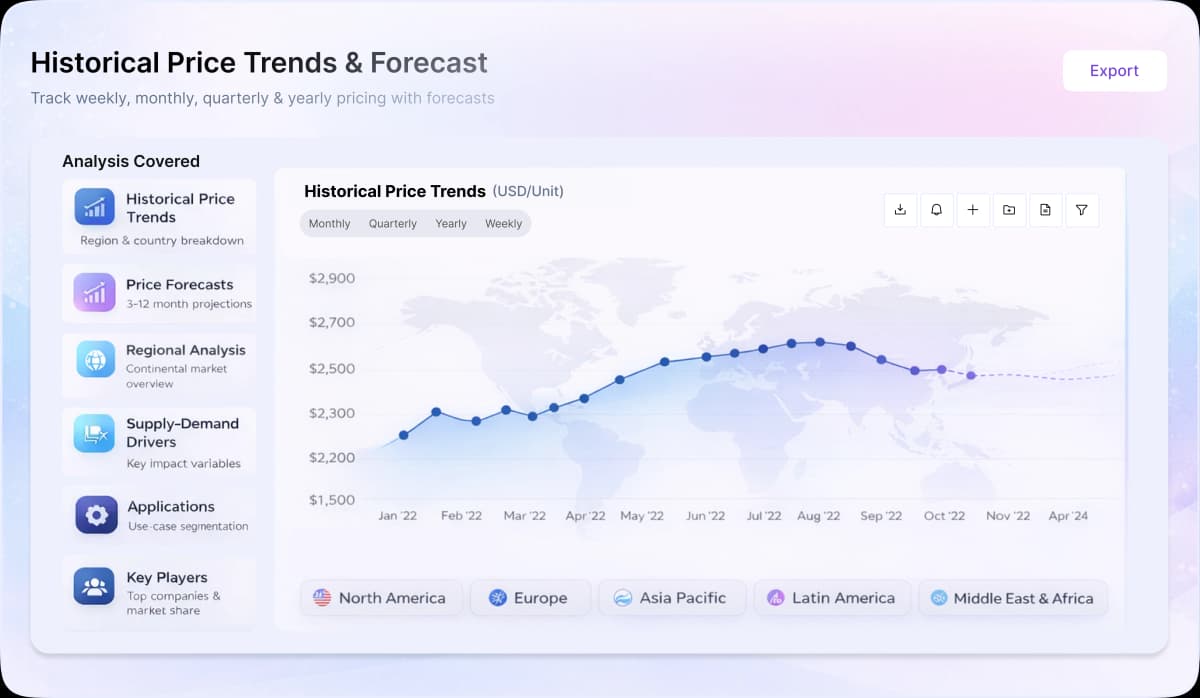
During the second half of 2025, liquefied natural gas prices mostly moved on the lower side of the scale. The main reason was softer demand expectations caused by milder weather, especially in key consuming regions such as Europe and parts of Asia. The winter heating season started slowly, which reduced the urgency for buyers to secure extra LNG cargoes.

At the same time, global supply stayed comfortable. High LNG output from the United States continued through H2, with export plants running close to capacity despite some short-term operational issues. This steady flow added confidence that supply was available when needed. New LNG projects being sanctioned earlier in the year also reinforced the view that more gas would be available in the coming years.

European gas markets remained well supplied due to healthy storage levels and policy-driven diversification away from Russian gas, which reduced near-term panic buying. Asian demand, especially from price-sensitive countries, stayed cautious as earlier high energy costs had already slowed consumption growth.

Overall, LNG prices in H2’25 reflected a market that felt balanced rather than tight. Short-term disruptions did not change the broader view that supply was sufficient, keeping price pressure limited.


About Liquefied Natural Gas

LNG is natural gas that is cooled to about –162 degree Celsius. This low temperature turns the gas into liquid phase and makes it easier in transportation and storage. It is a colorless, odorless, and non-toxic liquid that has high density and low volume. The liquid nature also helps in the reduction of flammability and helps the fuel to burn cleanly. It is also a versatile fuel source used in a number of industrial and commercial applications.

Liquefied Natural Gas Product Detail

Hs Code
27111100
Industrial Uses

Power generation, Industrial boilers, Transportation, Residential and commercial heating, Fertilizer production, Metal and glass manufacturing

Synonyms

LNG, Liquid Natural Gas

Supplier Database

Chevron Corporation, China Petroleum and Chemical Corporation, Equinor ASA, Exxon Mobil Corporation, Gazprom Energy, PetroChina Company Limited, Royal Dutch Shell PLC

Regional Coverage

Asia Pacific

China, India, Indonesia, Pakistan, Bangladesh, Japan, Philippines, Vietnam, Iran, Thailand, South Korea, Iraq, Saudi Arabia, Malaysia, Nepal, Taiwan, Sri Lanka, UAE, Israel, Hongkong, Singapore, Oman, Kuwait, Qatar, Australia, and New Zealand

Europe

Germany, France, United Kingdom, Italy,Spain, Russia, Turkey, Netherlands, Poland, Sweden, Belgium, Austria, Ireland Switzerland, Norway, Denmark, Romania, Finland, Czech Republic, Portugal and Greece

North America

United States and Canada

Latin America

Brazil, Mexico, Argentina, Columbia, Chile, Ecuador, and Peru

Africa

South Africa, Nigeria, Egypt, Algeria, Morocco

CurrencyUS$ (Data can also be provided in local currency)

Supplier Database AvailabilityYes

Customization ScopeThe report can be customized as per the requirements of the customer

Post-Sale Analyst Support360-degree analyst support after report delivery

Note: Our supplier search experts can assist your procurement teams in compiling and validating a list of suppliers indicating they have products, services, and capabilities that meet your company's needs.

Liquefied Natural Gas Production Processes

In conversion of natural gas to liquified natural gas, the natural gas is exposed to low temperatures of about 162°C . The liquified gas is then stored in cryogenic containers with double wall that maintains the pressure of the system a little above the atmospheric pressure.

About the Author

Udeesha Tomar profile photo

Udeesha Tomar

AVP - Strategy and Solutions

Leading procurement research solutions across chemicals, materials, and food & beverages, with expertise in price forecasting and market analytics.

Our Price Analysis Methodology

Schedule Demo

Schedule a demo

Experience how Procurement Resource transforms raw material price data into clear, decision ready intelligence. Optimise your performance with reliable, expert market data and analysis. Schedule your demo today to experience a live walk-through where our experts will showcase interactive price charts, forecasted prices, and insights driving the prices for your key commodities, tailored to your workflows. Contact us now!

Our Team will be happy to assist you

We are just a text away

+1

Still Need Help?

Europe & Africa

+44 7573 171117

[email protected]

USA & Canada

+1 307 363 1045

[email protected]

APAC

+91 8850629517

[email protected]

Unlock full access to Procurement Resource's price databases, interactive charts, and short-term forecasts for thousands of commodities. Elevate your sourcing decisions by comparing prices across regions, downloading historical data, and layering in analyst-backed insights, all with our flexible plans that scale as your portfolio grows.

Still have any Questions

Contact Us
Mastercard
Wire
VISA
Stripe

Why Procurement Database

Commodity Market Intelligence

Commodity Market Intelligence

Track prices, market movements, supply-demand dynamics, and industry developments across hundreds of commodities through a centralized intelligence platform built for informed procurement decisions.

Price Forecasts & Market Outlooks

Price Forecasts & Market Outlooks

Understand market fluctuations using analyst-backed forecasts, historical pricing patterns, and evolving industry trends to strengthen sourcing strategies and budget planning.

Cost & Procurement Optimization

Cost & Procurement Optimization

Leverage cost models, pricing benchmarks, and procurement insights to evaluate purchasing opportunities, improve negotiations, and enhance operational efficiency.

Global & Regional Market Insights

Global & Regional Market Insights

Access region-specific price trends, trade activities, capacity changes, and supply chain developments influencing commodity markets worldwide.

1/4