Udeesha Tomar
AVP - Strategy and Solutions
Leading procurement research solutions across chemicals, materials, and food & beverages, with expertise in price forecasting and market analytics.
The Nylon DTY market moved through a challenging year in 2025, with prices mostly under pressure across all major regions. In the first half of the year, DTY values drifted lower as feedstock costs weakened due to high supply. In Asia, especially China, DTY producers faced reduced demand from textiles and apparel, while mills operated cautiously and avoided building large inventories. Short periods of restocking did create brief improvements, but these rebounds faded quickly because export demand remained slow.
Europe showed a similar trend. Although suppliers tried to lift margins early in the year, the downstream sectors did not support stronger movement. Buyers depended heavily on their existing stocks, which pushed trade volumes down. As competition from Asian imports grew stronger, European manufacturers adjusted offers to protect their market position. North America also dealt with a steady easing of DTY sentiment as oversupply increased and key sectors like construction and automotive stayed sluggish. Short-term restocking helped only temporarily before prices slipped again.
In the second half of 2025, the market did not recover. Asia continued to struggle with excess supply and lukewarm demand from textiles, packaging, and industrial applications. Europe remained weighed down by slow industrial activity and the impact of global resin oversupply. North America saw mild improvement in automotive output, but it was not enough to lift DTY values. Discussions around trade and tariffs created uncertainty, but they did not tighten supply.
Analyst Insight
According to Procurement Resource, a clear recovery in the Nylon DTY market is unlikely without stronger demand from the textile sector or a cut in upstream supply.

Related Report
Get real-time price assessments, periodic trends, forecasts and price driver insights across key global markets.
Unlock Price Insights NowOur Clients

Turn price intelligence into action with the Procurement Resource Database. Log in or subscribe to unlock live price trends, historical charts, supplier databases, cost curves, and analyst-backed insights across chemicals, agriculture, energy, packaging, and more. Use these tools to benchmark your contracts, plan budgets with confidence, and stay ahead of market moves on every product you buy.

0
+Products
0
+Regions
0
+Subscriptions
The Nylon DTY market moved through a year of shifting conditions in 2024, shaped mainly by changes in demand, feedstock costs, and global trade disruptions. In the first quarter, prices generally softened as many factories operated at lower rates during holiday periods and downstream textile units restarted slowly. Higher inventories and weak buying interest kept the market under pressure. Europe and North America also saw declines as winter demand faded and upstream costs eased, creating a muted start to the year.


During the second quarter, the trend turned upward. Stronger demand from sectors such as tires and improved global consumption helped lift sentiment, especially in Asia. Supply tightening by producers and ongoing freight disruptions supported this rise. Europe and North America followed a similar pattern as production costs climbed and regional economic activity improved, although logistics challenges continued to affect trade flows.
The third quarter showed mixed movement. Oversupply and cautious buying initially pushed prices down, but later in the quarter market conditions began to stabilize. Some revival in textile and automotive orders helped rebuild confidence. By the end of Q3, most regions showed early signs of recovery as operating conditions and global trade flows improved.
In the fourth quarter, however, the market slowed again. Feedstock costs increased slightly, but overall demand from textiles stayed weak. Ample inventories and cautious purchasing kept prices from rising much, and higher supply levels in key Asian markets added further pressure.
Nylon DTY stands for Nylon Drawn Textured Yarn, produced by texturing Nylon partially oriented yarn or POY. Nylon DTY has 30-40 percent crystallinity and finds applications in making conducting fabric, hosiery goods, dishing nets, and ropes.
C54H102N6O6
Clothing, shoes, nylon fibre, toothbrush bristles, ropes, slings, machinery, parachutes, nylon balloons, carpets, tire cables.
Muk Chi Trade Co., Ltd., Acelon Chemicals & Fiber Corporation, Shinkong Textile Co., Ltd., New Marine Consolidator Co., Ltd., Fujian Jingfeng Technology Co., Ltd.
CurrencyUS$ (Data can also be provided in local currency)
Supplier Database AvailabilityYes
Customization ScopeThe report can be customized as per the requirements of the customer
Post-Sale Analyst Support360-degree analyst support after report delivery
Note: Our supplier search experts can assist your procurement teams in compiling and validating a list of suppliers indicating they have products, services, and capabilities that meet your company's needs.
Nylon chips are melted, and the melted filaments are partially stretched to form nylon POY, which is further drawn and twisted to form Nylon DTY.

AVP - Strategy and Solutions
Leading procurement research solutions across chemicals, materials, and food & beverages, with expertise in price forecasting and market analytics.
Our Price Analysis Methodology

Experience how Procurement Resource transforms raw material price data into clear, decision ready intelligence. Optimise your performance with reliable, expert market data and analysis. Schedule your demo today to experience a live walk-through where our experts will showcase interactive price charts, forecasted prices, and insights driving the prices for your key commodities, tailored to your workflows. Contact us now!
Our Team will be happy to assist you
We are just a text away
Still Need Help?
Unlock full access to Procurement Resource's price databases, interactive charts, and short-term forecasts for thousands of commodities. Elevate your sourcing decisions by comparing prices across regions, downloading historical data, and layering in analyst-backed insights, all with our flexible plans that scale as your portfolio grows.
Still have any Questions
Contact Us


Price Trend Dashboard - What's Included
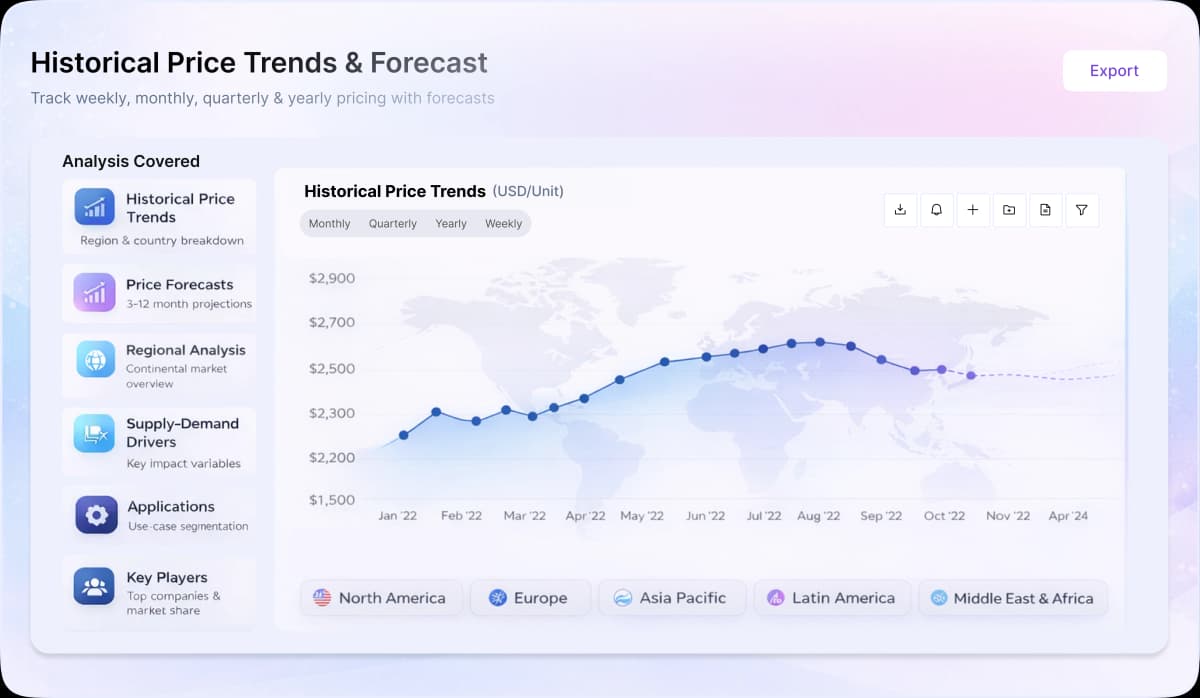
Price trends across a diverse portfolio of categories and products, spanning board to niche chemicals
Coverage extendable to grade-specific chemicals based on procurement requirements
Regular price tracking supported by robust historical datasets
News, policy updates, and key market drivers impacting price movements
Short-term and long-term price outlooks and forecasts
Supply-demand dynamics and capacity-driven market analysis