

Udeesha Tomar
AVP - Strategy and Solutions
Leading procurement research solutions across chemicals, materials, and food & beverages, with expertise in price forecasting and market analytics.

The fourth quarter exhibited notable volatility in global pigment markets, with titanium dioxide pricing dynamics reflecting shifting cost structures and demand patterns. The period commenced with modest appreciation as several major producers implemented price adjustments, though downstream purchasing activity remained subdued. Market sentiment displayed cautious characteristics, with buyers adopting wait-and-see positions amid uncertain demand visibility. Inventory levels at producer facilities remained elevated, creating pressure on spot transaction negotiations. Mid-quarter trading witnessed initial weakness as limited new order activity and constrained end-user demand prompted temporary price softening. However, escalating production costs from raw material inputs, energy expenses, and environmental compliance requirements provided increasing support to manufacturer pricing strategies. Multiple domestic and international producers announced successive price increases in response to cost pressures, though actual transaction values reflected ongoing market resistance.
The latter portion of the quarter brought renewed appreciation as accumulated cost burdens prompted additional price adjustment announcements from leading manufacturers. Export activity fluctuated throughout the period, with monthly shipment volumes displaying variability against year-earlier comparisons. Import flows declined progressively, reflecting both domestic supply adequacy and price competitiveness considerations. Market conditions remained characterized by negotiation-based pricing, with buyers demonstrating selective purchasing behaviour and manufacturers facing challenges in fully implementing announced increases.
Analyst Insight
According to Procurement Resource, pigment prices are expected to maintain upward bias as production cost pressures persist and manufacturers seek to implement accumulated price adjustments.
Related Report
Need Latest Pigments Prices?
Get real-time price assessments, periodic trends, forecasts and price driver insights across key global markets.
Our Clients































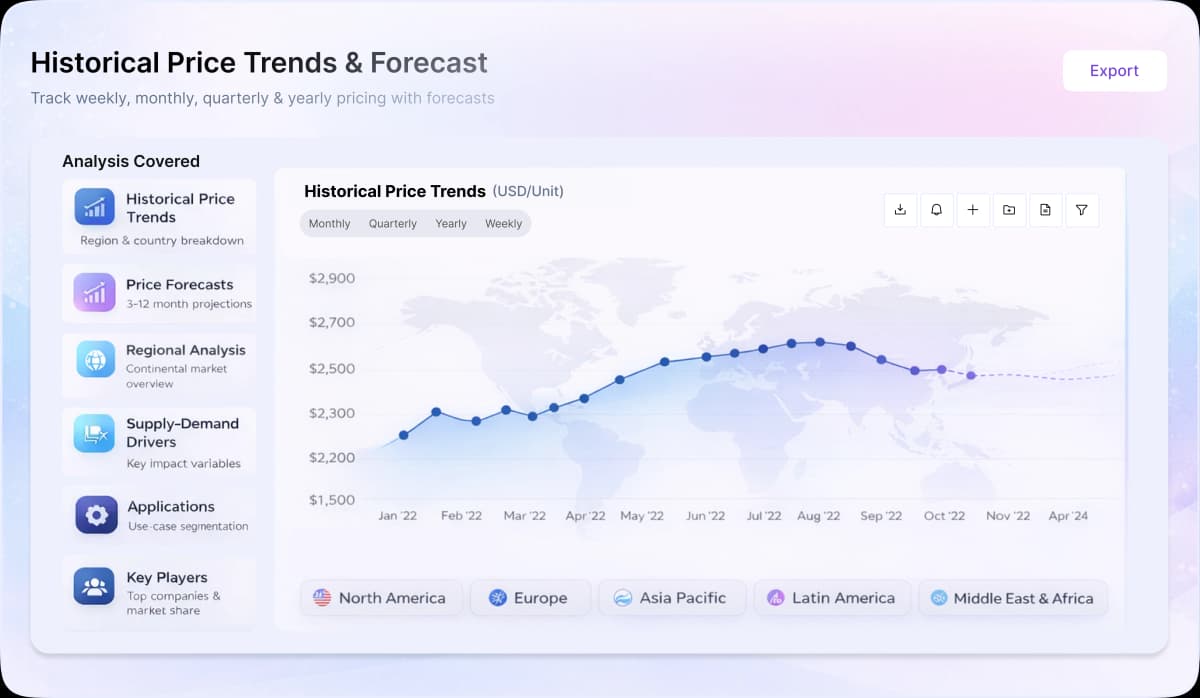
Turn price intelligence into action with the Procurement Resource Database. Log in or subscribe to unlock live price trends, historical charts, supplier databases, cost curves, and analyst-backed insights across chemicals, agriculture, energy, packaging, and more. Use these tools to benchmark your contracts, plan budgets with confidence, and stay ahead of market moves on every product you buy.
0
+Products
0
+Regions
0
+Subscriptions
In Q3 of 2025, the pigments market, including titanium dioxide-based pigments, experienced fluctuations influenced by weak demand and cost pressures. Initially, the market saw a decline in prices as downstream industries such as coatings, plastics, and automotive showed subdued buying activity. This weak demand led to cautious purchasing decisions, with prices adjusting downwards, particularly in titanium dioxide pigments. The overall market sentiment was affected by high raw material costs and the limited movement in trading activity.
However, by the end of the quarter, the pigments market, including titanium dioxide, stabilized, with some price increases announced by manufacturers. Despite these increases, demand remained stagnant, and buyers were hesitant, leading to limited transactions. Raw material costs continued to exert pressure, but the market remained largely consolidated, with manufacturers adopting a wait-and-see approach. In the short term, the pigments market is expected to stay relatively stable, with prices remaining firm amid ongoing supply and demand imbalances.
A Pigment refers to a material which can modify, change or alter the colour of the reflected light as a result of the wavelength-selective absorption. They improve the properties of a substance, and unlike dyes, do not rely on water solubility for their application. Pigments are available in both temporary and permanent forms. Fugitive, that is, temporary pigments fade over time upon exposure to heat and light, while some eventually blacken. They find applications in industries like plastics, construction, textile, and others.
Paint and Coatings, Printing Inks, Metallic Lustre Coatings, Ceramics, Paper and Pulp, Construction Materials
Tronox, Inc, BASF SE, Pidilite Industries Limited, Huntsman International LLC, Sensient Technologies Corporation, Clariant AG, Lanxess AG
CurrencyUS$ (Data can also be provided in local currency)
Supplier Database AvailabilityYes
Customization ScopeThe report can be customized as per the requirements of the customer
Post-Sale Analyst Support360-degree analyst support after report delivery
Note: Our supplier search experts can assist your procurement teams in compiling and validating a list of suppliers indicating they have products, services, and capabilities that meet your company's needs.
While the synthetic organic pigments are extracted from coal tars and other petrochemicals, inorganic pigments are produced via the process of oxidation. Mostly, organic pigments are synthesised from aromatic hydrocarbons, which contain structures of carbon atoms with attached hydrogen atoms forming closed rings. An example of such organic pigments include azo pigments, which have a nitrogen group attached to it.
Our Price Analysis Methodology
AVP - Strategy and Solutions
Leading procurement research solutions across chemicals, materials, and food & beverages, with expertise in price forecasting and market analytics.
Experience how Procurement Resource transforms raw material price data into clear, decision ready intelligence. Optimise your performance with reliable, expert market data and analysis. Schedule your demo today to experience a live walk-through where our experts will showcase interactive price charts, forecasted prices, and insights driving the prices for your key commodities, tailored to your workflows. Contact us now!
Our Team will be happy to assist you
We are just a text away
Still Need Help?
Unlock full access to Procurement Resource's price databases, interactive charts, and short-term forecasts for thousands of commodities. Elevate your sourcing decisions by comparing prices across regions, downloading historical data, and layering in analyst-backed insights, all with our flexible plans that scale as your portfolio grows.
Still have any Questions
Contact Us



Price Trend Dashboard - What's Included
Price trends across a diverse portfolio of categories and products, spanning board to niche chemicals
Coverage extendable to grade-specific chemicals based on procurement requirements
Regular price tracking supported by robust historical datasets
News, policy updates, and key market drivers impacting price movements
Short-term and long-term price outlooks and forecasts
Supply–demand dynamics and capacity-driven market analysis

Track prices, market movements, supply-demand dynamics, and industry developments across hundreds of commodities through a centralized intelligence platform built for informed procurement decisions.

Understand market fluctuations using analyst-backed forecasts, historical pricing patterns, and evolving industry trends to strengthen sourcing strategies and budget planning.

Leverage cost models, pricing benchmarks, and procurement insights to evaluate purchasing opportunities, improve negotiations, and enhance operational efficiency.
Access region-specific price trends, trade activities, capacity changes, and supply chain developments influencing commodity markets worldwide.