Udeesha Tomar
AVP - Strategy and Solutions
Leading procurement research solutions across chemicals, materials, and food & beverages, with expertise in price forecasting and market analytics.

Viscose Spunlace is a hydroentangled nonwoven fabric made from viscose and polyester fibres, used across personal care and hygiene applications including wet wipes, dry hair towels, facial cleansing pads, and medical grade nonwovens. Its pricing tracks viscose staple fibre and polyester staple fibre, so volatility in wood pulp or petrochemical markets transmits quickly to finished spunlace rolls.
Entering H1 2026, the market carried a cautious, soft undertone extending the weakness of 2025. In China, the dominant producer and exporter, mill inventories stayed elevated early in the year as hygiene and personal care manufacturers restrained buying and drew down stock. Viscose staple fibre costs were manageable through January and February on adequate pulp availability and subdued energy costs, while polyester staple fibre tracked a range bound course, leaving sellers unable to push through increases. South and Southeast Asia were modestly more constructive, with Indian producers supported by seasonal hygiene demand and export enquiries. European buyers began well stocked after prudent Q4 procurement, with interest reviving late in Q1 as inventories thinned. In Q2, Chinese export enquiries strengthened on Latin American and Middle Eastern interest, domestic restocking resumed ahead of summer demand, and European buyers committed to mid term volumes, taking the market from soft to cautiously stabilising.
Analyst Insight
According to Procurement Resource, Viscose Spunlace prices should stay range bound through H2 2026 as soft feedstock costs meet cautiously recovering hygiene demand. A sustained pickup in Chinese domestic offtake or firmer viscose staple fibre costs would tilt the balance toward modest recovery, while ample pulp and polyester availability remains the main cap on upside.
Related Report
Need Latest Viscose Spunlace Prices?
Get real-time price assessments, periodic trends, forecasts and price driver insights across key global markets.
Our Clients































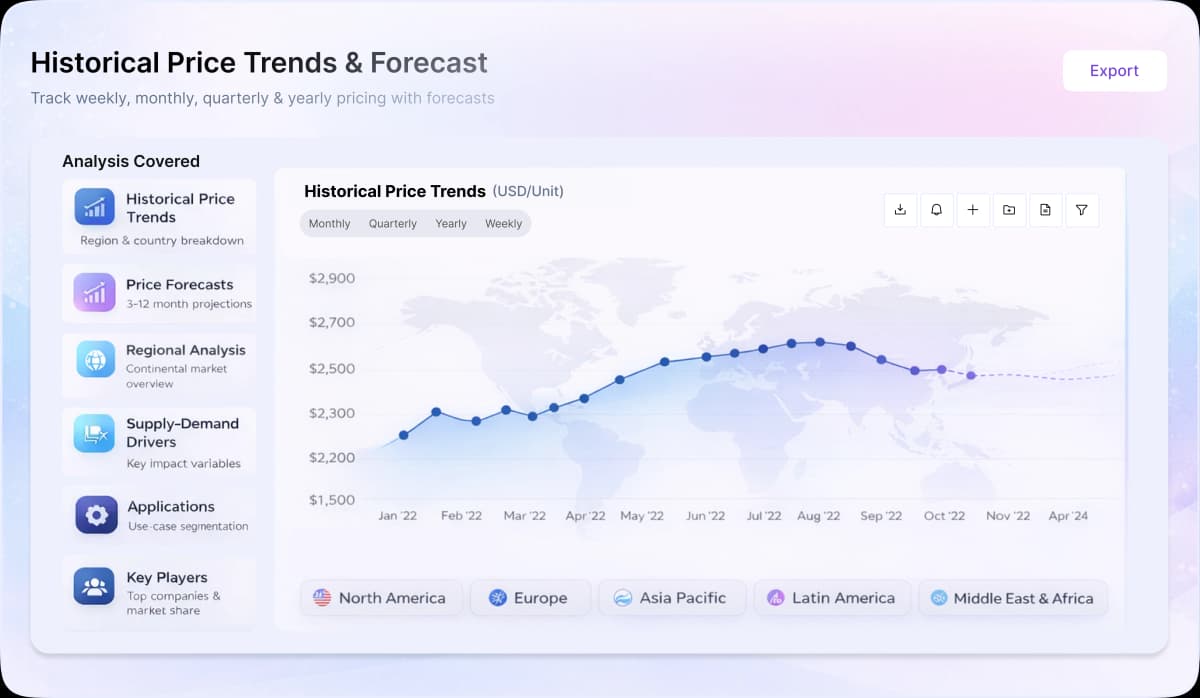
Turn price intelligence into action with the Procurement Resource Database. Log in or subscribe to unlock live price trends, historical charts, supplier databases, cost curves, and analyst-backed insights across chemicals, agriculture, energy, packaging, and more. Use these tools to benchmark your contracts, plan budgets with confidence, and stay ahead of market moves on every product you buy.
0
+Products
0
+Regions
0
+Subscriptions
Asia
In Q1’25, the Viscose Spunlace market in Asia experienced a mixed trend, similar to the broader viscose fibre market. January and early February saw steady demand from hygiene and nonwoven sectors, supported by active replenishment after the New Year holidays. Manufacturers resumed operations gradually, which helped avoid supply surpluses and kept prices stable to slightly firm. However, as February progressed, demand softened due to tight liquidity in downstream sectors and cautious purchasing behaviour.
The market saw a further slowdown in March, with increasing inventories and weaker orders from export markets. While feedstock availability remained stable and freight rates declined, sluggish textile and hygiene sector consumption weighed on prices. Overall, the quarter ended on a weaker note for the Asian Viscose Spunlace market.
Europe
The European Viscose Spunlace market showed a largely positive tone during the first two months of Q1’25. Strong post-holiday demand, especially from the hygiene and personal care industries, drove active restocking. Supply constraints due to ongoing port congestion and labor disruptions added upward pressure to prices during January and February.
However, March brought a mild correction as supply conditions improved and demand growth slowed. Buyers turned cautious amid softening global economic signals and concerns over excess inventory. Despite lingering logistical challenges and steady production costs, the market faced slight downward pressure toward the end of the quarter.
North America
In North America, the Viscose Spunlace market followed a bearish path throughout Q1’25. January began with optimism as buyers moved quickly to secure materials amid concerns of port strikes and rising freight costs. However, as the quarter advanced, market sentiment turned weaker.
Inventory levels remained high, imports continued steadily, and demand from nonwovens and hygiene sectors lost momentum. March saw reduced buyer activity, influenced by soft consumer spending and ongoing uncertainty around trade policies and tariffs. Lower freight rates and stable feedstock prices offered little support, and overall pricing softened through the quarter.
Viscose Spunlace is Spunlace nonwoven polyester and viscose fabric material comprising viscose and polyester fibre made using a hydroentangled bonding technology. It has great durability, liquid absorbent qualities, tough grime-clean capacity, and is food contact grade (SGS) proved.
Used to make products like dry hair towels, wet wipes, and facial wash towels in the healthcare and hygiene industry, to make special water–processed cloth.
Spunlace Viscose, Spun-lace Non-woven, Viscose Spunlace Fabric
Marusan Industry, Alpha Foam, Unitika, Mogul, Ginni Nonwovens, ANDRITZ, Novita SA, Birla Cellulose, Jacob Holm Group, Lentex, Guangzhou Junqian Nonwoven, Hangzhou Guozhen Industrial, Qingdao L&A Orient Nonwoven Manufacture, Hangzhou Nonwoven Supply (Hangzhou Source Nonwoven), Weston, Sheng Hung Industrial
CurrencyUS$ (Data can also be provided in local currency)
Supplier Database AvailabilityYes
Customization ScopeThe report can be customized as per the requirements of the customer
Post-Sale Analyst Support360-degree analyst support after report delivery
Note: Our supplier search experts can assist your procurement teams in compiling and validating a list of suppliers indicating they have products, services, and capabilities that meet your company's needs.
Viscose spunlace production involves spinning viscose and polyester fibers and subjecting them to hydroentanglement using high-pressure water jets. This process enables the spinning and entangling of non-woven webs. After hydroentanglement, the non-woven material is dried and wound onto spools for further use.
Our Price Analysis Methodology
AVP - Strategy and Solutions
Leading procurement research solutions across chemicals, materials, and food & beverages, with expertise in price forecasting and market analytics.

Experience how Procurement Resource transforms raw material price data into clear, decision ready intelligence. Optimise your performance with reliable, expert market data and analysis. Schedule your demo today to experience a live walk-through where our experts will showcase interactive price charts, forecasted prices, and insights driving the prices for your key commodities, tailored to your workflows. Contact us now!
Our Team will be happy to assist you
We are just a text away
Still Need Help?
Europe & Africa
+44 7573 171117
Sales@procurementresource.com
USA & Canada
+1 307 363 1045
Sales@procurementresource.com
APAC
+91 8850629517
Sales@procurementresource.com
The report contains the cost analysis of PET production using DMT process.
Unlock full access to Procurement Resource's price databases, interactive charts, and short-term forecasts for thousands of commodities. Elevate your sourcing decisions by comparing prices across regions, downloading historical data, and layering in analyst-backed insights, all with our flexible plans that scale as your portfolio grows.
Still have any Questions
Contact Us



Price Trend Dashboard - What's Included
Price trends across a diverse portfolio of categories and products, spanning board to niche chemicals
Coverage extendable to grade-specific chemicals based on procurement requirements
Regular price tracking supported by robust historical datasets
News, policy updates, and key market drivers impacting price movements
Short-term and long-term price outlooks and forecasts
Supply–demand dynamics and capacity-driven market analysis

Track prices, market movements, supply-demand dynamics, and industry developments across hundreds of commodities through a centralized intelligence platform built for informed procurement decisions.

Understand market fluctuations using analyst-backed forecasts, historical pricing patterns, and evolving industry trends to strengthen sourcing strategies and budget planning.

Leverage cost models, pricing benchmarks, and procurement insights to evaluate purchasing opportunities, improve negotiations, and enhance operational efficiency.
Access region-specific price trends, trade activities, capacity changes, and supply chain developments influencing commodity markets worldwide.