Udeesha Tomar
AVP - Strategy and Solutions
Leading procurement research solutions across chemicals, materials, and food & beverages, with expertise in price forecasting and market analytics.

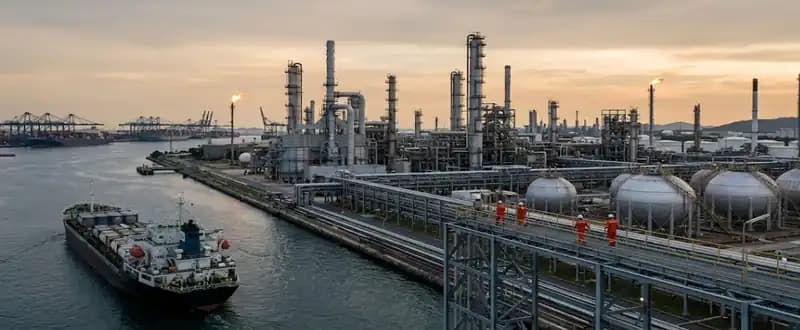
Asian petrochemical prices have come under fresh downward pressure following the Labour Day holiday in China, with weaker upstream crude values and softening demand for downstream products weighing on sentiment across the region. Cracker run rates outside China have moved higher as naphtha cargoes from non-Middle East origins began arriving in May, easing the feedstock squeeze that had pushed regional run rates as low as 50 to 60 percent since the U.S.-Iran conflict erupted in late February.
Naphtha crackers in northeast and southeast Asia have lifted output, with Thailand's IRPC, Indonesia's Chandra Asri, South Korea's GS Caltex, KPIC, HD Hyundai Chemical and Lotte Chemical's Daesan facility all reported to have raised operating rates. Despite firm naphtha values, ethylene and propylene prices have weakened for three consecutive weeks under the combined weight of crude oil losses and compressed derivative margins. June ethylene discussions in southeast Asia have largely stalled, with buyers holding back to monitor further upstream movement.
Request the Latest Naphtha Price Data - Get Your Free Sample Report
Within China, the situation has been markedly different. Ethylene producers in the country have trimmed operating rates for May, citing high costs and constrained feedstock supply. Carbide-based polyvinyl chloride producers, in contrast, have continued at full capacity to capitalise on tight supply conditions and elevated prices. Buyers from India have continued to source competitively priced carbide material from China, although overall Indian demand has begun softening as the monsoon period approaches in the third quarter.
Trade flows have also adjusted sharply. China's polypropylene exports rose to roughly 406,000 tonnes in March, up from approximately 244,000 tonnes the previous month, with India accounting for around 13 percent of that volume. Polypropylene exports overall are expected to remain firm in April as Chinese coal-based producers continue to capture share from Middle Eastern producers cut off by the closure of the Strait of Hormuz. Northeast Asia and southeast Asia historically rely on the Middle East for 21 percent and 31 percent of their polyethylene demand respectively, and that gap has proven difficult for non-Chinese suppliers to fill.
Procurement Resource has indicated that Asian polyolefin prices are likely to face further downward pressure once Middle East tensions ease and crude prices retreat, though the correction is expected to unfold gradually rather than in a single step. The bearish outlook is reinforced by potential production cuts in downstream segments such as polyethylene if performance there continues to deteriorate. For procurement teams in plastics, packaging and fibres, the current pricing environment offers a narrow tactical window to balance spot and contract exposure, particularly for Indian buyers entering the seasonal monsoon lull.
AVP - Strategy and Solutions
Leading procurement research solutions across chemicals, materials, and food & beverages, with expertise in price forecasting and market analytics.


.webp&w=1080&q=75)
We are Just a Text away