Prakhar Panchbhaiya
Assistant Manager: Business Insights and Content
Supporting procurement teams with category intelligence, market research, price trends, supply-demand analysis, and strategic sourcing insights across key industries.

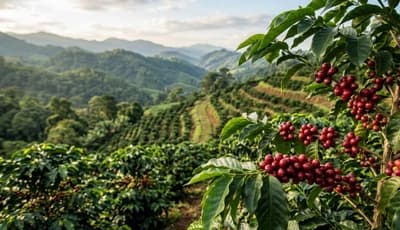
Brazil’s expected record coffee crop could be reduced by 15% to 20% as El Niño brings excessive heat and irregular rainfall, according to the Brazilian Coffee Industry Association. The warning places a large portion of the projected harvest at risk and gives roasters a reason to review forward coverage for arabica and canephora beans.
Brazilian crop agency Conab has forecast total production of 66.7 million 60-kilogram bags. A reduction of 15% to 20% from that figure would equal about 10 million to 13.3 million bags, though the industry warning is not an official revised production forecast. The scale shows how weather losses could alter global availability if crop damage reaches the upper end of the range.
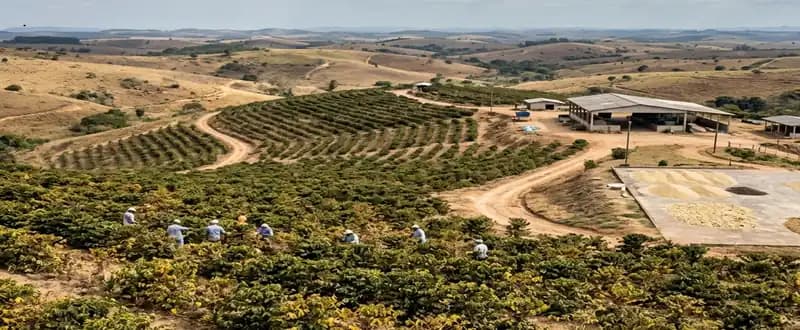
Growers are better prepared than during earlier El Niño periods. Irrigation has expanded, farm practices have improved and some producers use cooling systems to protect plants during hot weather. These investments reduce dependence on rainfall, but they do not fully protect flowering, ripening or bean quality.
The greatest concern lies in the biological cycle during the second half of 2026. Uneven rainfall can interrupt flowering, and high temperatures can reduce successful fruit development. Irregular ripening also raises harvesting costs and can lower the proportion of beans meeting premium quality specifications.
Request the Latest Coffee Prices Data - Access Price Insights Now
Recent rainfall has already delayed harvesting in some arabica areas and caused cherries to fall to the ground. Espírito Santo, the country’s largest canephora-producing state, has experienced longer dry intervals broken by shorter and heavier downpours. Its conilon production is expected to decline by 15% this year, partly due to the crop’s normal high-yield and low-yield cycle.
Conditions are better in Rondônia, where farmers expect production to reach 3 million bags, above Conab’s 2.77 million-bag forecast. Widespread irrigation in the state’s robusta farms offers more protection from heat and drought than many arabica areas currently have.
For buyers, the issue extends beyond total crop size. Delayed harvests, fallen cherries and uneven ripening can widen quality differentials before outright supply becomes scarce. Roasters dependent on specific cup profiles may face higher premiums even when exchange prices do not fully reflect local quality losses.
Purchasing teams can reduce exposure by securing graded coffee earlier, widening approved origins and reviewing substitution limits between arabica and robusta-based formulations. Supplier contracts should also address delivery delays and quality claims arising from weather-damaged lots.
Brazil could still produce a large crop, but the range of outcomes has widened. Forward procurement decisions now need to account for losses in volume, lower bean quality and uneven conditions between producing states.
Assistant Manager: Business Insights and Content
Supporting procurement teams with category intelligence, market research, price trends, supply-demand analysis, and strategic sourcing insights across key industries.


We are Just a Text away