Udeesha Tomar
AVP - Strategy and Solutions
Leading procurement research solutions across chemicals, materials, and food & beverages, with expertise in price forecasting and market analytics.

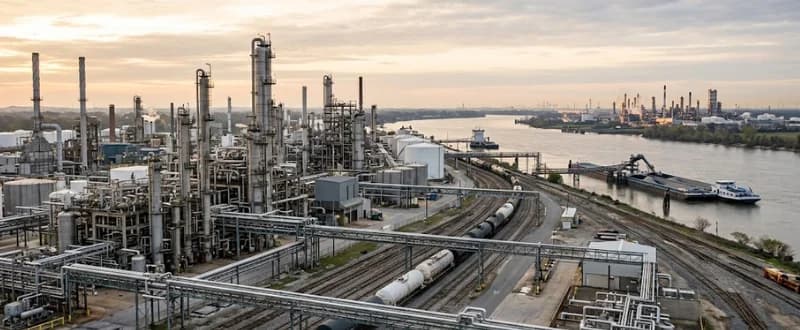
Specialty chemicals manufacturer LANXESS has announced a global increase in prices for trimethylolpropane, raising rates by about 20 percent with immediate effect as cost pressures continue to mount across its production chain.
The move comes as the company faces sustained increases in energy expenses and feedstock costs, both of which have intensified over recent months. Rising input prices linked to petrochemical derivatives and utilities have made it difficult for producers to maintain earlier pricing levels. Industry data shows that trimethylolpropane production relies heavily on materials such as formaldehyde and n-butyraldehyde, whose prices are tied to fluctuations in upstream oil and gas markets.
Energy has been another major factor behind the adjustment. Manufacturing the compound requires significant power and heat, leaving producers exposed to swings in natural gas and electricity markets. Previous spikes in gas prices, especially in Europe, have sharply increased operating costs for chemical plants, forcing companies to pass on part of the burden to customers.
Trimethylolpropane is widely used as a building block in industrial materials, particularly in coatings, resins and lubricants. It plays a key role in producing alkyd resins and polyester polyols that are used in automotive finishes, construction coatings and marine applications due to their durability and resistance to weathering. The compound is also used in adhesives, sealants, synthetic lubricants and plastic additives, as well as in specialty fluids where stability and low volatility are required.
Request the Latest Trimethylolpropane (TMP) Price Data - Download Your Free Sample PDF
Demand from these sectors has remained closely tied to activity in construction, automotive manufacturing and industrial production. At the same time, supply conditions have been affected by periodic plant shutdowns, regulatory pressures and shifts in global trade flows. Market assessments indicate that pricing for the chemical tends to react quickly to changes in raw material availability, energy costs and supply-demand balance.
LANXESS indicated that it had attempted to absorb higher costs but concluded that a price revision was necessary to maintain stable supply over the long term. The increase applies across all regions and reflects the broader strain on chemical producers dealing with volatile input markets and uneven industrial demand.
AVP - Strategy and Solutions
Leading procurement research solutions across chemicals, materials, and food & beverages, with expertise in price forecasting and market analytics.
.webp&w=1080&q=75)
.webp&w=1080&q=75)
.webp&w=1080&q=75)
.webp&w=1080&q=75)
.webp&w=1080&q=75)
We are Just a Text away