Prakhar Panchbhaiya
Assistant Manager: Business Insights and Content
Supporting procurement teams with category intelligence, market research, price trends, supply-demand analysis, and strategic sourcing insights across key industries.

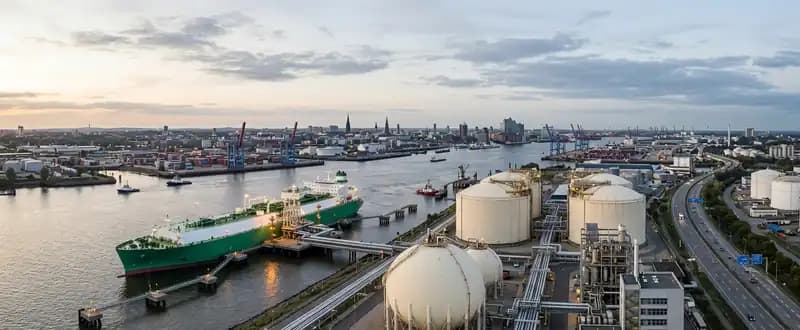
Three companies with very different roles in the ammonia value chain have agreed to explore building a new import route into Germany, a move that could reshape how European industrial buyers source the chemical in the years ahead. Covestro, Fertiglobe, and MB Energy signed a memorandum of understanding during a state visit to Germany by the President of the United Arab Emirates, bringing together a major ammonia producer, an energy infrastructure operator, and one of Europe's largest industrial consumers of the chemical.
Under the agreement, Fertiglobe will examine supplying ammonia through an import terminal that MB Energy is proposing to build and operate at Blumensand in Hamburg. Fertiglobe describes itself as the world's largest seaborne exporter of urea and ammonia, giving the proposed terminal potential access to a substantial base of supply. The company is also weighing a possible equity stake in the terminal itself, which would tie its interests more closely to the success of the project.
Covestro's role centers on demand. The polymer materials producer will study taking ammonia delivered through the terminal both as a feedstock for its own production processes and as a potential source of hydrogen. Ammonia can serve as a hydrogen carrier, and Covestro has flagged reducing the carbon footprint of its production as a strategic priority, which makes access to lower-carbon ammonia supply routes commercially relevant.
Request the Latest ammonia Prices Data - Access Price Insights Now
The three parties plan to jointly evaluate the commercial, technical, and logistical requirements for moving ammonia through Hamburg, including terminal capacity, delivery volumes, and the onward transportation network needed to reach industrial customers. That includes assessing pipelines, barges, and rail links connecting the terminal to end users beyond Hamburg itself.
The companies say the arrangement is not limited to conventional ammonia. They will also consider lower-carbon and renewable grades, and will weigh the carbon intensity of potential supply against emerging regulatory frameworks, including the European Union's Carbon Border Adjustment Mechanism and applicable low-carbon hydrogen requirements. That positions the project as much around future compliance costs as around near-term volume.
For buyers watching European ammonia availability, the significance lies less in any immediate volume commitment and more in the creation of an additional, purpose-built entry point for imports at a time when several European producers have faced high energy costs and reduced domestic output. A new terminal route, if developed, would give industrial consumers another supplier relationship to draw on beyond existing pipeline and rail-fed sources.
Executives from all three companies framed the project around supply security as much as decarbonization. MB Energy's chief executive pointed to the need for reliable infrastructure to move lower-carbon ammonia to industrial scale, while Fertiglobe's chief executive tied the move to expanding routes to market for the company's global ammonia platform. No timeline for a final investment decision was disclosed.
Assistant Manager: Business Insights and Content
Supporting procurement teams with category intelligence, market research, price trends, supply-demand analysis, and strategic sourcing insights across key industries.
We are Just a Text away