- TC Energy's Columbia Gas Transmission declared force majeure on the Mountaineer Xpress pipeline, cutting 1.4-1.8 bcf/d of Appalachian flows.
- US Lower 48 daily gas output was set to fall to a near-eight-month low of 106.9 bcfd, even as the monthly average hit a record 112.5 bcfd.
- LNG feedgas deliveries to nine major export terminals rose to 17.9 bcfd in September from 17.2 bcfd in August, despite Cove Point's planned maintenance shutdown.
- US storage surplus versus the five-year average narrowed to an estimated 2.4%, down from 2.9% the prior week, after a hot summer drew down inventories.
- International gas benchmarks (TTF near $24/mmBtu, JKM near $26/mmBtu) remain well above US prices, continuing to support export demand.
US natural gas futures gave back some ground, falling about 4.6% on the day, as traders weighed lower demand forecasts for the coming week against a market perception that a pipeline problem in West Virginia would be resolved soon.
Front-month gas futures for October delivery fell 15.1 cents to $3.146 per million British thermal units, on their second-to-last day as the lead contract. That followed a 9% surge the prior session that had pushed the contract to its highest close since late June, driven in part by a drop in daily output tied to a pipeline incident.
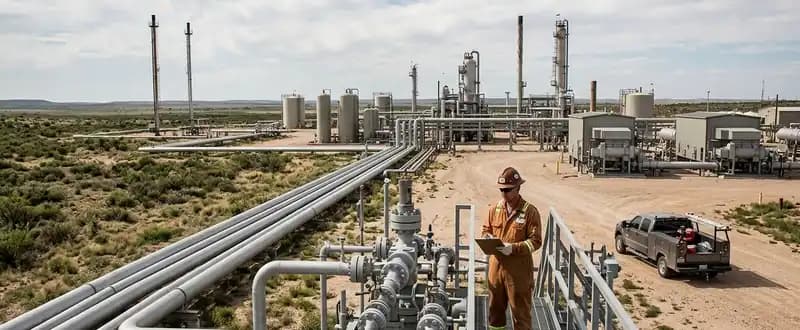
The disruption traces to TC Energy's Columbia Gas Transmission unit, which declared force majeure on its Mountaineer Xpress pipeline after a mechanical issue affected roughly 1.4 to 1.8 billion cubic feet per day of flows. The company said crews were working to fix the problem and would update customers again soon.
Request the Latest Natural gas Prices Data - Access Price Insights Now
The outage showed up directly in national output figures. Average Lower 48 production had climbed to a monthly record of 112.5 billion cubic feet per day so far in September, but was on track to fall to a near-eight-month low of 106.9 bcfd on the day of the report, with declines concentrated in West Virginia and Texas.
On the inventory side, record output and mild spring weather had kept storage levels running above the five-year average since March, reaching as much as 7.7% above normal in April. But hotter-than-normal summer weather forced utilities to draw down gas to meet air-conditioning demand, narrowing that surplus. Analysts expected the week-ending storage figure to show inventories at 2.4% above normal, down from 2.9% the prior week. Forecasters called for mostly near-normal weather through mid-October, with Lower 48 demand, including exports, projected to fall from 108.0 bcfd to 102.8 bcfd the following week before rebounding.
LNG export demand continued to provide underlying support. Average feedgas deliveries to the nine largest US export terminals rose to 17.9 bcfd so far in September, up from 17.2 bcfd in August, even with Berkshire Hathaway Energy's Cove Point LNG plant in Maryland offline for several weeks of planned annual maintenance starting around September 19. Internationally, gas traded near $24 per mmBtu at the Dutch TTF benchmark and $26 at the Japan-Korea Marker, underscoring the price gap that continues to support US LNG exports.





.webp&w=1080&q=75)
.webp&w=1080&q=75)