
Prakhar Panchbhaiya
Assistant Manager: Business Insights and Content
Supporting procurement teams with category intelligence, market research, price trends, supply-demand analysis, and strategic sourcing insights across key industries.

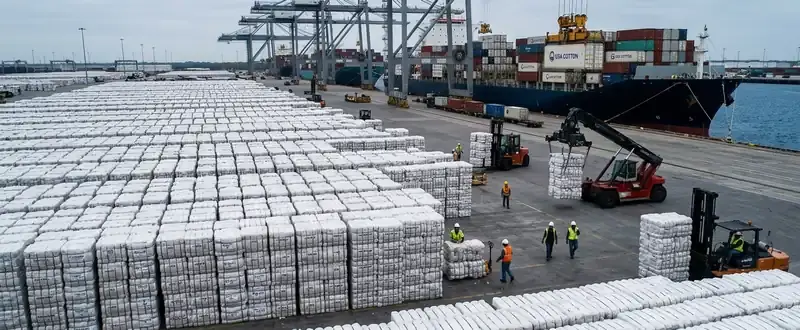
The United States and China have taken a fresh step toward easing trade friction on agricultural goods, naming cotton among the products eligible for reduced tariff treatment under a new bilateral framework announced this week.
The agreement came on the heels of Chinese President Xi Jinping's visit to Washington, D.C., where the two governments announced they had reached a broader trade consensus. As part of those talks, the two sides established what they are calling a "30 for 30" framework, under which each government has identified $30 billion worth of agricultural and other non-sensitive products for consideration under more favorable tariff treatment.
Both countries published lists of products to be considered for import through this reduced tariff treatment via the newly formed U.S.-China Board of Trade. Cotton appeared explicitly on that list, alongside other major agricultural commodities including corn, wheat, sorghum, meat, barley and oats.
Request the Latest cotton Prices Data - Access Price Insights Now
The framework stops short of specifying exactly how much China's tariff on US cotton imports would be reduced, and no implementation timeline has been established. Despite that uncertainty, industry groups welcomed the development as a sign of forward movement in a relationship that has weighed heavily on US cotton exports in recent years.
China has historically been the largest export destination for American cotton, making any shift in tariff treatment there particularly consequential for US growers and exporters. The National Cotton Council and other industry voices expressed appreciation for the progress, while noting that concrete details are still to come.
"Efforts to reduce trade barriers and create opportunities for increased demand are positive steps for U.S. cotton," said National Cotton Council Chairman Nathan Reed. "We look forward to continued efforts that support expanded market access and policies that strengthen the competitiveness of U.S. cotton in the global marketplace."
For buyers and sellers in the cotton trade, the announcement represents a potentially meaningful but still undefined shift. Without a specified tariff reduction percentage or a start date, market participants are left to watch for further details from the Board of Trade before adjusting sourcing or pricing strategies tied to the China market.
Assistant Manager: Business Insights and Content
Supporting procurement teams with category intelligence, market research, price trends, supply-demand analysis, and strategic sourcing insights across key industries.



.webp&w=1080&q=75)
.webp&w=1080&q=75)
We are Just a Text away
.webp&w=1080&q=75)
.webp&w=1080&q=75)
-(1).webp&w=1080&q=75)
.webp&w=1080&q=75)