
Prakhar Panchbhaiya
Assistant Manager: Business Insights and Content
Supporting procurement teams with category intelligence, market research, price trends, supply-demand analysis, and strategic sourcing insights across key industries.


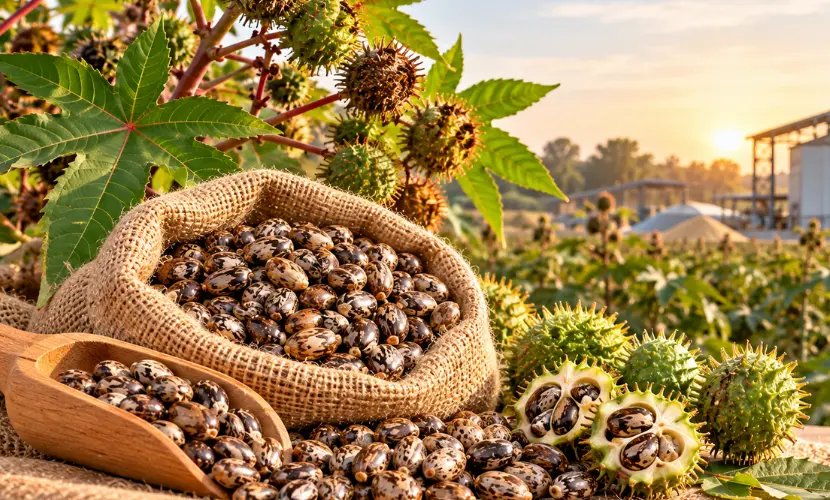
Indian castor seed markets held firm through the third week of September 2026, with prices at leading Gujarat mandis staying near multi month highs on continued export demand and tighter arrivals ahead of the new rabi crop. The average castor seed price at Gujarat mandis stood at about 7,402 rupees per quintal on September 23, with individual yards trading in a range of 5,000 to 7,675 rupees per quintal depending on grade and location. Deesa Bhildi, Palanpur, Vijapur, and Visnagar all reported average prices between 74.55 and 76.75 rupees per kilogram, one of the tightest cluster ranges seen this quarter.
At the all India level, the national castor seed average sat close to 7,367 rupees per quintal on September 24, with Mansa and Unava in Gujarat quoting some of the highest levels at around 76 to 77 rupees per kilogram. Rajkot in the Saurashtra belt traded a touch softer at about 71.35 rupees per kilogram, while Kurnool in Andhra Pradesh, another producing region, reported values close to 73.30 rupees per kilogram. Regional traders said that farmer holding activity was firm across northern Gujarat, with growers slow to release remaining old crop stocks ahead of harvest expectations for the coming season.
Request the Latest Castor Seed Prices Data - Access Price Insights Now
The export story kept a firm bid under the market. India accounts for more than 90 percent of global castor oil supply, and offtake from lubricant, cosmetic, plasticizer, and pharmaceutical buyers in China, the European Union, and the United States continued through September. Traders reported that overseas buyers were locking in October and November shipment cover, with paid up letter of credit business at ports of Kandla and Mundra staying active. Refined castor oil spot values in the Kandla belt tracked castor seed higher through the reference week.
Weather and sowing signals stayed constructive. Sowing area for the 2025 to 2026 castor cycle had already expanded, and area maintenance for the coming rabi cycle looks broadly stable as Gujarat and Rajasthan farmers remain attracted by castor's competitive returns against alternative rabi crops. Any disruption to the monsoon withdrawal in Gujarat and Rajasthan through the last week of September will decide whether new crop arrivals from November onwards keep the market well supplied or leave a short window of tightness open into the December delivery period.
For procurement teams in derivatives, oleochemical, and pharmaceutical formulation segments, the near term action is to secure October and November castor oil coverage at current spot values before Diwali freight competes for space. Lubricant and coating buyers should confirm bilateral offtake volumes from Gujarat refiners while arrivals remain in a farmer holding mode. Overseas buyers of first special grade oil should stress test fourth quarter budgets against a scenario where India Kandla spot values firm by another 3 to 5 percent through October if new crop arrivals are delayed.
Assistant Manager: Business Insights and Content
Supporting procurement teams with category intelligence, market research, price trends, supply-demand analysis, and strategic sourcing insights across key industries.


We are Just a Text away
.webp&w=1080&q=75)