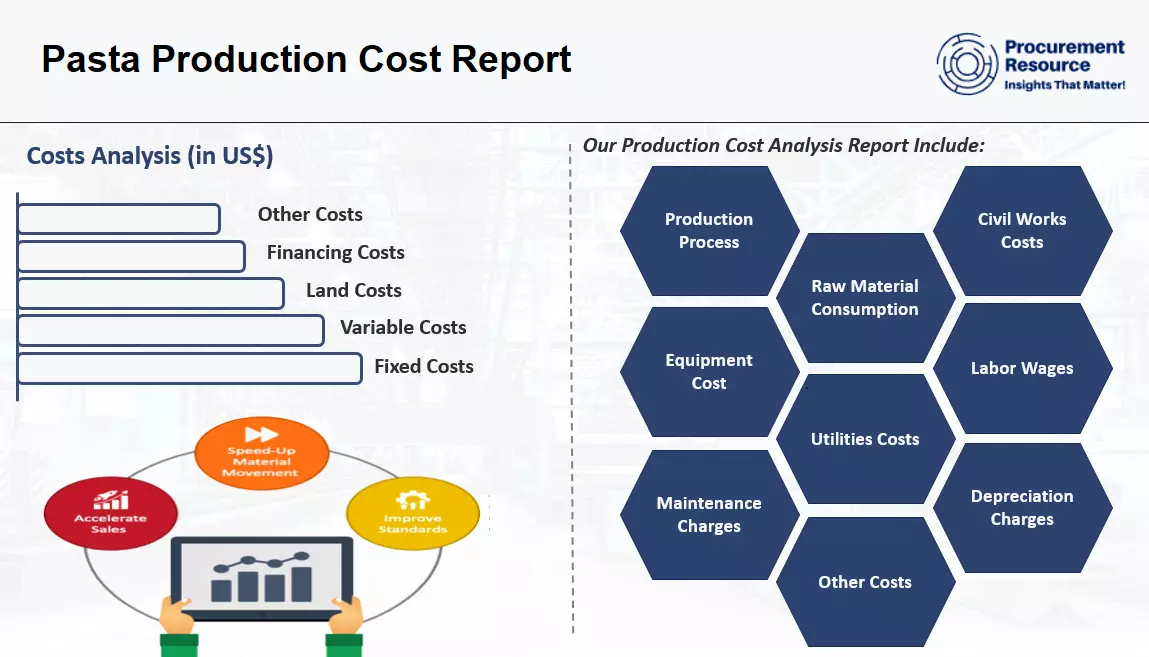
The report provides a detailed analysis essential for establishing a Pasta production plant. It encompasses all critical aspects necessary for Pasta production, including the cost of Pasta production, Pasta plant cost, Pasta production costs, and the overall Pasta production plant cost. Additionally, the study covers specific expenditures associated with setting up and operating a Pasta production plant. These encompass production processes, raw material requirements, utility requirements, infrastructure needs, machinery and technology requirements, manpower requirements, packaging requirements, transportation requirements, and more.
Pasta is a type of food made from a dough of flour, water, and eggs. It is widely utilized worldwide in the preparation of a variety of cuisines or dishes. It is considered a popular carbohydrate and can be used in many ways. It can be paired with vegetables, herbs, or olive oil to make dishes like lasagna, etc. Moreover, it is extensively used in various culinary applications.
The market for Pasta is majorly driven by its applications in the preparation of a variety of dishes, which contributes to its market expansion and increases its demand in the culinary industries, processed food industries, and other food sectors. It is also served in various restaurants, which significantly enhances its demand in the Hospitality industry. Furthermore, the availability and cost of production of Pasta feedstock (semolina, water, etc), Pasta market prices, distribution (including trading and shipping), logistics, and safety standards, etc., are some of the elements that influence industrial Pasta procurement.
Raw Material for Pasta Production
According to the Pasta production plant project report, the major raw materials for Pasta include Semolina-Water.
Manufacturing Process of Pasta
The extensive Pasta production cost report consists of the following industrial production process:
- Production from Rolling and Drying Processes: The process begins with preparing a mixture of semolina, flour, and water, which is constantly kneaded, followed by the addition of flavours and colors. Then, the moisture content of the prepared dough is reduced and is further pressed into thin sheets and pasteurized. After, this it is shaped and dried for selling.
Pasta is a kind of traditional food item made from durum wheat, water, or eggs. It is available in various shapes and is prepared by cooking in boiling water. It can also be made using other grains, like rice, barley, or buckwheat. It is made into a dough using its key ingredients, boiled and then prepared with various sauces.
It is a gluten-containing (elastic protein) dish which is rich in nutrients like B vitamins (which help the functions of the nervous system) and iron. It is lightweight and can hold heat and sauces it's prepared in. It is a versatile and digestible food item that provides energy. Additionally, it has a high fibre content and a low glycemic index which helps prevent cardiovascular disease and tumours.