Acetone Price Trend Analysis 2026: Supply Demand Analysis, Price Drivers, Market Insights, Historical Prices & Latest News

Pragati Agarwal profile photo
Written ByPragati Agarwal

Procurement Resource Database

Laptop screen

Turn price intelligence into action with the Procurement Resource Database. Log in or subscribe to unlock live price trends, historical charts, supplier databases, cost curves, and analyst-backed insights across chemicals, agriculture, energy, packaging, and more. Use these tools to benchmark your contracts, plan budgets with confidence, and stay ahead of market moves on every product you buy.

0

+

Products

0

+

Regions

0

+

Subscriptions

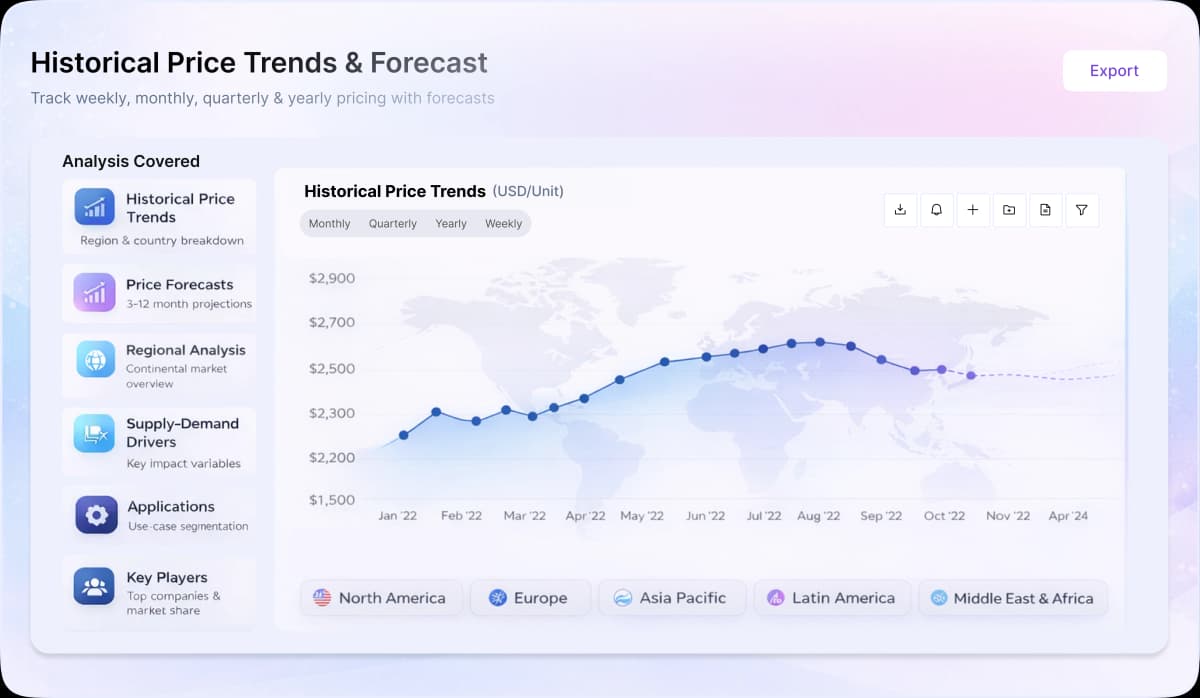
  • Global acetone prices showed an overall upward trend in Q1’26, with strong gains toward the end of the quarter despite temporary softness during the mid-period.
  • Feedstock support from benzene and propylene remained a key driver, keeping production costs elevated and supporting price increases.
  • Downstream demand remained mixed, with stronger uptake from core sectors offsetting weaker recovery in solvents and other applications.

Asia

In Asia, acetone prices showed a sharp upward movement driven by strong cost-side and logistical shocks. In China, the prices were ~4.40 RMB/kg (Spot) in January and ~6.43 RMB/kg in March, and acetone prices increased by ~45%. The increase was mainly driven by a surge in crude oil prices linked to tensions in the Middle East, which disrupted shipping through the Strait of Hormuz and tightened feedstock availability. This pushed up benzene and propylene costs, directly raising acetone production costs. At the same time, controlled imports and limited inventory pressure supported the upward movement. In India, the prices were ~55.74 INR/kg (Spot) in January and ~103.29 INR/kg in March, reflecting an increase of ~80%. The sharper rise was due to higher dependence on imported feedstocks, which made the market more exposed to crude price spikes and logistical disruptions. Supply chain delays, higher freight costs, and stronger cost pass-through amplified the increase, while steady downstream demand supported price transmission.

Europe

In Europe, acetone prices were influenced by fluctuations in feedstock costs and changes in regional supply-demand balance. Higher benzene and crude-linked costs supported the market and prevented a sharper correction during weaker demand phases. At the same time, downstream consumption remained uneven, which limited uninterrupted upward movement. Buyers stayed cautious in procurement, and pricing direction was shaped by a combination of cost support, demand variability, and the availability of imported material. As a result, the European market remained firm overall, but gains were moderated by selective buying behaviour and the absence of uniformly strong downstream consumption.

North America

In the American market, acetone prices were supported by firm feedstock costs and relatively stable downstream demand from industrial and chemical sectors. The market remained generally balanced, with cost-side pressure providing support even when buying activity was not especially aggressive. Regional pricing also reflected broader global market movements, particularly changes in raw material costs and international trade conditions. Demand from core downstream applications helped maintain steady procurement, allowing the market to stay supported through the quarter without showing sharp weakness.


About Acetone

In appearance, Acetone is a colourless organic solvent which has mild, sweetish odour. It is volatile and flammable in nature. Acetone is found naturally in plants and trees. Acetone is miscible with water and is used as an as an important solvent in industry, home, and laboratory. It is extensively used in the production of methyl methacrylate and bisphenol A.

Acetone Product Detail

Chemical Formula

C3H6O

Cas Number
67-64-1
Molecular Weight
58.08 g/mol
Industrial Uses

Adhesives and sealant chemicals, Agricultural chemicals (non-pesticidal), Fuels and fuel additives, Intermediates, Ion exchange agents, Laboratory chemicals, Paint additives and coating additives, Paper waterproofing, Photosensitive chemicals, Propellants and blowing agents, Solvents, Surface active agents, Viscosity adjustors

Synonyms

2-Propanone, Dimethyl ketone, Dimethyl carbonyl, Propanone, 2-Propanone, Dimethyl formaldehyde, Ketone Propane

Supplier Database

Formosa Chemicals and Fibre Corporation (FCFC), Royal Dutch Shell plc, INEOS Phenol GmbH, Mitsui Chemicals Inc., Cepsa Química, S.A.

Regional Coverage

Asia Pacific

China, India, Indonesia, Pakistan, Bangladesh, Japan, Philippines, Vietnam, Iran, Thailand, South Korea, Iraq, Saudi Arabia, Malaysia, Nepal, Taiwan, Sri Lanka, UAE, Israel, Hongkong, Singapore, Oman, Kuwait, Qatar, Australia, and New Zealand

Europe

Germany, France, United Kingdom, Italy,Spain, Russia, Turkey, Netherlands, Poland, Sweden, Belgium, Austria, Ireland Switzerland, Norway, Denmark, Romania, Finland, Czech Republic, Portugal and Greece

North America

United States and Canada

Latin America

Brazil, Mexico, Argentina, Columbia, Chile, Ecuador, and Peru

Africa

South Africa, Nigeria, Egypt, Algeria, Morocco

CurrencyUS$ (Data can also be provided in local currency)

Supplier Database AvailabilityYes

Customization ScopeThe report can be customized as per the requirements of the customer

Post-Sale Analyst Support360-degree analyst support after report delivery

Note: Our supplier search experts can assist your procurement teams in compiling and validating a list of suppliers indicating they have products, services, and capabilities that meet your company's needs.

Acetone Production Processes

  • Production of Acetone from Propylene and Benzene via the Cumene Process; from Isopropanol; via Direct Oxidation; and via Indirect Oxidation

In the cumene process, benzene is alkylated with the help of propene, which is further oxidised to produce Acetone with phenol. This production process utilises a significant amount of air and nearly all acetone production takes place via the cumene route where 0.62 tonnes of acetone is prepared with each tonne of phenol. Being a co-product to phenol, the availability of acetone also depends upon the market conditions for phenol.

Our Price Analysis Methodology

About the Author

Pragati Agarwal profile photo

Pragati Agarwal

Senior Business Insights Analyst

Delivering price trend analysis and procurement market insights at Procurement Resource, with expertise in identifying commodity patterns, supporting purchasing strategies, and improving cost efficiency through actionable market intelligence.

Schedule Demo

Schedule a demo

Experience how Procurement Resource transforms raw material price data into clear, decision ready intelligence. Optimise your performance with reliable, expert market data and analysis. Schedule your demo today to experience a live walk-through where our experts will showcase interactive price charts, forecasted prices, and insights driving the prices for your key commodities, tailored to your workflows. Contact us now!

Our Team will be happy to assist you

We are just a text away

+1

Still Need Help?

Europe & Africa

+44 7573 171117

[email protected]

USA & Canada

+1 307 363 1045

[email protected]

APAC

+91 8850629517

[email protected]

Other Related Reports

Acetone or Propanone Production from Isopropanol

This report provides an exhaustive economics of acetone production from isopropanol (Isopropyl alcohol).

Acetone or Propanone Production from Propylene- Indirect Oxidation

The report revolves around the economics of production of Acetone by a two step indirect oxidation process.
Acetone or Propanone Production from Propylene-Direct Oxidation

This report presents a detailed cost analysis of Acetone production by direct oxidation of propylene. The process involves the direct gas-phase oxidation of propylene in the presence of O2 with Au supported TS-1 catalyst (Au/TS-1) to produce Acetone.

Acetone or Propanone Production from Propylene and Benzene

The report involves the cost analysis of production of Acetone by Cumene Process.

Acetonitrile Manufacturing Plant Project Report 2026: Cost Analysis, ROI, and Feasibility Insights

Acetonitrile Manufacturing Plant Project Report thoroughly focuses on every detail that encompasses the cost of manufacturing. Our extensive cost model meticulously covers breaking down expenses around raw materials, labour, technology, and manufacturing expenses. This enables precise cost structure optimization and helps in identifying effective strategies to reduce the overall cash cost of manufacturing.


Unlock full access to Procurement Resource's price databases, interactive charts, and short-term forecasts for thousands of commodities. Elevate your sourcing decisions by comparing prices across regions, downloading historical data, and layering in analyst-backed insights, all with our flexible plans that scale as your portfolio grows.

Still have any Questions

Contact Us
Mastercard
Wire
VISA
Stripe

Related News

View All

Why Procurement Database

Commodity Market Intelligence

Commodity Market Intelligence

Track prices, market movements, supply-demand dynamics, and industry developments across hundreds of commodities through a centralized intelligence platform built for informed procurement decisions.

Price Forecasts & Market Outlooks

Price Forecasts & Market Outlooks

Understand market fluctuations using analyst-backed forecasts, historical pricing patterns, and evolving industry trends to strengthen sourcing strategies and budget planning.

Cost & Procurement Optimization

Cost & Procurement Optimization

Leverage cost models, pricing benchmarks, and procurement insights to evaluate purchasing opportunities, improve negotiations, and enhance operational efficiency.

Global & Regional Market Insights

Global & Regional Market Insights

Access region-specific price trends, trade activities, capacity changes, and supply chain developments influencing commodity markets worldwide.

1/4