Aspirin Price Trend Analysis 2026: Historical Prices, Latest News, Supply Demand Analysis, Price Drivers & Market Insights

Procurement Resource Database

Laptop screen

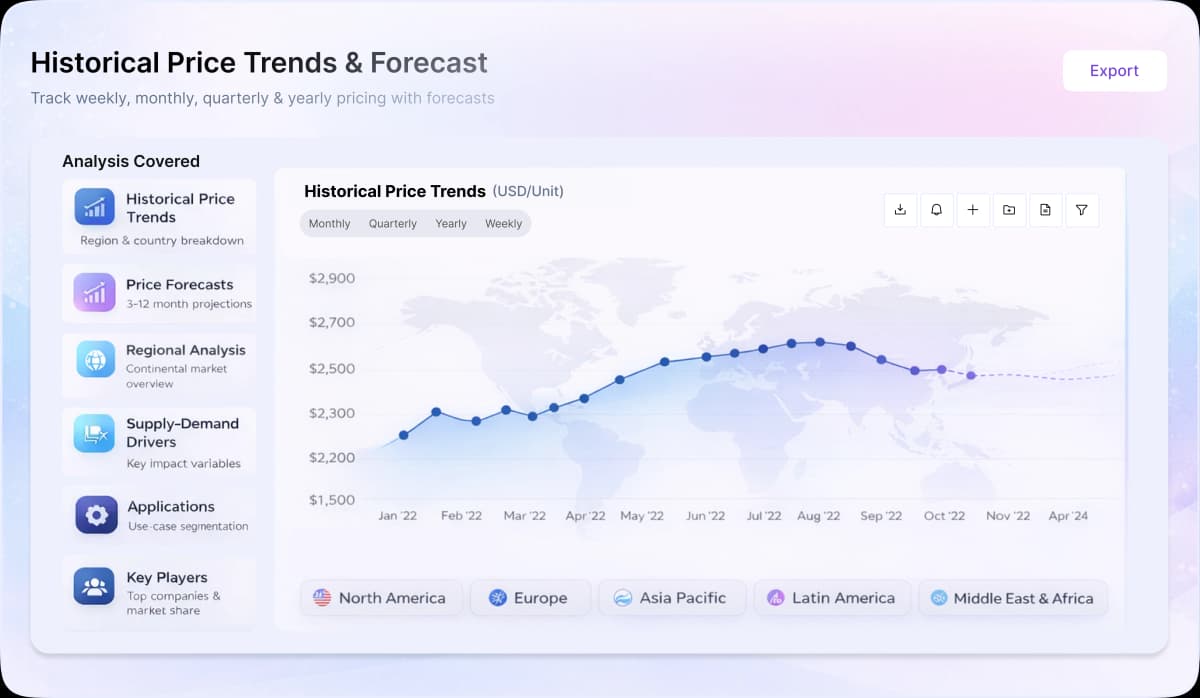
Turn price intelligence into action with the Procurement Resource Database. Log in or subscribe to unlock live price trends, historical charts, supplier databases, cost curves, and analyst-backed insights across chemicals, agriculture, energy, packaging, and more. Use these tools to benchmark your contracts, plan budgets with confidence, and stay ahead of market moves on every product you buy.

0

+

Products

0

+

Regions

0

+

Subscriptions

Asia

The Asian aspirin market remained largely weak during H2 2025, although regional conditions varied. Chinese manufacturers maintained robust production levels, while export demand remained moderate, increasing product availability and intensifying competition among suppliers. Improved access to key feedstocks reduced manufacturing cost pressures and supported competitive pricing throughout much of the period. Although controlled operating rates and firmer input costs provided some support toward the end of the year, balanced supply-demand fundamentals prevented any significant price recovery, keeping overall market sentiment subdued.

Europe

European aspirin prices exhibited a generally soft trend during H2 2025. Adequate supply across major manufacturing hubs and cautious procurement by pharmaceutical companies limited pricing power. Improved availability of feedstocks reduced production cost pressures, while increased import volumes from Asia further intensified competition. Efficient logistics and stable distribution networks ensured consistent product availability throughout the region. Although downstream pharmaceutical demand remained steady, it was insufficient to absorb the ample supply, resulting in a gradual easing of prices during the second half.

North America

The North American aspirin market displayed mixed pricing dynamics during H2 2025. Prices weakened during Q3 as steady domestic production, improved feedstock availability, and conservative purchasing by pharmaceutical manufacturers created a balanced supply environment. Market sentiment strengthened in Q4, supported by firm domestic consumption, inventory replenishment, and higher feedstock procurement costs. Stable freight conditions and export demand from Latin America further supported prices, allowing the market to recover from earlier softness and finish the year on a firmer footing


About Aspirin

The scientific name of aspirin is acetylsalicylic acid that is widely used as an anti-pyretic. In addition to its anti-pyretic properties, aspiring also helps in reduction inflammation and in providing pain relief. It inhibits the production of prostaglandins, producing enzymes that cause inflammation. Aspirin also has blood thinning effects that help in preventing blood clots and thus aids in reducing risk of heart attacks and strokes. It is available in several formulations such as tablets, capsules, etc.

Aspirin Product Detail

HS Code
30049062
Chemical Formula

C9H8O4

CAS Number
50-78-2
Molecular Weight
180.158 g/mol
Industrial Uses

Food and beverage industries, Pharmaceuticals and agrochemicals, Chemical synthesis, Analytical chemistry

Supplier Database

Bayer, Novacap, Shiono Chemical Co, Chemische Fabrik Weyl Gmbh, Eli Lily and Co, Jqc Huayin Pharmaceutical Co Ltd

Regional Coverage

Asia Pacific

China, India, Indonesia, Pakistan, Bangladesh, Japan, Philippines, Vietnam, Iran, Thailand, South Korea, Iraq, Saudi Arabia, Malaysia, Nepal, Taiwan, Sri Lanka, UAE, Israel, Hongkong, Singapore, Oman, Kuwait, Qatar, Australia, and New Zealand

Europe

Germany, France, United Kingdom, Italy,Spain, Russia, Turkey, Netherlands, Poland, Sweden, Belgium, Austria, Ireland Switzerland, Norway, Denmark, Romania, Finland, Czech Republic, Portugal and Greece

North America

United States and Canada

Latin America

Brazil, Mexico, Argentina, Columbia, Chile, Ecuador, and Peru

Africa

South Africa, Nigeria, Egypt, Algeria, Morocco

CurrencyUS$ (Data can also be provided in local currency)

Supplier Database AvailabilityYes

Customization ScopeThe report can be customized as per the requirements of the customer

Post-Sale Analyst Support360-degree analyst support after report delivery

Note: Our supplier search experts can assist your procurement teams in compiling and validating a list of suppliers indicating they have products, services, and capabilities that meet your company's needs.


Aspirin Production Processes

The production of aspirin is carried out using acetylation of salicylic acid using acetic anhydride in glass-lined vessels. The product of this reaction is a liquid which is crystallized and cooled. In subsequent steps, acetic acid and other solvents are removed and recycled. The final crystals are then washed, filtered, and dried to produce final aspirin.

Frequently Asked Questions

The aspirin outlook for 2026 points to firm prices in Europe, underpinned by acute supply shortages and sustained cardiovascular prescription demand, while Asia faces softening risk if acetic anhydride and acetic acid remain weak. Downstream demand from retail pharmacy channels and pharmaceutical exports should provide support, though Hormuz-related logistics costs and feedstock volatility remain key swing factors. Any meaningful recovery in acetic anhydride and acetic acid pricing would ease cost pressure on Asian producers, while European supply tightness would need new capacity or import flows to ease.
Aspirin prices are driven primarily by acetic anhydride and acetic acid feedstock costs, since acetic anhydride is used directly in the acetylation of salicylic acid, and both inputs are tied to natural gas and coal linked production economics. Shipping and logistics costs matter significantly too, particularly for routes passing through chokepoints such as the Strait of Hormuz, since a large share of global oil and shipping capacity moves through such corridors; disruptions there can sharply raise freight and energy costs for API producers and shippers alike. Downstream demand from retail pharmacy channels and cardiovascular prescription volumes sets the pace of offtake.
Major players in the aspirin market include Bayer, Teva Pharmaceutical Industries, Cipla, Hebei Jiheng Chemical, Shaanxi Guanjie Technology, Novacap, Shiono Chemical, Chemische Fabrik Weyl, Eli Lilly, and Jqc Huayin Pharmaceutical. Asia-Pacific leads production, anchored by strong API manufacturing in China and India, while Europe and North America rely heavily on imported APIs and formulations. Europe's dependence on imported API supply is a notable structural vulnerability for procurement security, since regional pharmacy networks have limited buffer against upstream disruptions.
Aspirin is produced via acetylation of salicylic acid with acetic anhydride in glass-lined vessels. Salicylic acid derives from phenol and carbon dioxide, while acetic anhydride is made through carbonylation of methyl acetate linked to methanol and acetic acid, tied to natural gas and coal prices. After reaction, the liquid is chilled in a crystallizer; solvents and acetic acid are removed, filtered, and recycled. Crystals are washed, filtered, and dried to yield aspirin (C9H8O4), used as an API in over-the-counter pain relievers, anti-inflammatory treatments, low-dose cardiovascular antiplatelet therapies, and veterinary medicine.
Aspirin demand stems from its use as a pain reliever, anti-inflammatory, and fever reducer in OTC products and cardiovascular prescriptions. The pharmaceutical industry drives consumption through retail pharmacy channels and exports, with steady prescription volumes for low-dose cardiovascular antiplatelet therapy providing a resilient demand base. India's role as a major API and formulation exporter means its export volumes are a useful signal of underlying global demand strength. This combination of prescription stability and export-driven volume keeps baseline aspirin demand comparatively steady across markets.
Asia-Pacific dominates the global aspirin market through concentrated API production in China and India, which supply Europe and North America. This concentration gives Asian producers meaningful pricing influence, so a feedstock cost spike, such as a sharp rise in acetic anhydride or acetic acid prices, quickly raises Asian aspirin production costs and feeds through to importing markets. Shipping chokepoint disruptions, such as those affecting the Strait of Hormuz, compound this exposure by raising freight costs on the same routes that carry product to Europe and North America, making the underlying concentration a structural pricing risk for importers.
Procurement Resource assesses aspirin prices through a structured, data-driven methodology that combines primary engagement with producers, suppliers and traders, secondary market data, monitoring of feedstock and input costs, trade-flow and inventory tracking, and exchange or spot benchmarks. All inputs are validated and translated into a transparent price assessment and outlook. The detailed methodology is available on the Procurement Resource website.

Our Price Analysis Methodology

About the Author

Vishakha Agrawal profile photo

Vishakha Agrawal

Lead - Social & Development Research

Delivering procurement intelligence and supply chain analytics across healthcare, FMCG, and chemicals sectors, with expertise in cost modeling, vendor mapping, and spend optimization to support data-driven sourcing decisions and procurement outcomes.

Schedule Demo

Schedule A Demo

Experience how Procurement Resource transforms raw material price data into clear, decision ready intelligence. Optimise your performance with reliable, expert market data and analysis. Schedule your demo today to experience a live walk-through where our experts will showcase interactive price charts, forecasted prices, and insights driving the prices for your key commodities, tailored to your workflows. Contact us now!

Our Team will be happy to assist you

We are just a text away

+1

Still Need Help?

Europe & Africa

+44 7573 171117

[email protected]

USA & Canada

+1 307 363 1045

[email protected]

APAC

+91 8850629517

[email protected]

Unlock full access to Procurement Resource's price databases, interactive charts, and short-term forecasts for thousands of commodities. Elevate your sourcing decisions by comparing prices across regions, downloading historical data, and layering in analyst-backed insights, all with our flexible plans that scale as your portfolio grows.

Still have any Questions

Contact Us
Mastercard
Wire
VISA
Stripe

Why Procurement Database

Commodity Market Intelligence

Commodity Market Intelligence

Track prices, market movements, supply-demand dynamics, and industry developments across hundreds of commodities through a centralized intelligence platform built for informed procurement decisions.

Price Forecasts & Market Outlooks

Price Forecasts & Market Outlooks

Understand market fluctuations using analyst-backed forecasts, historical pricing patterns, and evolving industry trends to strengthen sourcing strategies and budget planning.

Cost & Procurement Optimization

Cost & Procurement Optimization

Leverage cost models, pricing benchmarks, and procurement insights to evaluate purchasing opportunities, improve negotiations, and enhance operational efficiency.

Global & Regional Market Insights

Global & Regional Market Insights

Access region-specific price trends, trade activities, capacity changes, and supply chain developments influencing commodity markets worldwide.

1/4