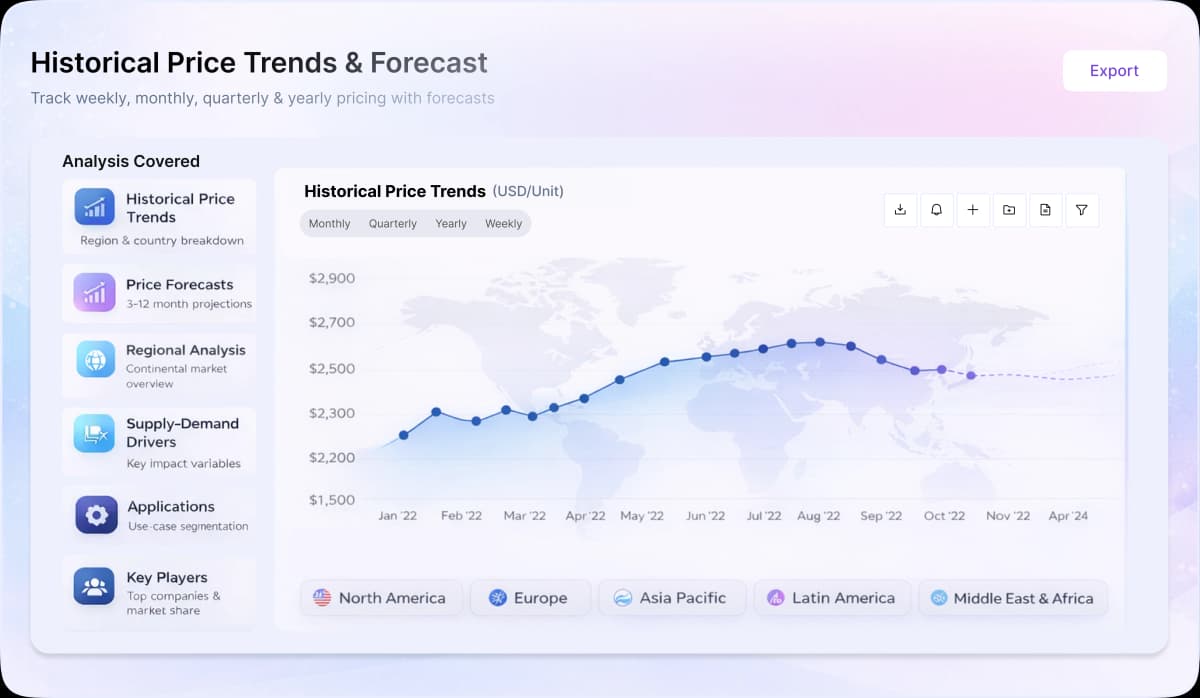
The market for bio-adipic acid was very volatile in 2024, which was indicative of the larger difficulties bio-based chemical substitutes were facing. Adoption was hampered by the higher manufacturing costs associated with initial market introduction when compared to conventional adipic acid generated from petroleum. The requirement for sophisticated bioprocessing technology, different biomass feedstock quality, and small production scales have had a significant impact on the emerging bio-adipic acid market.
Innovative partnerships like the one between Toray and PTT Global Chemical propelled the market's steady gains in production efficiency throughout the year. In order to lower production costs and increase market competitiveness, these collaborations concentrated on creating sustainable production techniques employing non-edible biomass. Bio-based alternatives gained more traction as environmental sustainability and greenhouse gas reduction gained more attention. The pricing dynamics were further shaped by downstream industry demands, particularly from textile and automotive sectors seeking more environmentally friendly materials.