New Phosphoric Acid Plant to Double Capacity
Gujarat Alkalies has begun construction of a 33,870‑TPA phosphoric acid facility, expected to double domestic supply and reduce reliance on imports, likely easing market prices.

Gujarat Alkalies has begun construction of a 33,870‑TPA phosphoric acid facility, expected to double domestic supply and reduce reliance on imports, likely easing market prices.
GSFC received board approval to build a 600 MTPD phosphoric acid plant at its Sikka unit in Jamnagar, Gujarat. The expansion aims to boost internal supply and reduce reliance on imported phosphoric acid. Increased domestic supply is expected to ease upward price pressure on the commodity.
Asia
The prices of Bone Phosphate of Lime (or Tricalcium phosphate) exhibited fluctuating patterns given the volatile demands from downstream food and pharma industries. Quarter one observed an almost flattened yet positive price curve as the supply-demand dynamics were in equilibrium.
However, as the inventory levels rose, the prices experienced a steep fall in the second quarter. A robust decline in feedstock phosphorus and soda ash prices coupled with eased and cheaper freight situation pulled the price trend for Bone Phosphate of Lime down.
Europe
In Europe, the price trend for Bone Phosphate of Lime/Tricalcium phosphate behaved no differently than in other global markets. The Russian invasion of Ukraine disrupted the supply chains and pushed the European region into a grave economic recession. As the trade and freight routes have been restored, the supply chains and inflation effects have been fainting, and prices have started declining, attributing to trade normalization. Overall, the prices fell steeply in the second quarter after a steady run in Q1.
North America
North American market too observed an overall mixed price behaviour for Bone Phosphate of Lime. The prices inclined in the first quarter as demands rose and then declined in the second quarter owing to the high inventory levels and bearish market sentiments.
Analyst Insight
According to the Procurement Resource, the Bone Phosphate of Lime prices are expected to oscillate in the upcoming months. The increased supply from China and decreased demands from the USA will continue to influence the market fundamentals.
Related Report
Need Latest Bone Phosphate of Lime Prices?
Get real-time price assessments, periodic trends, forecasts and price driver insights across key global markets.
Our Clients































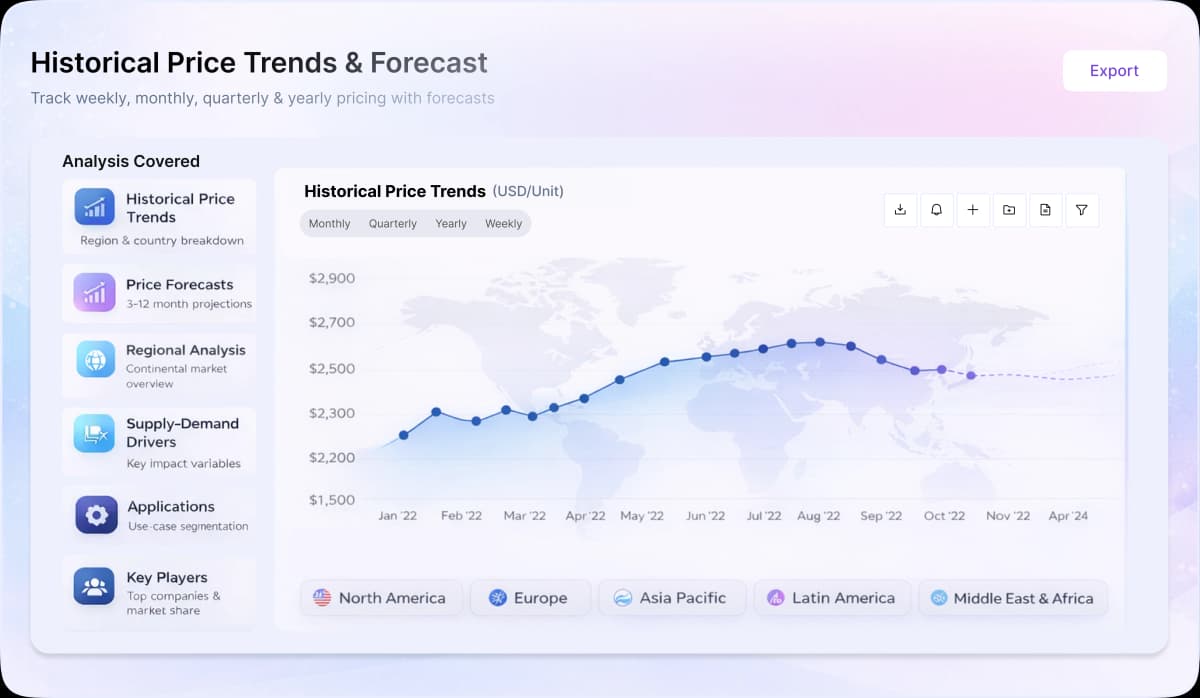
Turn price intelligence into action with the Procurement Resource Database. Log in or subscribe to unlock live price trends, historical charts, supplier databases, cost curves, and analyst-backed insights across chemicals, agriculture, energy, packaging, and more. Use these tools to benchmark your contracts, plan budgets with confidence, and stay ahead of market moves on every product you buy.
0
+Products
0
+Regions
0
+Subscriptions
Asia
The price trend for bone phosphate of lime or tricalcium phosphate fluctuated during the second half of 2022. The prices remained inclined during the first half of Q3, as seen in the previous quarter, given the complex geopolitical situation. However, the price trend stabilized towards the end of Q1 as the demand started falling gradually, causing the then-available stocks to balance the downstream demand.
However, the prices declined further in the fourth quarter, given the demand destruction. Even after the opening of trade channels, the demands did not gain momentum. Additionally, the industrial powerhouse China still struggled with the covid restrictions and power-rationing norms affecting the overall market for bone phosphate of lime or tricalcium phosphate.
Europe
The European markets faced the direct consequences of the Russia-Ukraine war, which triggered an acute energy crisis in the region. The consistently high prices led to demand destruction, and hence, as a result, the industries were forced to lower their market quotations. Further, the rising inflation contracted the purchasing capacities of the downstream consumers, impacting the pricing fundamentals. The decreased inquiries from the food and beverage industries further aided the downfall of tricalcium phosphate prices.
North America
The price trend for bone phosphate of lime followed a similar trend in the US domestic market as seen in the other global markets. The lowering inquiries amid over-stocked inventories and labor strikes impacted the overall market. Further, the hiking of interest by central banks and fears of looming recession reduced the buyer’s confidence in the market, affecting the prices negatively.
The calcium salt of phosphoric acid, tricalcium phosphate, also known as bone phosphate of lime is a low-solubility white solid. The majority of commercial "tricalcium phosphate" samples are actually hydroxyapatite. It comes in three different crystalline polymorphs: α, α', and β. At high temperatures, the α and α' states remain stable.
Ca3(PO4)2
Food Additives, Feed Additives, Medical Use
Calcium phosphate, Tricalcium Phosphate, Synthos, Calcium phosphate tribasic
Innophos, Trans-Tech, NEI, ICL Performance Products, Prayon, Haotian Pharm, Yuwei Biological, Shanghai Caifeng, Hubei Lianxing New Material, Hubei Xingfa Chemicals, Lianyungang Dongzhou
CurrencyUS$ (Data can also be provided in local currency)
Supplier Database AvailabilityYes
Customization ScopeThe report can be customized as per the requirements of the customer
Post-Sale Analyst Support360-degree analyst support after report delivery
Note: Our supplier search experts can assist your procurement teams in compiling and validating a list of suppliers indicating they have products, services, and capabilities that meet your company's needs.
Phosphate rock is combined with soda ash before being ground and palletized in this process. The processed mixture is then mixed to phosphoric acid, which is then transferred to a rotary kiln, resulting in the creation of BPL.
Our Price Analysis Methodology

AVP - Strategy and Solutions
Leading procurement research solutions across chemicals, materials, and food & beverages, with expertise in price forecasting and market analytics.
Experience how Procurement Resource transforms raw material price data into clear, decision ready intelligence. Optimise your performance with reliable, expert market data and analysis. Schedule your demo today to experience a live walk-through where our experts will showcase interactive price charts, forecasted prices, and insights driving the prices for your key commodities, tailored to your workflows. Contact us now!
Our Team will be happy to assist you
We are just a text away
Still Need Help?
Unlock full access to Procurement Resource's price databases, interactive charts, and short-term forecasts for thousands of commodities. Elevate your sourcing decisions by comparing prices across regions, downloading historical data, and layering in analyst-backed insights, all with our flexible plans that scale as your portfolio grows.
Still have any Questions
Contact Us



Price Trend Dashboard - What's Included
Price trends across a diverse portfolio of categories and products, spanning board to niche chemicals
Coverage extendable to grade-specific chemicals based on procurement requirements
Regular price tracking supported by robust historical datasets
News, policy updates, and key market drivers impacting price movements
Short-term and long-term price outlooks and forecasts
Supply–demand dynamics and capacity-driven market analysis

Track prices, market movements, supply-demand dynamics, and industry developments across hundreds of commodities through a centralized intelligence platform built for informed procurement decisions.

Understand market fluctuations using analyst-backed forecasts, historical pricing patterns, and evolving industry trends to strengthen sourcing strategies and budget planning.

Leverage cost models, pricing benchmarks, and procurement insights to evaluate purchasing opportunities, improve negotiations, and enhance operational efficiency.
Access region-specific price trends, trade activities, capacity changes, and supply chain developments influencing commodity markets worldwide.
