

Udeesha Tomar
AVP - Strategy and Solutions
Leading procurement research solutions across chemicals, materials, and food & beverages, with expertise in price forecasting and market analytics.

Asia
In Q4 2025, butanal prices in Asia followed the movement of propylene, its primary feedstock, and reflected a similar pattern of early weakness followed by partial recovery. In China, prices declined during the first half of the quarter, tracking the softer propylene trend and reflecting cautious downstream demand from plasticizers, coatings, and intermediate chemical sectors. Ample upstream availability and limited cost support weighed on market sentiment, while buyers maintained restrained procurement strategies. As the quarter progressed, the feedstock market showed slight improvement, which provided modest support to butanal prices. This resulted in a gradual recovery during the second half of the quarter. However, the rebound remained moderate, and prices stabilized toward the end of the period as supply-demand conditions balanced.
In India, butanal prices mirrored the regional feedstock pattern and remained largely range-bound. The market saw an initial upward movement aligned with mid-quarter firming in propylene, followed by a decline in the latter half as feedstock values softened again. Overall fluctuations were limited, and the quarter closed near its starting level. Procurement behaviour remained measured, with buyers focusing on short-term needs and avoiding aggressive restocking. The alignment with propylene trends highlights the cost-driven nature of pricing during the quarter.
Europe
In Europe, butanal prices followed a trajectory comparable to Asia, closely reflecting movements in propylene. The quarter opened with softer pricing as feedstock values weakened, and downstream consumption remained moderate. Market activity was steady but not expansionary, with buyers maintaining cautious purchasing patterns. During the latter part of the quarter, feedstock stabilization contributed to a mild recovery in butanal prices. The upward adjustment was limited, and the market entered a stable phase by the close of the quarter. Overall volatility remained contained, with price movements largely influenced by feedstock direction rather than strong shifts in demand.
North America
North American butanal prices exhibited a similar pattern during Q4 2025. Early-quarter softness aligned with weaker propylene trends and balanced supply conditions. Mid-quarter improvements in feedstock provided some support, though gains were not sustained at elevated levels. By the end of the quarter, prices stabilized within a narrower range, reflecting steady supply and cautious downstream engagement.
Related Report
Need Latest Butanal Prices?
Get real-time price assessments, periodic trends, forecasts and price driver insights across key global markets.
Our Clients































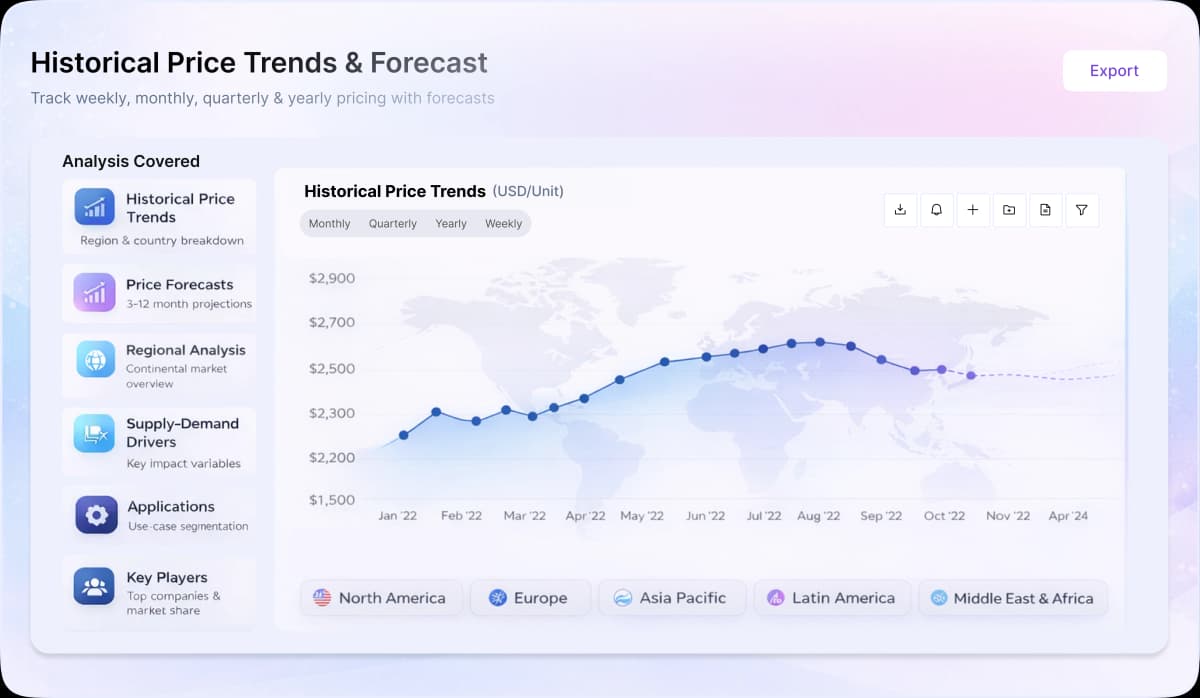
Turn price intelligence into action with the Procurement Resource Database. Log in or subscribe to unlock live price trends, historical charts, supplier databases, cost curves, and analyst-backed insights across chemicals, agriculture, energy, packaging, and more. Use these tools to benchmark your contracts, plan budgets with confidence, and stay ahead of market moves on every product you buy.
0
+Products
0
+Regions
0
+Subscriptions
Asia
The third quarter witnessed mixed performance in butanal pricing across the Asian region, predominantly influenced by propylene feedstock dynamics. The period commenced with a softening trend as propylene costs declined, reducing production economics for butanal manufacturers. Lower raw material support, combined with expanded propylene capacity from newly commissioned facilities, created ample feedstock availability that eased cost pressures. Demand from key downstream applications remained subdued during the initial phase, with 2-ethylhexanol producers for plasticizer manufacturing and n-butanol converters operating cautiously. This restrained buying behaviour from butyric acid production and specialty chemical manufacturers limited upward price momentum. The mid-quarter phase experienced fluctuations as increased propylene output pressured butanal margins. Temporary price rebounds emerged following maintenance-related shutdowns and brief restocking activity from derivative producers. The latter portion brought gradual recovery as rising propylene feedstock prices and renewed downstream interest supported butanal valuations.
Europe
European butanal markets maintained broadly stable conditions throughout the third quarter, mirroring the balanced propylene feedstock environment. Supply conditions remained adequate, supported by consistent refinery operations and stable production rates at butanal facilities. Demand from major downstream applications demonstrated steady performance, with plasticizer producers utilizing butanal for 2-ethylhexanol synthesis, maintaining regular procurement schedules. Feedstock propylene costs fluctuated mildly but failed to introduce substantial price swings. Market participants across pharmaceutical intermediates, specialty chemicals, and agricultural formulations reported consistent activity levels. The absence of notable supply disruptions resulted in predictable price movements throughout the quarter.
North America
North American butanal markets mirrored global propylene-driven trends during the third quarter, experiencing initial weakness followed by gradual improvement. The period opened with sufficient propylene feedstock inventories and cautious downstream purchasing from plasticizer manufacturers and coatings producers. As the quarter progressed, feedstock propylene costs edged upward while maintenance activities curbed availability, improving market sentiment. Late-quarter demand from pharmaceutical intermediate producers and specialty chemical manufacturers strengthened slightly, lifting prices from earlier lows. Agricultural chemical formulators increased purchases, while flavors and fragrances applications maintained steady consumption. The quarter concluded with a restrained but positive trajectory, supported by improved downstream engagement and firmer propylene feedstock costs.
Butyraldehyde, often known as butanal, is an organic molecule that is a butane aldehyde derivative. It belongs to a group of botanicals made up of propane with a formyl substituent at the 1-position. This substance is a colourless, flammable liquid with a foul odour. Most organic solvents are soluble in butanal. It oxidises to generate butyric acid with extended contact to air.
C4H8O
Paints and Coatings, Pharmaceutical, Agrochemical, Polymer
Butyraldehyde, n-butyraldehyde, Butyral
Mitsubishi Chemical Corporation, Tokyo Chemical Industry Co., Ltd., KH Neochem Co. Ltd, Eastman Chemical Company, BASF SE
CurrencyUS$ (Data can also be provided in local currency)
Supplier Database AvailabilityYes
Customization ScopeThe report can be customized as per the requirements of the customer
Post-Sale Analyst Support360-degree analyst support after report delivery
Note: Our supplier search experts can assist your procurement teams in compiling and validating a list of suppliers indicating they have products, services, and capabilities that meet your company's needs.
Propylene combines with an aqueous solution of rhodium catalyst to generate aldehyde in this method.
Our Price Analysis Methodology
AVP - Strategy and Solutions
Leading procurement research solutions across chemicals, materials, and food & beverages, with expertise in price forecasting and market analytics.
Experience how Procurement Resource transforms raw material price data into clear, decision ready intelligence. Optimise your performance with reliable, expert market data and analysis. Schedule your demo today to experience a live walk-through where our experts will showcase interactive price charts, forecasted prices, and insights driving the prices for your key commodities, tailored to your workflows. Contact us now!
Our Team will be happy to assist you
We are just a text away
Still Need Help?
Unlock full access to Procurement Resource's price databases, interactive charts, and short-term forecasts for thousands of commodities. Elevate your sourcing decisions by comparing prices across regions, downloading historical data, and layering in analyst-backed insights, all with our flexible plans that scale as your portfolio grows.
Still have any Questions
Contact Us



Price Trend Dashboard - What's Included
Price trends across a diverse portfolio of categories and products, spanning board to niche chemicals
Coverage extendable to grade-specific chemicals based on procurement requirements
Regular price tracking supported by robust historical datasets
News, policy updates, and key market drivers impacting price movements
Short-term and long-term price outlooks and forecasts
Supply–demand dynamics and capacity-driven market analysis

Track prices, market movements, supply-demand dynamics, and industry developments across hundreds of commodities through a centralized intelligence platform built for informed procurement decisions.

Understand market fluctuations using analyst-backed forecasts, historical pricing patterns, and evolving industry trends to strengthen sourcing strategies and budget planning.

Leverage cost models, pricing benchmarks, and procurement insights to evaluate purchasing opportunities, improve negotiations, and enhance operational efficiency.
Access region-specific price trends, trade activities, capacity changes, and supply chain developments influencing commodity markets worldwide.