Calcium Carbonate Price Trend Analysis 2026: Market Insights, Price Drivers, Supply Demand Analysis, Historical Prices & Latest News

Udeesha Tomar profile photo
Written ByUdeesha Tomar

Procurement Resource Database

Laptop screen

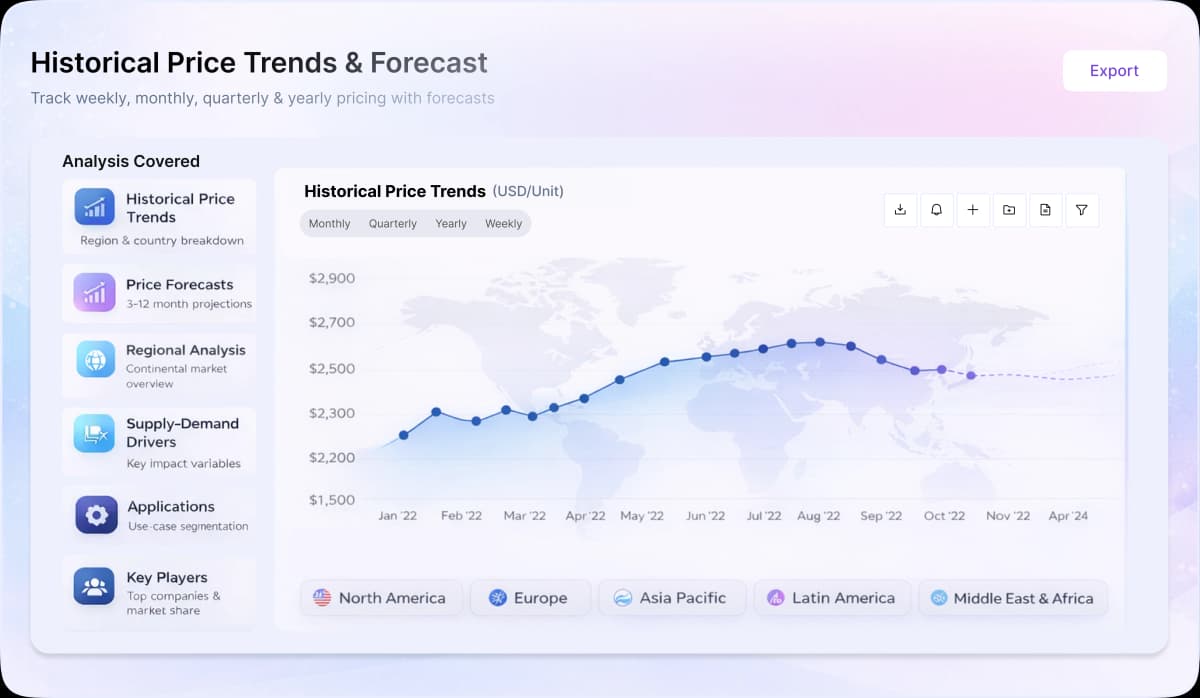
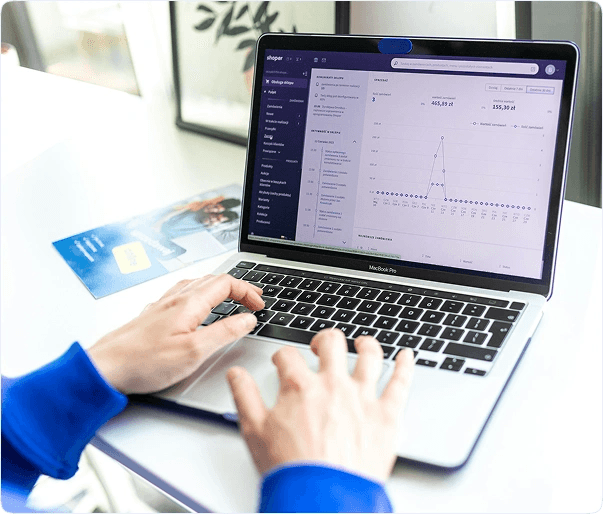
Turn price intelligence into action with the Procurement Resource Database. Log in or subscribe to unlock live price trends, historical charts, supplier databases, cost curves, and analyst-backed insights across chemicals, agriculture, energy, packaging, and more. Use these tools to benchmark your contracts, plan budgets with confidence, and stay ahead of market moves on every product you buy.

Calcium Carbonate Dashboard Inclusions

Calcium Carbonate Price Dasboard

0

+

Products

0

+

Regions

0

+

Subscriptions

Asia

In Asia, the prices of calcium carbonate were slightly higher in Q4’25. The prices were supported by tighter inventories and stable downstream demand from the packaging, coatings, and glove industries. However, the construction-related demand was weaker, which prevented the prices from going higher. The producers operated at a normal rate, which ensured that the supply was stable. As a result, the spot prices were range-bound, with buyers buying cautiously. The costs were stable, which prevented the prices from going higher. As a result, the Asian markets were characterized by a balanced tone.

Europe

In the European market, prices of calcium carbonate registered an increase during the quarter. Domestic demand was steady, with industrial and construction-linked consumption supporting the trend. The export pattern resulted in an increase in coastal inventory levels. The industry was operating at regular capacities, and limestone supply was abundant, thereby supporting prices. The prices were steady, with minimal impact of energy and logistics costs. The overall buying pattern was routine, with no indication of inventory restocking. The spot and contract market was firm, with prices registering a gradual increase.

North America

In North America, changes in the prices of calcium carbonate were more significant in Q4’25. At the beginning of the quarter, restocking and strong demand in the food, nutraceuticals, and pharmaceutical industries led to higher prices. Spot prices were also affected, rising as inventories fell, and producers faced increasing energy and logistics costs, resulting in a mild squeeze on their margins. Towards the end of the quarter, natural demand patterns slowed, resulting in a moderate impact on prices.

About Calcium Carbonate

Calcium carbonate makes up more than 4% of the earth's crust and can be found all over the world. Its most commonly found forms are chalk, limestone, and marble, which are formed over millions of years by the sedimentation of the shells of small, fossilised snails, shellfish, and coral. Although all three forms are chemically identical, they differ in many ways, including purity, whiteness, thickness, and homogeneity. One of the most useful and versatile materials known to man is calcium carbonate.

Calcium Carbonate Product Detail

Hs Code
283650
Chemical Formula

CaCO3

Cas Number
471-34-1
Industrial Uses

Construction, Acid Water Treatment, Sugar Processing, Agriculture, Paper Industry, Plastic Industry, Ceramic Industry

Synonyms

Mexican Onyx, Chalk, Onyx Marble, Iceland Spar, Calcite, Limestone

Supplier Database

BASF SE, Gulf Cryo, Linde, Praxair Technology Inc., SINOPEC, Chengdu Xinju Chemical Co. Ltd.

Regional Coverage

Asia Pacific

China, India, Indonesia, Pakistan, Bangladesh, Japan, Philippines, Vietnam, Iran, Thailand, South Korea, Iraq, Saudi Arabia, Malaysia, Nepal, Taiwan, Sri Lanka, UAE, Israel, Hongkong, Singapore, Oman, Kuwait, Qatar, Australia, and New Zealand

Europe

Germany, France, United Kingdom, Italy,Spain, Russia, Turkey, Netherlands, Poland, Sweden, Belgium, Austria, Ireland Switzerland, Norway, Denmark, Romania, Finland, Czech Republic, Portugal and Greece

North America

United States and Canada

Latin America

Brazil, Mexico, Argentina, Columbia, Chile, Ecuador, and Peru

Africa

South Africa, Nigeria, Egypt, Algeria, Morocco

CurrencyUS$ (Data can also be provided in local currency)

Supplier Database AvailabilityYes

Customization ScopeThe report can be customized as per the requirements of the customer

Post-Sale Analyst Support360-degree analyst support after report delivery

Note: Our supplier search experts can assist your procurement teams in compiling and validating a list of suppliers indicating they have products, services, and capabilities that meet your company's needs.

Calcium Carbonate Production Processes

  • Calcium Carbonate Production from Soda Lime; and from Quick Lime

Calcium hydroxide is generated when water is added to calcium oxide in the quick lime process, and the required calcium carbonate is then produced by passing carbon dioxide through the solution.

Frequently Asked Questions

During Q1 2026, calcium carbonate prices remained largely stable to mildly firm, with regional variation across major markets. Asia saw mixed movement as adequate supply and competitive offers limited stronger gains. North America and Europe showed firmer pricing due to steady construction, paper, plastics, and coatings demand, along with higher freight, electricity, and processing costs.
The calcium carbonate outlook for 2026 remains steady, supported by demand from paper, plastics, paints, coatings, adhesives, construction materials, rubber, pharmaceuticals, food, and agriculture. Ground calcium carbonate is expected to remain widely used because of its low cost and availability, while precipitated calcium carbonate may gain support from premium paper, packaging, polymer, and specialty applications.
Calcium carbonate prices in Q1 2026 were affected by energy costs, freight expenses, and demand from construction, paper, and plastics. Production economics remained linked to limestone mining, grinding, drying, classification, and, for precipitated calcium carbonate, lime and carbon dioxide handling. Stable raw material availability limited sharp increases, but higher logistics and processing costs supported firm pricing in several regions.
Major calcium carbonate markets include China, the United States, India, Turkey, Vietnam, Egypt, Germany, Japan, Brazil, and Italy. Key companies include Imerys, Omya International, Minerals Technologies Inc., Huber Engineered Materials, Sibelco, Mississippi Lime Company, Carmeuse, and Nordkalk. These players operate across ground calcium carbonate, precipitated calcium carbonate, limestone processing, lime production, and specialty mineral applications.
In March 2026, Daswell Powder Tech. completed the installation and commissioning of a DR-28 ring roller grinding mill plant for calcium carbonate processing in Minya, Egypt. The system was designed to process calcium carbonate raw material into fine powder with a production capacity of 3 tonnes per hour. The project strengthened ground calcium carbonate processing capacity in an important Egyptian production region.
Calcium carbonate is mainly produced from limestone, marble, chalk, and calcite-rich mineral deposits. Ground calcium carbonate is made by quarrying, crushing, grinding, classifying, and surface treating mineral feedstock. Precipitated calcium carbonate is produced by calcining limestone into quicklime, slaking it into calcium hydroxide, and reacting it with carbon dioxide. The value chain ends in paper, plastics, paints, construction, agriculture, food, and pharma applications.
Global lime production was estimated at 420.0 million tonnes in 2025. China dominated production with 310.0 million tonnes, followed by India at 17.0 million tonnes, the United States at 15.0 million tonnes, Russia at 12.0 million tonnes, Brazil at 8.2 million tonnes and Japan at 5.9 million tonnes. Limestone reserves were reported as adequate for all listed producing countries, while global limestone and dolomite resources suitable for lime manufacture were described as very large.
Calcium carbonate demand is mainly driven by paper and packaging, plastics, paints and coatings, construction materials, rubber, adhesives, sealants, food, pharmaceuticals, agriculture, and water treatment. In paper, it improves brightness and opacity. In plastics and paints, it works as a filler and performance additive. In construction, it is used in cement, concrete, mortar, flooring, and sealant formulations.
A key 2026 policy development that affected the calcium carbonate prices was Commission Implementing Regulation (EU) 2026/194, adopted on January 28, 2026, and published on January 29, 2026. It transferred calcium carbonate from India for food and feed use from Annex II to Annex I under EU import control rules. The change removed the requirement for each consignment to carry official certification but kept 30% identity and physical checks. This eased documentation pressure while maintaining inspection costs and compliance-related pricing pressure for EU-bound material.
Procurement Resource employs a structured methodology combining primary research, secondary market data, analytical models, and validation processes to assess calcium carbonate prices and trends. Price evaluations incorporate supply-demand dynamics, feedstock movements, trade flows, and value chain analysis, supported by continuous market monitoring to ensure accurate and reliable insights.

About the Author

Udeesha Tomar profile photo

Udeesha Tomar

AVP - Strategy and Solutions

Leading procurement research solutions across chemicals, materials, and food & beverages, with expertise in price forecasting and market analytics.

Our Price Analysis Methodology

Schedule Demo

Schedule a demo

Experience how Procurement Resource transforms raw material price data into clear, decision ready intelligence. Optimise your performance with reliable, expert market data and analysis. Schedule your demo today to experience a live walk-through where our experts will showcase interactive price charts, forecasted prices, and insights driving the prices for your key commodities, tailored to your workflows. Contact us now!

Our Team will be happy to assist you

We are just a text away

+1

Still Need Help?

Europe & Africa

+44 7573 171117

[email protected]

USA & Canada

+1 307 363 1045

[email protected]

APAC

+91 8850629517

[email protected]

Other Related Reports

Calcium Sulfate Production from Gypsum

The report is a detailed study of economics of production of calcium sulfate from gypsum which is extracted from the earth by mining.

Calcium Carbide Production from Lime & Coke

The report involves the cost analysis of production of calcium carbide in an electric arc furnace from a mixture of lime and coke at approximately 2,200 °C.

Calcium Carbonate Production from Quick Lime

The report involves the cost analysis of production of Calcium carbonate from quicklime or calcium oxide.

Unlock full access to Procurement Resource's price databases, interactive charts, and short-term forecasts for thousands of commodities. Elevate your sourcing decisions by comparing prices across regions, downloading historical data, and layering in analyst-backed insights, all with our flexible plans that scale as your portfolio grows.

Still have any Questions

Contact Us
Mastercard
Wire
VISA
Stripe

Related News

View All

Why Procurement Database

Commodity Market Intelligence

Commodity Market Intelligence

Track prices, market movements, supply-demand dynamics, and industry developments across hundreds of commodities through a centralized intelligence platform built for informed procurement decisions.

Price Forecasts & Market Outlooks

Price Forecasts & Market Outlooks

Understand market fluctuations using analyst-backed forecasts, historical pricing patterns, and evolving industry trends to strengthen sourcing strategies and budget planning.

Cost & Procurement Optimization

Cost & Procurement Optimization

Leverage cost models, pricing benchmarks, and procurement insights to evaluate purchasing opportunities, improve negotiations, and enhance operational efficiency.

Global & Regional Market Insights

Global & Regional Market Insights

Access region-specific price trends, trade activities, capacity changes, and supply chain developments influencing commodity markets worldwide.

1/4