Udeesha Tomar
AVP - Strategy and Solutions
Leading procurement research solutions across chemicals, materials, and food & beverages, with expertise in price forecasting and market analytics.

The Camphene market in the second half of 2024 experienced significant volatility, mirroring the complex dynamics of its precursor, Alpha Pinene. Regional variations played a crucial role in shaping the market trajectory. In North America, the Camphene market remained relatively stable, with modest price fluctuations. The steady demand from pharmaceutical and fragrance industries helped maintain consistent pricing. Manufacturers focused on optimizing production processes and managing supply chain challenges.
The APAC region witnessed an upward price trend for Camphene. Driven by robust manufacturing activities in sectors like resins and flavours, the market saw increased demand. Strategic inventory management and stable supply chains supported this growth. Indian manufacturers demonstrated resilience by adapting to changing market conditions and exploring new application areas.
Conversely, the European Camphene market faced downward pressure. Weakening demand from key end-use sectors, particularly pharmaceuticals and flavours, led to price declines. The availability of synthetic alternatives and oversupply further complicated the market landscape. Manufacturers in this region had to be agile, adjusting production rates and exploring cost optimization strategies.
Related Report
Need Latest Camphene Prices?
Get real-time price assessments, periodic trends, forecasts and price driver insights across key global markets.
Our Clients































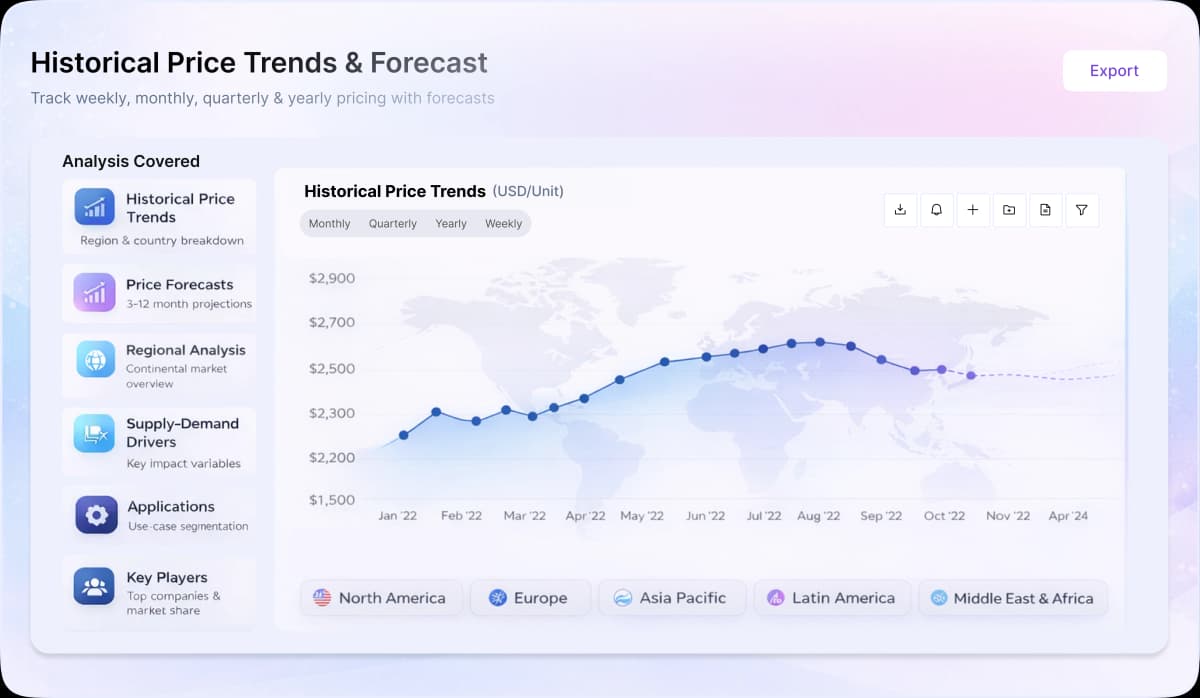
Turn price intelligence into action with the Procurement Resource Database. Log in or subscribe to unlock live price trends, historical charts, supplier databases, cost curves, and analyst-backed insights across chemicals, agriculture, energy, packaging, and more. Use these tools to benchmark your contracts, plan budgets with confidence, and stay ahead of market moves on every product you buy.
0
+Products
0
+Regions
0
+Subscriptions
During the first half of 2024, the price trend of camphene exhibited a close correlation with its primary feedstock, alpha pinene. The camphene market witnessed moderate fluctuations, largely driven by the evolving pricing dynamics of alpha pinene. In the initial months, camphene prices saw a consistent upward trajectory due to elevated raw material costs, particularly as alpha pinene faced sustained supply chain challenges and high input costs. These pressures were further compounded by robust demand for camphene, especially in its key applications in the fragrance, flavor, and chemical synthesis sectors. The demand for camphene remained strong domestically and internationally, supported by the steady industrial utilization of the product in a variety of sectors.
As the year progressed, camphene prices experienced a slight easing, in line with the downward adjustment of alpha pinene prices. This moderation was largely attributed to an improvement in supply chain efficiencies, which resulted in quicker delivery times and increased stock levels for alpha pinene. The reduction in feedstock input costs provided some relief to camphene manufacturers, enabling them to adjust their pricing strategies to remain competitive in both domestic and export markets. However, despite the decline in alpha pinene prices, camphene continued to see sustained demand, which helped to buffer any significant downward pressure on prices.
Looking ahead, the camphene market is expected to remain somewhat volatile, influenced by seasonal fluctuations in alpha pinene prices. While peak demand periods are likely to drive camphene prices higher during the second half of the year, natural market adjustments may temper these increases as the industry aligns itself with broader economic conditions and financial strategies toward year-end. Overall, the camphene market during the first half of 2024 was shaped by a delicate balance of raw material cost fluctuations, supply chain improvements, and steady demand, with prices mirroring the movements in the alpha pinene sector.
Camphene, a bicyclic monoterpene, is a colourless to light yellow crystalline solid with a pine-woody odour. To say, it has camphor-like odour and camphoraceous taste. It is utilised in small quantity or as a minor constituent in a wide range of essential oils. Camphene is immiscible in water while it is miscible in common organic solvents such as alcohols.
C10H16
Manufacture of synthetic camphor, Cannabis-based creams, Essential oils, Salves and lotions, Adhesives and sealant chemicals, Intermediates, Flavour and fragrance agents, Laundry and dishwashing products, Paints and coatings, Personal care products
Comphene, 6,6-dimethyl-5-methylidenebicyclo[2.2.1]heptane
Ernesto Ventós, S.A , Moellhausen S.p.A., Berjé Inc, Takasago International Corporation, Toronto Research Chemicals Inc
CurrencyUS$ (Data can also be provided in local currency)
Supplier Database AvailabilityYes
Customization ScopeThe report can be customized as per the requirements of the customer
Post-Sale Analyst Support360-degree analyst support after report delivery
Note: Our supplier search experts can assist your procurement teams in compiling and validating a list of suppliers indicating they have products, services, and capabilities that meet your company's needs.
At a commercial scale, Camphene is generally produced through isomerisation with the help of a catalyst. It is produced from the more common alpha-pinene, which is catalytically isomerised to produce the desired results.
Our Price Analysis Methodology
AVP - Strategy and Solutions
Leading procurement research solutions across chemicals, materials, and food & beverages, with expertise in price forecasting and market analytics.
Experience how Procurement Resource transforms raw material price data into clear, decision ready intelligence. Optimise your performance with reliable, expert market data and analysis. Schedule your demo today to experience a live walk-through where our experts will showcase interactive price charts, forecasted prices, and insights driving the prices for your key commodities, tailored to your workflows. Contact us now!
Our Team will be happy to assist you
We are just a text away
Still Need Help?
Europe & Africa
+44 7573 171117
Sales@procurementresource.com
USA & Canada
+1 307 363 1045
Sales@procurementresource.com
APAC
+91 8850629517
Sales@procurementresource.com
Unlock full access to Procurement Resource's price databases, interactive charts, and short-term forecasts for thousands of commodities. Elevate your sourcing decisions by comparing prices across regions, downloading historical data, and layering in analyst-backed insights, all with our flexible plans that scale as your portfolio grows.
Still have any Questions
Contact Us



Price Trend Dashboard - What's Included
Price trends across a diverse portfolio of categories and products, spanning board to niche chemicals
Coverage extendable to grade-specific chemicals based on procurement requirements
Regular price tracking supported by robust historical datasets
News, policy updates, and key market drivers impacting price movements
Short-term and long-term price outlooks and forecasts
Supply–demand dynamics and capacity-driven market analysis

Track prices, market movements, supply-demand dynamics, and industry developments across hundreds of commodities through a centralized intelligence platform built for informed procurement decisions.

Understand market fluctuations using analyst-backed forecasts, historical pricing patterns, and evolving industry trends to strengthen sourcing strategies and budget planning.

Leverage cost models, pricing benchmarks, and procurement insights to evaluate purchasing opportunities, improve negotiations, and enhance operational efficiency.
Access region-specific price trends, trade activities, capacity changes, and supply chain developments influencing commodity markets worldwide.