Udeesha Tomar
AVP - Strategy and Solutions
Leading procurement research solutions across chemicals, materials, and food & beverages, with expertise in price forecasting and market analytics.
| Product | Region | Incoterm Basis | Price | Time Period |
|---|---|---|---|---|
| Chloroprene Rubber | Japan | CIF | USD 5,600.87/MT | April 2026 |
| Chloroprene Rubber | USA | CIF | USD 5,645.87/MT | April 2026 |
| Chloroprene Rubber | Germany | CIF | USD 5,684.87/MT | April 2026 |
| Chloroprene Rubber | India | CIF | USD 5,608.87/MT | April 2026 |
| Chloroprene Rubber | China | FOB | USD 5,558.87/MT | April 2026 |
| Chloroprene Rubber | Japan | CIF | USD 5,308.00/MT | March 2026 |
| Chloroprene Rubber | USA | CIF | USD 5,359.00/MT | March 2026 |
| Chloroprene Rubber | Germany | CIF | USD 5,354.00/MT | March 2026 |
| Chloroprene Rubber | India | CIF | USD 5,327.00/MT | March 2026 |
| Chloroprene Rubber | China | FOB | USD 5,272.00/MT | March 2026 |
Stay updated with the latest Chloroprene Rubber prices, historical data, and tailored regional analysis
Related Report
Get real-time price assessments, periodic trends, forecasts and price driver insights across key global markets.
Unlock Price Insights NowOur Clients

Turn price intelligence into action with the Procurement Resource Database. Log in or subscribe to unlock live price trends, historical charts, supplier databases, cost curves, and analyst-backed insights across chemicals, agriculture, energy, packaging, and more. Use these tools to benchmark your contracts, plan budgets with confidence, and stay ahead of market moves on every product you buy.

0
+Products
0
+Regions
0
+Subscriptions
Asia
In Asia, chloroprene rubber prices exhibited a predominantly downward trend through 2025, driven by high inventories, stable-to-elevated operating rates, and fluctuating feedstock butadiene dynamics. Q1 saw initial firmness due to higher butadiene costs and supply disruptions, including a seismic impact in Japan, alongside producer-led price hikes; however, prices corrected by March as feedstock costs declined and export volatility persisted. Q2 recorded a sharp decline amid falling butadiene prices, improved logistics, and weak downstream demand from construction, footwear, and automotive sectors, despite steady exports to Western markets. Although July saw a brief rebound supported by tightening supply, rising butadiene costs, and improved buying sentiment, Q3 prices again softened due to weak construction activity, cautious procurement, and export slowdown. By Q4, surplus supply and restrained domestic demand continued to weigh on pricing, even as disciplined shipment management, inventory drawdowns, and rising butadiene costs provided intermittent support and limited sharper declines.
Europe
In Europe, chloroprene rubber prices declined across most of 2025 under sustained pressure from weak construction activity, inconsistent automotive demand, and elevated import competition. Q1 witnessed early gains due to tight butadiene availability and port disruptions, but prices reversed by March amid declining demand and easing feedstock costs. Q2 saw a steeper downturn as rising imports and subdued industrial activity outweighed logistical bottlenecks, prompting producers to adjust operating rates to manage oversupply. Although temporary support emerged in Q3 from port congestion and grade-specific supply tightness, overall sentiment remained weak due to inventory overhang and reduced export orders. In Q4, prices remained under pressure despite selective supplier withholding and stable logistics, as adequate inventories and mixed demand, stronger automotive offset by weak construction, continued to cap recovery, while feedstock fluctuations and allocation strategies shaped short-term price movements.
North America
In North America, chloroprene rubber prices followed a declining trajectory in 2025, influenced by stable import flows, elevated inventories, and cautious downstream demand. Q1 declines were driven by easing butadiene costs and improved freight conditions, despite support from strong automotive and aerospace demand. Q2 recorded sharper corrections as falling feedstock prices and steady shipments from major exporters ensured ample supply, while weak construction and industrial demand limited offtake. A modest rebound in July was supported by restocking activity and stabilized feedstock costs; however, Q3 prices weakened again due to tariff uncertainties, delayed procurement, and inventory build-up. In Q4, continued import pressure, balanced supply, and cautious buying behavior kept prices subdued, even as rising butadiene costs, firm aerospace demand, and tighter prompt availability provided intermittent support and prevented steeper declines.
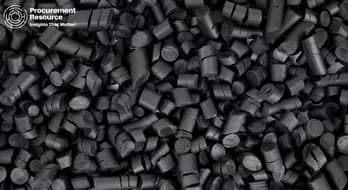
Chloroprene Rubber (CR) is a synthetic rubber that is also known as Neoprene. The properties of CR are well-balanced and include good chemical stability and utility over a broad temperature range. It exhibits good resistance to ozone cracking, heat ageing, and chemical attack because of its low reactivity. For instance, it has only moderate or poor resistance to acids, solvents, and fuels, but good resistance to many chlorofluorocarbons, aliphatic hydrocarbons, mineral oils, greases, and ozone.
C4H5Cl
Fire protection accessories, Aerospace, Mobile technology, Food Equipment (FDA-approved rubber), Stainless Steel, Medical and Healthcare
Neoprene
Denka Group, DuPont Performance Elastomers, Dow Chemical Company, Showa Denko K.K., Lanxess AG
CurrencyUS$ (Data can also be provided in local currency)
Supplier Database AvailabilityYes
Customization ScopeThe report can be customized as per the requirements of the customer
Post-Sale Analyst Support360-degree analyst support after report delivery
Note: Our supplier search experts can assist your procurement teams in compiling and validating a list of suppliers indicating they have products, services, and capabilities that meet your company's needs.
A butadiene chlorination in the vapour phase is followed by the polymerization of a free-radical emulsion in the integrated process. First, 1,4-dichloro-2-butene and 3,4-dichloro-1-butene are formed by chlorinating butadiene. After that, 3,4-dichloro-1-butene isomers are produced from the 1,4-dichloro-2-butene isomers, which are then further dehydrochlorinated. Caustic soda facilitates the dehydrochlorination, which results in the production of sodium chloride and chloroprene. Chloroprene rubber is the end result of the polymerization process that the produced chloroprene goes through.

AVP - Strategy and Solutions
Leading procurement research solutions across chemicals, materials, and food & beverages, with expertise in price forecasting and market analytics.
Our Price Analysis Methodology

Experience how Procurement Resource transforms raw material price data into clear, decision ready intelligence. Optimise your performance with reliable, expert market data and analysis. Schedule your demo today to experience a live walk-through where our experts will showcase interactive price charts, forecasted prices, and insights driving the prices for your key commodities, tailored to your workflows. Contact us now!
Our Team will be happy to assist you
We are just a text away
Still Need Help?
The report is the cost analysis of production method of chloroprene from acetylene.
The report is a detailed study of economics of production of chloroprene from butadiene using a two step process.
Unlock full access to Procurement Resource's price databases, interactive charts, and short-term forecasts for thousands of commodities. Elevate your sourcing decisions by comparing prices across regions, downloading historical data, and layering in analyst-backed insights, all with our flexible plans that scale as your portfolio grows.


Still have any Questions
Contact Us


Price Trend Dashboard - What's Included
Price trends across a diverse portfolio of categories and products, spanning board to niche chemicals
Coverage extendable to grade-specific chemicals based on procurement requirements
Regular price tracking supported by robust historical datasets
News, policy updates, and key market drivers impacting price movements
Short-term and long-term price outlooks and forecasts
Supply-demand dynamics and capacity-driven market analysis