Choco Flakes Price Trend Analysis 2026: Supply Demand Analysis, Latest News, Price Drivers, Historical Prices & Market Insights

Siddharth David profile photo
Written BySiddharth David

Procurement Resource Database

Laptop screen

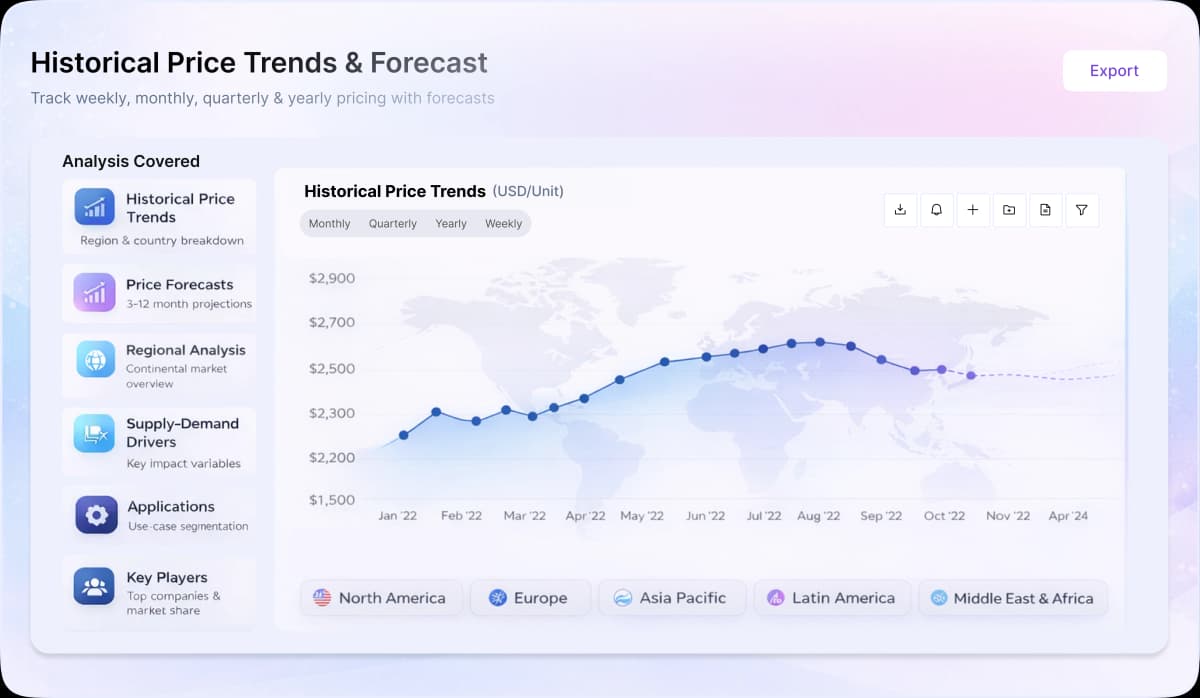
Turn price intelligence into action with the Procurement Resource Database. Log in or subscribe to unlock live price trends, historical charts, supplier databases, cost curves, and analyst-backed insights across chemicals, agriculture, energy, packaging, and more. Use these tools to benchmark your contracts, plan budgets with confidence, and stay ahead of market moves on every product you buy.

0

+

Products

0

+

Regions

0

+

Subscriptions

In the second half of 2024, the prices of Choco Flakes experienced significant fluctuations globally. The rising cost of cocoa, a primary feedstock, due to suboptimal harvests and declining output, exerted upward pressure on choco flakes prices. Major cocoa-producing regions such as Ghana and Côte d'Ivoire reported a consistent decline in production, as pests, diseases, and the El Niño weather phenomenon created farming challenges. This reduction in supply, compounded by supply chain disruptions, further escalated feedstock costs. Downstream manufacturers, including choco flakes producers, faced challenges in maintaining profit margins amid rising input costs. The limited availability of cocoa also created procurement difficulties, prompting manufacturers to reconsider formulations and reduce reliance on expensive ingredients.

Additionally, regulatory policies such as the European Union Deforestation Regulation (EUDR), which mandates that imports must be classified as deforestation-free, further restricted market access for non-compliant products. Overall, choco flakes prices remained elevated due to rising cocoa costs and constrained supply.

About Choco Flakes

Choco Flakes, as the name says, are basically flakes covered with chocolate. These flakes are widely produced from finest ingredients and are rich in iron, vitamins, minerals and dietary fibres. These flakes are generally consumed with milk. They are extensively consumed as a breakfast snack owing to their rich flavour and nutritious content. Choco Flakes are known to stimulate metabolism and help cure depression.

Choco Flakes Product Detail

Industrial Uses

Food and Beverage Industry, Confectionery

Supplier Database

Nestlé S.A, GD Foods, Unilever PLC, Bagrry's India Ltd, Kellogg India Pvt. Ltd, Global Organics, Shanti Foods (India)

Regional Coverage

Asia Pacific

China, India, Indonesia, Pakistan, Bangladesh, Japan, Philippines, Vietnam, Iran, Thailand, South Korea, Iraq, Saudi Arabia, Malaysia, Nepal, Taiwan, Sri Lanka, UAE, Israel, Hongkong, Singapore, Oman, Kuwait, Qatar, Australia, and New Zealand

Europe

Germany, France, United Kingdom, Italy,Spain, Russia, Turkey, Netherlands, Poland, Sweden, Belgium, Austria, Ireland Switzerland, Norway, Denmark, Romania, Finland, Czech Republic, Portugal and Greece

North America

United States and Canada

Latin America

Brazil, Mexico, Argentina, Columbia, Chile, Ecuador, and Peru

Africa

South Africa, Nigeria, Egypt, Algeria, Morocco

CurrencyUS$ (Data can also be provided in local currency)

Supplier Database AvailabilityYes

Customization ScopeThe report can be customized as per the requirements of the customer

Post-Sale Analyst Support360-degree analyst support after report delivery

Note: Our supplier search experts can assist your procurement teams in compiling and validating a list of suppliers indicating they have products, services, and capabilities that meet your company's needs.

Choco Flakes Production Process

  • Production of Choco Flakes from Cocoa and Flour Ingredients

To produce Choco Flakes, the ingredients are subjected to a combination of heating, cooling, mixing and shearing in the extruder. The extruded pellets are flaked in the rolling unit and further dried. After that, the resulting flakes are coated using cocoa or chocolate syrup, which are finally dried, cooled, and packed to be used for commercial purposes.

Frequently Asked Questions

The choco flakes outlook remains tied to cocoa supply conditions in West Africa and Ecuador, since cocoa powder is the dominant cost input. West African weather patterns, crop diseases, and Ecuadorian cocoa availability are the key structural drivers. Demand from food manufacturers and consumers across Europe, Asia, and North America is the other lever: softer manufacturer consumption tends to ease pricing pressure, while any supply disruption in the main cocoa-growing origins or a demand pickup could shift the trajectory higher.
Cocoa powder cost is the dominant driver of choco flakes prices, since cocoa is the primary flavoring input. Weather disruptions such as heavy rains, flooding, or drought in Ghana and Côte d'Ivoire, the leading cocoa-growing origins, can sharply reduce cocoa availability and lift cocoa powder prices. Crop-quality concerns and export delays from West Africa add further volatility. Improved weather and new cocoa arrivals from Ecuador can ease raw-material pressure, while manufacturer production levels and downstream demand strength across Europe, Asia, and North America determine how much of any cost swing passes through to prices.


The major companies in the choco flakes market are Nestlé S.A and Kellogg India Pvt. Ltd, alongside regional players including Bagrry's India Ltd, Shanti Foods (India), GD Foods, and Global Organics. Production and trade activity spans Asia Pacific, Europe, North America, Latin America, and Africa, though available data does not rank individual countries by output. Concentration among a small number of large manufacturers creates meaningful supply-chain concentration risk for buyers relying on any single producer.
Choco Flakes are made from cereal grains (corn grits or rice), combined with cocoa powder, sugar, malt extract, salt, vegetable oil, added vitamins and minerals, and packaging film. Production mixes the base with cocoa, sugar, malt, and salt, followed by steam-pressure cooking to gelatinize starch. The mass is cooled, moisture-adjusted, flaked or extruded, toasted, coated with cocoa or chocolate syrup, dried, and packaged. The finished product serves the food and beverage and confectionery industries as both a ready-to-eat breakfast cereal and ingredient in snack bars, dessert toppings, and bakery goods.
Choco flakes demand is driven by the breakfast cereal market, where they are consumed with milk as a quick, nutritious meal; the confectionery and baking sector, where they enhance cookies, brownies, cakes, and desserts; and the snack and beverage category, including trail mixes, ice cream and yogurt toppings, and chocolate-flavoured drinks. Growth in ready-to-eat and fortified functional foods, particularly among working adults, millennials, and students, amplifies procurement volumes across these channels, while cocoa cost fluctuations remain the primary price pressure.
Cocoa powder cost is the central seasonal driver of choco flakes prices, since cocoa-growing regions in West Africa follow a seasonal harvest cycle. Heavy rains, flooding, or crop disease during key growing windows in Ghana and Côte d'Ivoire can cut cocoa availability and push cocoa powder prices higher, while dry weather and export delays can compound the pressure. Improved weather and new cocoa arrivals from Ecuador, combined with reduced chocolate manufacturer production and softer downstream demand across Europe, Asia, and North America, tend to ease raw-material pressure and stabilize prices when they coincide.
Choco Flakes are offered in several grades distinguished by formulation and nutritional profile: standard sweetened flakes, whole-grain options, high-fiber products, and reduced-sugar versions. Many products are fortified with vitamins and minerals, including iron and B vitamins. These distinctions matter commercially because each grade targets a different buyer segment - retail consumers seeking taste, health-conscious shoppers seeking whole-grain or reduced-sugar options, and food-service or ingredient buyers seeking bulk consistency. Food-safety and quality-control requirements are managed through the manufacturing plant project framework covering ingredient sourcing, process line selection, and compliance protocols.
No dedicated EU standard exists specifically for choco flakes. Under regulations aligned with Codex Alimentarius standards, processed cereal products including flakes are subject to a maximum aflatoxin limit of 10 µg/kg. Compliance with such contaminant limits, alongside general food safety and labelling requirements, is necessary for market access in the EU. Documentation demonstrating adherence to these limits is required for approved commercial trade.
Procurement Resource assesses choco flakes prices through a structured methodology combining primary engagement with producers, suppliers and traders, secondary market data, monitoring of feedstock and input costs, trade-flow and inventory tracking, and exchange or spot benchmarks. These inputs are validated and translated into a transparent price assessment and outlook. The detailed methodology is available on the Procurement Resource website.

Our Price Analysis Methodology

About the Author

Siddharth David profile photo

Siddharth David

Manager - Market Research

Delivering market research and procurement intelligence at Procurement Resource with a focus on economic forecasting, commodity analysis, and client advisory to help sourcing teams make data-backed purchasing decisions.

Schedule Demo

Schedule A Demo

Experience how Procurement Resource transforms raw material price data into clear, decision ready intelligence. Optimise your performance with reliable, expert market data and analysis. Schedule your demo today to experience a live walk-through where our experts will showcase interactive price charts, forecasted prices, and insights driving the prices for your key commodities, tailored to your workflows. Contact us now!

Our Team will be happy to assist you

We are just a text away

+1

Still Need Help?

Europe & Africa

+44 7573 171117

[email protected]

USA & Canada

+1 307 363 1045

[email protected]

APAC

+91 8850629517

[email protected]

Unlock full access to Procurement Resource's price databases, interactive charts, and short-term forecasts for thousands of commodities. Elevate your sourcing decisions by comparing prices across regions, downloading historical data, and layering in analyst-backed insights, all with our flexible plans that scale as your portfolio grows.

Still have any Questions

Contact Us
Mastercard
Wire
VISA
Stripe

Why Procurement Database

Commodity Market Intelligence

Commodity Market Intelligence

Track prices, market movements, supply-demand dynamics, and industry developments across hundreds of commodities through a centralized intelligence platform built for informed procurement decisions.

Price Forecasts & Market Outlooks

Price Forecasts & Market Outlooks

Understand market fluctuations using analyst-backed forecasts, historical pricing patterns, and evolving industry trends to strengthen sourcing strategies and budget planning.

Cost & Procurement Optimization

Cost & Procurement Optimization

Leverage cost models, pricing benchmarks, and procurement insights to evaluate purchasing opportunities, improve negotiations, and enhance operational efficiency.

Global & Regional Market Insights

Global & Regional Market Insights

Access region-specific price trends, trade activities, capacity changes, and supply chain developments influencing commodity markets worldwide.

1/4