DOP (Dioctyl Phthalate Price Trend Analysis 2026: Latest News, Market Insights, Supply Demand Analysis, Historical Prices & Price Drivers
DOP (Dioctyl Phthalate) Price Trend H2 2025
Asia
During the second half of 2025, the Asian DOP market experienced a continuous decline. Oversupply and weak demand from PVC users kept pressure on prices. Production at several plants remained high, while raw materials like isooctanol and phthalic anhydride saw falling costs, reducing cost support. Construction activity slowed in many countries, making buyers cautious and limiting large purchases. India, China, and South Korea all followed this downtrend, as domestic demand remained soft and exports did not pick up significantly. Overall, Asian markets faced a bearish tone throughout the period.
Europe
In Europe, DOP prices were mostly stable to slightly soft. The market faced similar challenges as Asia, including weak demand from construction and automotive sectors. European producers dealt with competition from low cost imports from Turkey and Asia, which limited opportunities to raise prices. Some specialty plasticizers maintained stable demand, but overall buying was cautious. Many buyers focused on short-term procurement rather than stocking, keeping trading activity light.
North America
North American DOP prices were steadier compared to Asia and Europe. While construction demand was subdued, domestic production was balanced with consumption, helping prevent large price drops. Imports were affected by tariffs, giving local producers some support. Certain specialty grades used in wiring, data centres, and green energy projects saw consistent demand, helping stabilize overall prices despite soft conditions.
Analyst Insight
According to Procurement Resource, DOP prices are expected to remain under pressure in Asia and Europe due to oversupply and slow demand, while North America is likely to stay relatively stable as local demand and tariffs will provide moderate support.
Need latest DOP (Dioctyl Phthalate prices?
Get real-time price assessments, periodic trends, forecasts and price driver insights across key global markets.

Unlock Price Insights NowOur Clients
Procurement Resource Database

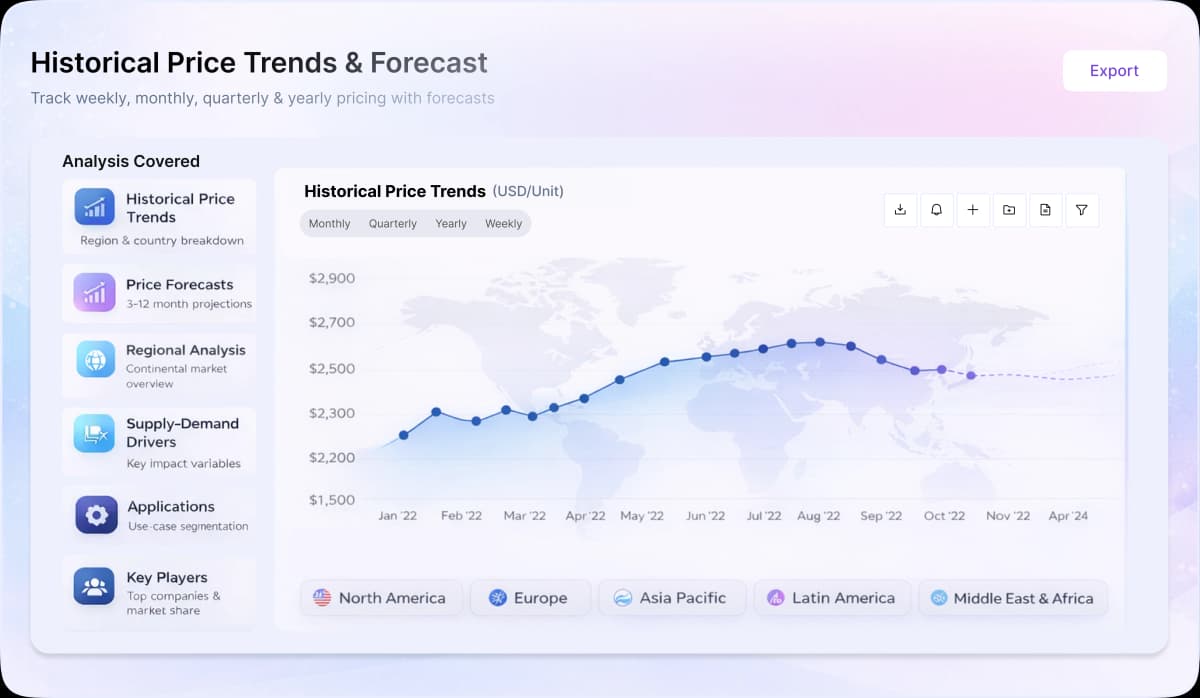
Turn price intelligence into action with the Procurement Resource Database. Log in or subscribe to unlock live price trends, historical charts, supplier databases, cost curves, and analyst-backed insights across chemicals, agriculture, energy, packaging, and more. Use these tools to benchmark your contracts, plan budgets with confidence, and stay ahead of market moves on every product you buy.

DOP (Dioctyl Phthalate Dashboard Inclusions

0
+Products
0
+Regions
0
+Subscriptions
Asia
In the first half of 2025, DOP prices in Asia experienced a sustained downward trajectory. The market was mainly influenced by weak cost support from feedstocks, particularly 2-Ethylhexanol, and an oversupplied environment. Despite some seasonal support from housing and infrastructure projects in select regions like South Korea, broader market momentum remained subdued.
Throughout H1, demand from the PVC segment stayed stable but lacked strength, especially in Japan and Southeast Asia where housing sales and automotive output remained soft. As production levels remained high post-Lunar New Year and freight rates eased, sellers were compelled to lower prices to remain competitive. Overall, the bearish trend was consistent, with no strong recovery signals in sight during the period.
Europe
In Europe, DOP prices showed a moderate but consistent upward movement over H1’25. The price trend was supported by gradually improving demand from downstream PVC markets and slightly rising feedstock costs. Construction and packaging sectors, especially in infrastructure-related activities, provided steady demand.
Energy costs and tightening inventories added to the upward push on prices. Though March and April saw an increase in imports, they were not sufficient to significantly offset the regional supply tightness. By the end of the half-year, market sentiment remained cautiously optimistic with a stable-to-firm outlook supported by stronger end-user activity and controlled production rates.
North America
North American DOP prices continued their moderate decline throughout the first half of 2025. Weakness in the construction and real estate sectors, driven by persistent economic uncertainty and high interest rates, limited PVC demand. As a result, DOP consumption remained low.
Although feedstock costs showed brief upward movements, they were not strong enough to support prices due to ongoing inventory buildup and tepid international demand, especially after China’s tariff changes. Suppliers had to adopt competitive pricing strategies to retain customers, and the overall market remained bearish, with limited prospects for short-term recovery.
About DOP
In appearance, DOP or Dioctyl phthalate is a clear liquid with a mild odour. It is slightly less dense than water and immiscible in it. Its flash point is around 430°F. It is basically utilised in the production of a variety of plastics and coating products. It helps to keep plastics soft and flexible, for instance, it is utilised to produce plastics which are further used as medical tubing and blood storage bags, cables and wire, carpetback coating, etc.
DOP (Dioctyl Phthalate Product Detail
C24H38O4
Plastic and PVC resins, Rubber products, Solvent, Used as dielectric and hydraulic fluids, Building/construction materials , Electrical and electronic products, Fabric, textile, and leather products, Furniture and furnishings , Personal care products
Dioctyl phthalate, Di-n-octyl phthalate, Dioctyl benzene-1,2-dicarboxylate, Dinopol NOP
Indo-Nippon Chemical Co., Ltd, SABIC, Acros Organics
Regional Coverage
Asia Pacific
Europe
North America
Latin America
Africa
CurrencyUS$ (Data can also be provided in local currency)
Supplier Database AvailabilityYes
Customization ScopeThe report can be customized as per the requirements of the customer
Post-Sale Analyst Support360-degree analyst support after report delivery
Note: Our supplier search experts can assist your procurement teams in compiling and validating a list of suppliers indicating they have products, services, and capabilities that meet your company's needs.
DOP Production Process
- Production of DOP (Dioctyl phthalate) via Esterification
DOP (Dioctyl phthalate) is prepared at atmospheric pressure or in a vacuum by heating an excess of n-octanol with phthalic anhydride using an esterification catalyst like sulphuric acid or p-toluenesulphonic acid. Thus, esterification of n-octanol with phthalic anhydride in the presence of a catalyst gives DOP.
Our Price Analysis Methodology

Schedule A Demo
Experience how Procurement Resource transforms raw material price data into clear, decision ready intelligence. Optimise your performance with reliable, expert market data and analysis. Schedule your demo today to experience a live walk-through where our experts will showcase interactive price charts, forecasted prices, and insights driving the prices for your key commodities, tailored to your workflows. Contact us now!
Our Team will be happy to assist you
We are just a text away
Still Need Help ?
Other Related Reports
Dimethyl Terephthalate Production from p-xylene and methanol
This process to produce DMT is a typical oxidation process. The next process which follows is methyl-esterification process.
Unlock full access to Procurement Resource's price databases, interactive charts, and short-term forecasts for thousands of commodities. Elevate your sourcing decisions by comparing prices across regions, downloading historical data, and layering in analyst-backed insights, all with our flexible plans that scale as your portfolio grows.
Still have any Questions
Contact Us


Price Trend Dashboard - What's Included
Price trends across a diverse portfolio of categories and products, spanning board to niche chemicals
Coverage extendable to grade-specific chemicals based on procurement requirements
Regular price tracking supported by robust historical datasets
News, policy updates, and key market drivers impacting price movements
Short-term and long-term price outlooks and forecasts
Supply–demand dynamics and capacity-driven market analysis