Erythromycin Price Trend Analysis 2026: Supply Demand Analysis, Latest News, Market Insights, Historical Prices & Price Drivers

Procurement Resource Database

Laptop screen

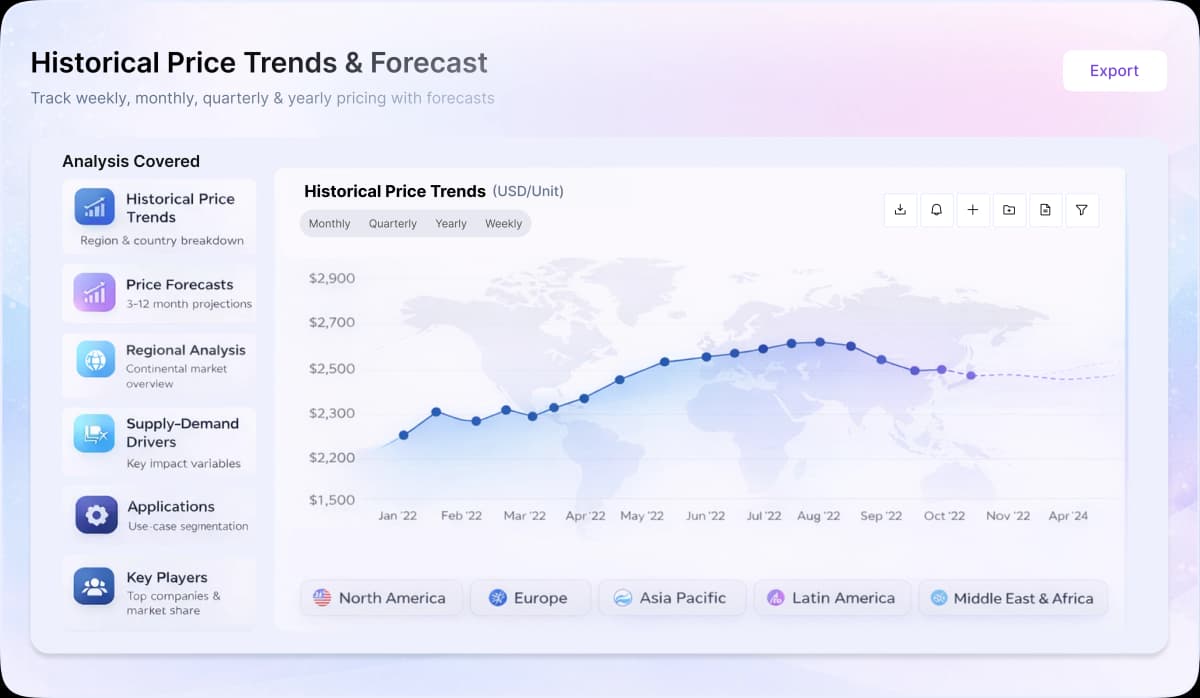
Turn price intelligence into action with the Procurement Resource Database. Log in or subscribe to unlock live price trends, historical charts, supplier databases, cost curves, and analyst-backed insights across chemicals, agriculture, energy, packaging, and more. Use these tools to benchmark your contracts, plan budgets with confidence, and stay ahead of market moves on every product you buy.

0

+

Products

0

+

Regions

0

+

Subscriptions

In the first half of 2025, the price trend for erythromycin remained relatively stable with minor fluctuations influenced by broader market events rather than changes in the drug’s direct supply chain. Being a generic antibiotic, erythromycin continued to be one of the more affordable prescription options, especially compared to brand-name drugs. Patients with insurance typically saw lower out-of-pocket costs, while those without coverage had to shop around or use discount programs to find the best deals.

Public attention toward prescription drug costs increased sharply following President Trump's May executive order aimed at reducing U.S. drug prices. However, since erythromycin is a generic drug and already among the cheaper antibiotics, the executive order had little immediate impact on its pricing. Most changes in the pharmaceutical sector at that time centered around higher-cost, brand-name medications.


About Erythromycin

Erythromycin is a macrolide antibiotic produced from the microorganism Saccharopolyspora erythraea. It is used for treating bacterial infections by inhibiting bacterial protein synthesis. Erythromycin is available in different forms including tablets, capsules, suspensions, and injectable formulations. It is widely used in pharmaceutical manufacturing due to its broad activity against various bacterial strains.
Erythromycin Product Detail

HS Code
2941
Chemical Formula

C37H67NO13

CAS Number
114-07-8
Molecular Weight
733.93 g/mol
Supplier Database

Pfizer Inc., Teva Pharmaceutical Industries Ltd., Abbott Laboratories, Sandoz International GmbH, Zhejiang Hisun Pharmaceutical Co., Ltd.

Regional Coverage

Asia Pacific

China, India, Indonesia, Pakistan, Bangladesh, Japan, Philippines, Vietnam, Iran, Thailand, South Korea, Iraq, Saudi Arabia, Malaysia, Nepal, Taiwan, Sri Lanka, UAE, Israel, Hongkong, Singapore, Oman, Kuwait, Qatar, Australia, and New Zealand

Europe

Germany, France, United Kingdom, Italy,Spain, Russia, Turkey, Netherlands, Poland, Sweden, Belgium, Austria, Ireland Switzerland, Norway, Denmark, Romania, Finland, Czech Republic, Portugal and Greece

North America

United States and Canada

Latin America

Brazil, Mexico, Argentina, Columbia, Chile, Ecuador, and Peru

Africa

South Africa, Nigeria, Egypt, Algeria, Morocco

CurrencyUS$ (Data can also be provided in local currency)

Supplier Database AvailabilityYes

Customization ScopeThe report can be customized as per the requirements of the customer

Post-Sale Analyst Support360-degree analyst support after report delivery

Note: Our supplier search experts can assist your procurement teams in compiling and validating a list of suppliers indicating they have products, services, and capabilities that meet your company's needs.

Production Process

Erythromycin production involves microbial fermentation, recovery, purification, and formulation processes. Manufacturers use controlled fermentation systems to maximize antibiotic yield, followed by solvent extraction and refining steps. The final API is tested for potency, purity, and quality before being supplied to pharmaceutical companies.

Industrial Uses

Erythromycin is mainly used in pharmaceutical formulations for treating respiratory tract infections, skin infections, ear infections, and certain gastrointestinal infections. It is also used as an active pharmaceutical ingredient (API) in antibiotics and veterinary medicines. Pharmaceutical companies process erythromycin into salts and derivatives for improved stability and formulation performance.

Frequently Asked Questions

The erythromycin outlook points to stable pricing, with policy decisions and healthcare procurement practices as the dominant market shapers. Consistent demand from essential antibiotic use tends to be offset by price competition from alternative antibiotics and cost-control pressure from government-supported pricing programmes. Steady production and comfortable availability underpin the stable view. The outlook would shift if supply disruptions, feedstock cost spikes, or major policy changes altered procurement structures.
US policy discussions around lowering prescription drug costs tend to dominate erythromycin pricing, pressuring pharmaceutical companies to offer it at reduced rates for uninsured and government-supported patients, keeping pricing controlled. Steady production and comfortable availability in key markets tend to remove supply-side price support, while consistent antibiotic demand is generally capped by strong price competition from alternative antibiotics.
Erythromycin API is manufactured primarily in China and India through fermentation of Saccharopolyspora erythraea, with Zhejiang Hisun Pharmaceutical Co., Ltd. as key China-based player. Pfizer Inc., Teva Pharmaceutical Industries Ltd., Abbott Laboratories, and Sandoz International GmbH source API, supplying finished dosage forms globally. United States, Canada, Germany, France, United Kingdom, Italy, Japan, South Korea, and Australia are primary consumers, while India, Indonesia, Pakistan, Bangladesh, Brazil, Mexico, Nigeria, and Egypt are import-dependent. Disruptions in Chinese or Indian fermentation output or export logistics create supply-chain concentration risk, posing outsized risk to importers.
Erythromycin is produced via submerged aerobic fermentation of *Saccharopolyspora erythraea* (also *Streptomyces erythreus*), using corn-derived glucose (dextrose) as the primary carbon source. The output undergoes multi-stage solvent extraction, crystallization, and purification to yield erythromycin base (potency above 850 mcg/mg). This base is converted into derivative salts and esters, including erythromycin stearate, ethylsuccinate, lactobionate, and thiocyanate, for formulation into oral tablets and capsules, topical gels and ointments for acne, intravenous preparations for severe infections, ophthalmic ointments for neonatal eye prophylaxis, and veterinary-grade feed additives.
Erythromycin demand is driven primarily by the pharmaceutical industry, where it serves as an antibacterial agent for treating bacterial infections across the body. Its use in oral and topical forms for skin, respiratory, and intestinal infections, as well as in ophthalmic preparations for eye infections, sustains consistent procurement. The healthcare and pharmaceutical sectors are the core downstream consumers, and their purchasing volumes directly shape market pricing. Policy pressure to lower prescription drug costs and competition from alternative antibiotics have kept pricing controlled rather than allowing significant increases.
China and India host a significant share of erythromycin API manufacturing capacity, with Zhejiang Hisun Pharmaceutical among key global suppliers. This concentration leaves developing-region buyers heavily import-dependent, exposing them to freight costs, regulatory delays, and stretched lead times. Any supply disruption in these hubs would tighten global availability quickly, since production levels are the primary lever on price. Stable production and comfortable availability tend to keep pricing controlled, but the underlying concentration leaves buyers vulnerable to sudden cost and supply shocks if Chinese or Indian output is interrupted.
Procurement Resource assesses erythromycin prices through a structured, data-driven methodology combining primary engagement with producers, suppliers and traders, secondary market data, and continuous monitoring of feedstock and input costs. Trade-flow and inventory tracking, alongside exchange and spot benchmarks, are validated into a transparent price assessment and outlook. The detailed methodology is available on the Procurement Resource website.

Our Price Analysis Methodology

About the Author

Vishakha Agrawal profile photo

Vishakha Agrawal

Lead - Social & Development Research

Delivering procurement intelligence and supply chain analytics across healthcare, FMCG, and chemicals sectors, with expertise in cost modeling, vendor mapping, and spend optimization to support data-driven sourcing decisions and procurement outcomes.

Schedule Demo

Schedule A Demo

Experience how Procurement Resource transforms raw material price data into clear, decision ready intelligence. Optimise your performance with reliable, expert market data and analysis. Schedule your demo today to experience a live walk-through where our experts will showcase interactive price charts, forecasted prices, and insights driving the prices for your key commodities, tailored to your workflows. Contact us now!

Our Team will be happy to assist you

We are just a text away

+1

Still Need Help?

Europe & Africa

+44 7573 171117

[email protected]

USA & Canada

+1 307 363 1045

[email protected]

APAC

+91 8850629517

[email protected]

Unlock full access to Procurement Resource's price databases, interactive charts, and short-term forecasts for thousands of commodities. Elevate your sourcing decisions by comparing prices across regions, downloading historical data, and layering in analyst-backed insights, all with our flexible plans that scale as your portfolio grows.

Still have any Questions

Contact Us
Mastercard
Wire
VISA
Stripe

Why Procurement Database

Commodity Market Intelligence

Commodity Market Intelligence

Track prices, market movements, supply-demand dynamics, and industry developments across hundreds of commodities through a centralized intelligence platform built for informed procurement decisions.

Price Forecasts & Market Outlooks

Price Forecasts & Market Outlooks

Understand market fluctuations using analyst-backed forecasts, historical pricing patterns, and evolving industry trends to strengthen sourcing strategies and budget planning.

Cost & Procurement Optimization

Cost & Procurement Optimization

Leverage cost models, pricing benchmarks, and procurement insights to evaluate purchasing opportunities, improve negotiations, and enhance operational efficiency.

Global & Regional Market Insights

Global & Regional Market Insights

Access region-specific price trends, trade activities, capacity changes, and supply chain developments influencing commodity markets worldwide.

1/4