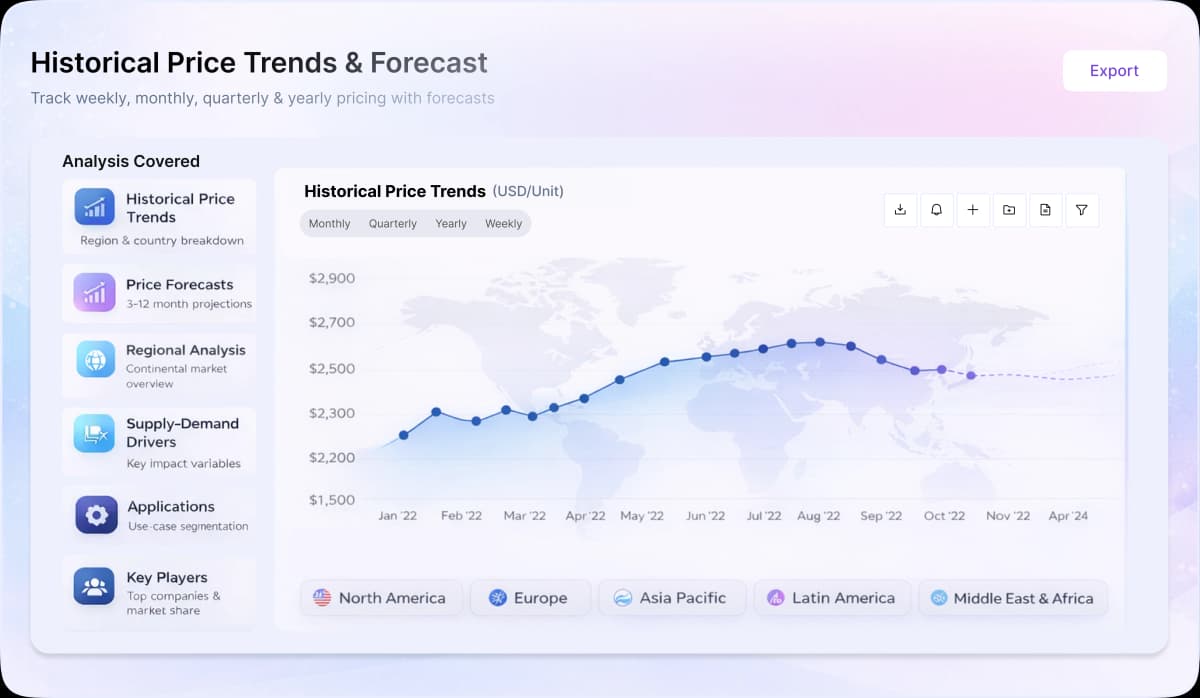
- Global ethylene oxide prices increased sharply through the quarter, with March seeing the strongest gains due to tight supply and rising upstream costs.
- Feedstock pressure intensified as crude oil and ethylene prices surged, supported by disruptions in key shipping routes and higher import costs.
- Downstream demand remained strong from construction and new energy sectors, with active restocking further pushing prices upward.
Asia
In the Chinese market, ethylene oxide prices increased from ~5.67 RMB/kg (Spot FD) in January to ~7.30 RMB/kg in March, reflecting a ~30.22% rise. The increase was driven by higher crude oil and ethylene prices following disruptions in the Strait of Hormuz, which impacted global energy flows and raised feedstock costs. Rising freight rates and logistical disruptions increased the cost of imported ethane, adding further pressure. Supply tightened due to plant maintenance, shutdowns, and reduced operating rates, while strong downstream demand from construction chemicals and battery solvents supported higher procurement. Panic buying further accelerated price increases, with suppliers limiting availability to sustain upward momentum.
Europe
In Q1’26, the ethylene oxide price curve was driven by higher prices for feedstock materials owing to geopolitical tension and disruption of logistics at the Strait of Hormuz in the European region. The price of crude oil rose, increasing production costs, while disruptions and uncertainty in the flow of goods due to tensions further strained supplies. Supply dependence on imports and high energy prices put pressure on manufacturers in favour of increasing the prices.
North America
In the North American markets, the ethylene oxide prices were driven higher amid increased costs for raw materials in response to disruptions in crude oil markets. Logistical pressures and other supply chain disruptions were coupled with shutdowns due to planned maintenance. Downstream demand held steady, which allowed manufacturers to keep pricing firm and consistent with their procurement activities.