Hot Rolled Coil Price Trend Analysis 2026: Supply Demand Analysis, Latest News, Price Drivers, Historical Prices & Market Insights

Shriya Singh profile photo
Written ByShriya Singh

Procurement Resource Database

Laptop screen

Turn price intelligence into action with the Procurement Resource Database. Log in or subscribe to unlock live price trends, historical charts, supplier databases, cost curves, and analyst-backed insights across chemicals, agriculture, energy, packaging, and more. Use these tools to benchmark your contracts, plan budgets with confidence, and stay ahead of market moves on every product you buy.

0

+

Products

0

+

Regions

0

+

Subscriptions

  • The global HRC market remained largely range-bound during Q1’26, as weak seasonal demand, high inventories, and delayed post-holiday recovery weighed on sentiment early, while cost support and trade-policy optimism improved conditions toward quarter-end.
  • Supply remained relatively ample as Chinese mills resumed output after maintenance and inventory accumulated through the Lunar New Year period, though firm iron ore and coking coal costs, thin mill margins, and expectations of production controls helped prevent a deeper correction.
  • Demand from automotive, machinery, construction equipment, and manufacturing sectors stayed mostly need-based, with delayed restocking and small-lot buying dominating transactions, while export channels and policy-led replacement demand provided partial support.

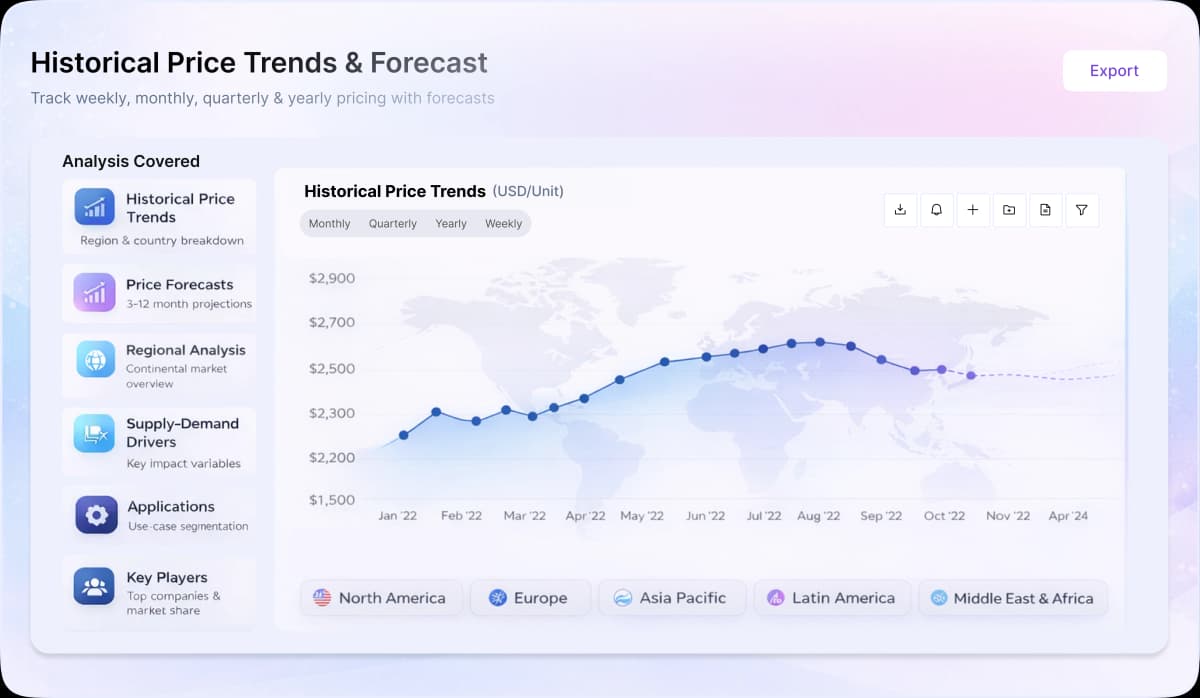
China’s hot-rolled coil market reflected a fluctuating but stable trend during Q1’26. Prices averaged around 3,420 RMB/tonne in January and eased slightly to 3,410 RMB/tonne in March, reflecting an approximate 0.31% decline over the quarter. The market remained under pressure early in the quarter as production resumed post-maintenance, inventories built up through the holiday period, and downstream sectors such as machinery, automotive, and steel processing restarted more slowly than expected.

Conditions improved through March as firm iron ore and coking coal prices strengthened the cost floor, and mills resisted sharper discounts amid low profitability. Sentiment was also supported by expectations surrounding China’s “Two New” policy (large-scale equipment renewal and consumer goods trade-ins), which is expected to support steel-intensive demand across machinery, vehicles, and appliances. Late-quarter market sentiment was further influenced by the Iran conflict, which raised freight and insurance costs, added uncertainty to steel export flows toward the Gulf, and reinforced cost-side support across the steel value chain. Overall, the market remained stable but lacked strong upward momentum due to still-elevated inventories and only gradual demand recovery.


About Hot Rolled Coil

Hot rolled coil is basically a moulded form of steel. It basically includes a mill process which involves rolling of steel at a high temperature (generally at a temperature over 1700° F), which is above the steel's recrystallisation temperature. When steel is above its recrystallisation temperature, Hot rolled coil is formed, and thus, given this shape. It is often utilised in the manufacturing of staircases. Further, it can be embossed with different patterns such as the teardrop pattern to impart excellent anti-slip properties to the product.

Hot Rolled Coil Product Detail

Industrial Uses

Construction, Shipping, Energy, Packaging, Consumer Appliances Industry, Housing, Automotive

Supplier Database

Tata Steel Limited, ArcelorMittal S.A., Nippon Steel Corporation, Jindal Steel & Power Ltd., Saudi Basic Industries Corporation (SABIC), POSCO

Regional Coverage

Asia Pacific

China, India, Indonesia, Pakistan, Bangladesh, Japan, Philippines, Vietnam, Iran, Thailand, South Korea, Iraq, Saudi Arabia, Malaysia, Nepal, Taiwan, Sri Lanka, UAE, Israel, Hongkong, Singapore, Oman, Kuwait, Qatar, Australia, and New Zealand

Europe

Germany, France, United Kingdom, Italy,Spain, Russia, Turkey, Netherlands, Poland, Sweden, Belgium, Austria, Ireland Switzerland, Norway, Denmark, Romania, Finland, Czech Republic, Portugal and Greece

North America

United States and Canada

Latin America

Brazil, Mexico, Argentina, Columbia, Chile, Ecuador, and Peru

Africa

South Africa, Nigeria, Egypt, Algeria, Morocco

CurrencyUS$ (Data can also be provided in local currency)

Supplier Database AvailabilityYes

Customization ScopeThe report can be customized as per the requirements of the customer

Post-Sale Analyst Support360-degree analyst support after report delivery

Note: Our supplier search experts can assist your procurement teams in compiling and validating a list of suppliers indicating they have products, services, and capabilities that meet your company's needs.

Hot Rolled Coil Production Process

  • Production of Hot Rolled Coil via Hot Rolling Process

In metalworking, rolling is a metal forming method in which metal stock is passed through one or more pairs of rolls to decrease its thickness and to make it uniform.  The rolling process is known as hot rolling if the temperature at which the metal is being rolled is above its recrystallisation point.

Thus, during the hot rolling of steel, it is transformed into coil a shaped product upon reaching above its recrystallisation point, thus, resulting in the formation of Hot Rolled Coil.

Frequently Asked Questions

During Q1 2026, hot rolled coil (HRC) prices in China showed a mild upward movement, increasing by 0.54% from January to March. As stable manufacturing demand and relatively firm raw material costs supported the market. Demand from machinery, automotive, and construction sectors remained steady, while cautious purchasing activity and adequate mill supply limited stronger gains. Market sentiment was also influenced by Chinese steel production controls, export activity, and developments in iron ore and coking coal markets.
From Q4 2025 to Q1 2026, average HRC prices increased from USD 469.98/MT in Q4 2025 to USD 476.49/MT in Q1 2026, showing a 1.38% rise. The improvement reflected relatively stable downstream steel demand, continued infrastructure and manufacturing activity, and firm steelmaking costs. Raw material markets remained important, with iron ore imports staying elevated and coking coal markets experiencing periodic supply concerns that supported steel production costs.
The hot rolled coil market outlook for 2026 remains cautiously balanced. Demand from manufacturing, automotive, machinery, and infrastructure sectors is expected to provide support, while steel supply will continue to be influenced by Chinese production controls and export trends. Raw material costs, particularly iron ore and coking coal, will remain important pricing drivers. Trade measures such as the EU Carbon Border Adjustment Mechanism (CBAM) may also influence international steel flows and competitiveness.
Coking coal and iron ore costs were key factors influencing HRC prices in Q1 2026. Strong freight and logistics charges for importing coking coal increased delivered costs for mills, which in turn supported HRC price stability. The tight integration of feedstock supply with regional mill output reinforced price resilience during the quarter.


China is the world's largest producer and exporter of hot rolled coil and plays a major role in determining global supply and pricing trends. Other important producers include India, Japan, South Korea, the United States, Germany, Brazil, and Russia. India, Japan, and South Korea are significant exporters, while Europe and North America remain major consuming regions for flat steel products used in manufacturing, automotive production, construction, and infrastructure projects.
In early 2026, Shougang Jingtang Steel in China resumed operations of its 5.5 million tonnes per year HRC facility after a planned maintenance shutdown. Meanwhile, POSCO announced ramp-up plans for its Gwangyang hot-rolled mill to increase specialty HRC output. These additions and restarts improved regional supply balance and supported consistent market availability.
HRC production relies mainly on coking coal, iron ore, and scrap steel. Coking coal and iron ore prices directly influence steelmaking costs, while scrap affects electric arc furnace operations. When feedstock costs rise, mills pass some of the cost to HRC prices. Conversely, abundant scrap and lower coke prices can ease pricing pressure on finished coils.
Demand from the automotive, appliance, and construction sectors maintained HRC consumption in Q1 2026. Strong order books in construction and machinery reinforced mill operating rates. While some exporters held back to manage inventories, consistent domestic consumption helped keep pricing stable despite global steel market volatility.
The EU Carbon Border Adjustment Mechanism (CBAM) became more prominent in early 2026. Imported steel products, including HRC, are now subject to carbon cost adjustments. This affected exporters to Europe, particularly from high-carbon steel-producing regions, influencing trade flows, landed costs, and indirectly supporting domestic HRC pricing in source countries.
Procurement Resource employs a structured methodology combining primary research, secondary market data, analytical models, and validation processes to assess hot rolled coil prices and trends. Price evaluations incorporate supply-demand dynamics, mining activities, trade flows, and value chain analysis, supported by continuous market monitoring to ensure accurate and reliable insights.

Our Price Analysis Methodology

About the Author

Shriya Singh profile photo

Shriya Singh

Business Insights Analyst

Helping procurement and sourcing teams navigate complex markets through data-driven research, category intelligence, and actionable insights - with a focus on identifying market trends, analyzing supply-side developments, and delivering clear intelligence that supports informed business decisions.

Schedule Demo

Schedule a demo

Experience how Procurement Resource transforms raw material price data into clear, decision ready intelligence. Optimise your performance with reliable, expert market data and analysis. Schedule your demo today to experience a live walk-through where our experts will showcase interactive price charts, forecasted prices, and insights driving the prices for your key commodities, tailored to your workflows. Contact us now!

Our Team will be happy to assist you

We are just a text away

+1

Still Need Help?

Europe & Africa

+44 7573 171117

[email protected]

USA & Canada

+1 307 363 1045

[email protected]

APAC

+91 8850629517

[email protected]

Other Related Reports

Coal Liquefication Production from Direct Liquefaction

This report provides the cost structure of coal liquefication by direct liquefaction. In this process, coal is exposed to hydrogen at 450°C along with high pressure for one hour in the presence of recycled solvent and iron-based catalyst.

Copper Wire Manufacturing Plant Project Report 2026: Cost Analysis, ROI, and Feasibility Insights

Copper Wire Manufacturing Plant Project Report thoroughly focuses on every detail that encompasses the cost of manufacturing. Our extensive cost model meticulously covers breaking down expenses around raw materials, labour, technology, and manufacturing expenses. This enables precise cost structure optimization and helps in identifying effective strategies to reduce the overall cash cost of manufacturing.

Unlock full access to Procurement Resource's price databases, interactive charts, and short-term forecasts for thousands of commodities. Elevate your sourcing decisions by comparing prices across regions, downloading historical data, and layering in analyst-backed insights, all with our flexible plans that scale as your portfolio grows.

Still have any Questions

Contact Us
Mastercard
Wire
VISA
Stripe

Related News

View All

Why Procurement Database

Commodity Market Intelligence

Commodity Market Intelligence

Track prices, market movements, supply-demand dynamics, and industry developments across hundreds of commodities through a centralized intelligence platform built for informed procurement decisions.

Price Forecasts & Market Outlooks

Price Forecasts & Market Outlooks

Understand market fluctuations using analyst-backed forecasts, historical pricing patterns, and evolving industry trends to strengthen sourcing strategies and budget planning.

Cost & Procurement Optimization

Cost & Procurement Optimization

Leverage cost models, pricing benchmarks, and procurement insights to evaluate purchasing opportunities, improve negotiations, and enhance operational efficiency.

Global & Regional Market Insights

Global & Regional Market Insights

Access region-specific price trends, trade activities, capacity changes, and supply chain developments influencing commodity markets worldwide.

1/4