Crude Futures Firm on Spot Demand
Crude oil futures firmed amid firm spot demand, with both major global benchmarks edging higher in trade. Increased positioning by market participants reflected continued underlying demand support.
Strait of Hormuz closure continues to constrain global oil supply, with observed output remaining significantly below year-ago levels. IEA revised its demand forecast downward as inventories fell to multi-decade lows, reinforcing upward price pressure and market volatility.
Asia
In Asia, Ibuprofen prices initially strengthened during Q1’26 due to higher feedstock costs and improving pharmaceutical manufacturing activity before softening mid-quarter amid weaker procurement and rising inventories. Expanding phenol-acetone production capacity in China continued influencing upstream market dynamics and feedstock availability, creating fluctuations in acetone pricing sentiment during the quarter. However, by March, the Iran conflict and disruptions around the Strait of Hormuz sharply increased energy and shipping expenses, raising production and export costs for pharmaceutical intermediates and supporting a late-quarter recovery in Ibuprofen prices. Stable export activity from China and improving regional pharmaceutical manufacturing further supported market fundamentals across Asia.
Europe
In Europe, Ibuprofen prices remained relatively elevated as manufacturers faced higher import and logistics expenses alongside uncertain feedstock availability. Weak downstream chemical demand and low operating rates in parts of the European acetone market intermittently tightened spot supply conditions during the quarter. Rising freight charges, marine insurance premiums, and concerns over energy flows through the Strait of Hormuz further increased replacement costs for imported pharmaceutical feedstocks and intermediates. Demand from healthcare and OTC pharmaceutical sectors remained stable, preventing significant price declines despite cautious procurement behaviour among distributors.
North America
In North America, Ibuprofen prices stayed firm as elevated upstream acetone costs and stable pharmaceutical demand supported the market. Production-side tightness in the acetone market and healthy export activity from the US Gulf region strengthened overall pharmaceutical intermediate costs during the quarter. Consumption from pain relief, cold and flu medication, and hospital procurement channels remained consistent, while higher global freight and energy costs linked to the Iran conflict limited opportunities for downward price correction.
Analyst Insight
According to Procurement Resource, in the near term, Ibuprofen prices are expected to remain firm-to-volatile as fluctuating feedstock economics, geopolitical shipping risks, and stable pharmaceutical demand continue influencing global market conditions.
Related Report
Need latest Ibuprofen price?
Get real-time price assessments, periodic trends, forecasts and price driver insights across key global markets.
Unlock Price Insights NowOur Clients

Turn price intelligence into action with the Procurement Resource Database. Log in or subscribe to unlock live price trends, historical charts, supplier databases, cost curves, and analyst-backed insights across chemicals, agriculture, energy, packaging, and more. Use these tools to benchmark your contracts, plan budgets with confidence, and stay ahead of market moves on every product you buy.
0
+Products
0
+Regions
0
+Subscriptions
Asia
In Asia, Ibuprofen prices continued to rise in the fourth quarter of 2025. China, being a major producer, experienced steady demand both domestically and internationally. The growing need from pharmaceutical companies pushed suppliers to maintain higher prices. Limited raw material availability and production costs also contributed to the upward trend. Overall, the market showed that any changes in production or exports could quickly affect prices, reflecting the region’s strong influence on the global supply.
Europe
In Europe, Ibuprofen prices also increased during Q4’25. Countries like Germany faced challenges due to shortages and reliance on imports from Asia. Pharmacies reported frequent gaps in stock, and demand from hospitals and consumers kept pressure on the market. Supply chain delays and regional inefficiencies made it harder to stabilize prices. Overall, European markets were very sensitive to disruptions, which kept prices moving upwards throughout the quarter.
North America
In North America, Ibuprofen prices rose slightly in Q4’25, mainly due to higher demand in healthcare and retail pharmacies. The U.S. market saw efforts to lower medicine costs through new government initiatives, but most price adjustments focused on branded or new drugs rather than common over-the-counter painkillers. Supply from Asia influenced availability, and any global shortage affected local prices. Consumers still faced moderate increases, reflecting both demand and supply constraints.
Ibuprofen belongs to the non-steroidal anti-inflammatory category of drugs and is popularly used in treatment of inflammation, fever, and pain. It is frequently used to treat a number of ailments, such as menstrual cramps, arthritis, muscle discomfort, and headaches. Orally ingested ibuprofen is readily absorbed and has long-lasting effects. It inhibits the enzymes which produce prostaglandins that are a primary cause of inflammation.

C13H18O2
Pharmaceutical manufacturing, Cosmetic and skincare, Athletic and topical products
BASF SE, BIOCAUSE Inc, Solara Active Pharma Sciences Limited, IOL Chemicals and Pharmaceuticals Limited, SI Group Inc
CurrencyUS$ (Data can also be provided in local currency)
Supplier Database AvailabilityYes
Customization ScopeThe report can be customized as per the requirements of the customer
Post-Sale Analyst Support360-degree analyst support after report delivery
Note: Our supplier search experts can assist your procurement teams in compiling and validating a list of suppliers indicating they have products, services, and capabilities that meet your company's needs.

In synthesis of ibuprofen, the first step is the reaction between isobutyl benzene and acetic anhydride. Theu undergo various sequential reactions such as Friedal-Crafts acylation, carbonyl reaction, chloride substitution, and Grignard reaction to ultimately give ibuprofen as its final product.
Our Price Analysis Methodology

Lead - Social & Development Research
Delivering procurement intelligence and supply chain analytics across healthcare, FMCG, and chemicals sectors, with expertise in cost modeling, vendor mapping, and spend optimization to support data-driven sourcing decisions and procurement outcomes.

Experience how Procurement Resource transforms raw material price data into clear, decision ready intelligence. Optimise your performance with reliable, expert market data and analysis. Schedule your demo today to experience a live walk-through where our experts will showcase interactive price charts, forecasted prices, and insights driving the prices for your key commodities, tailored to your workflows. Contact us now!
Our Team will be happy to assist you
We are just a text away
Still Need Help?
Unlock full access to Procurement Resource's price databases, interactive charts, and short-term forecasts for thousands of commodities. Elevate your sourcing decisions by comparing prices across regions, downloading historical data, and layering in analyst-backed insights, all with our flexible plans that scale as your portfolio grows.
Still have any Questions
Contact Us


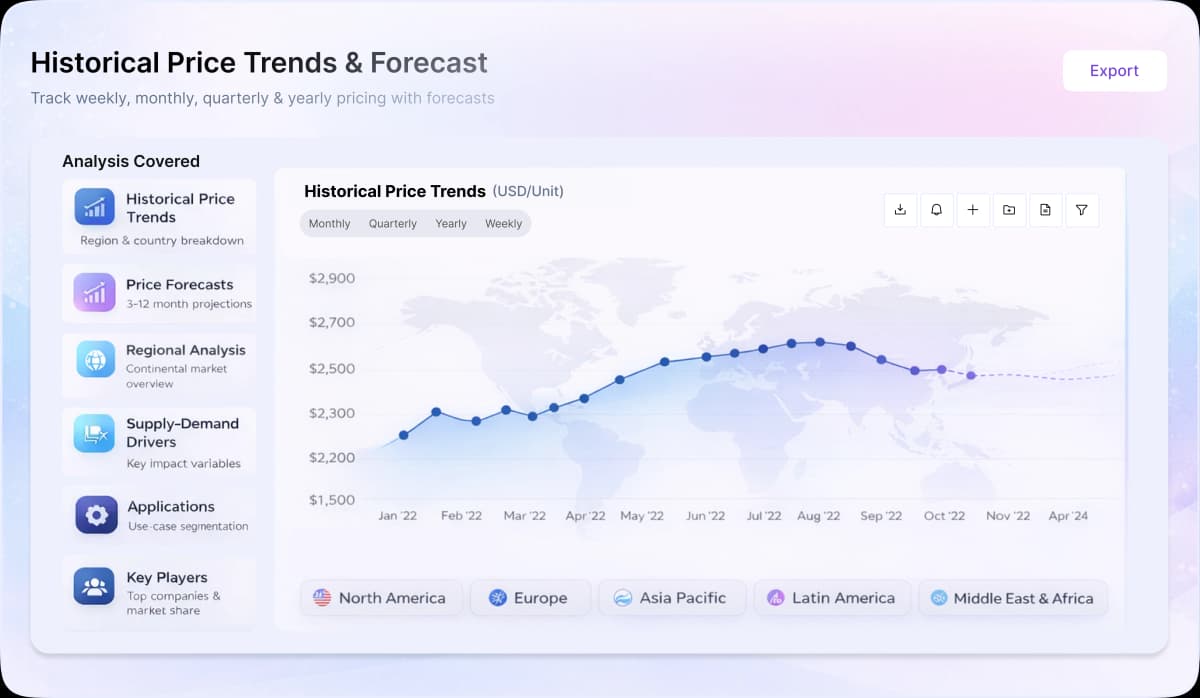
Price Trend Dashboard - What's Included
Price trends across a diverse portfolio of categories and products, spanning board to niche chemicals
Coverage extendable to grade-specific chemicals based on procurement requirements
Regular price tracking supported by robust historical datasets
News, policy updates, and key market drivers impacting price movements
Short-term and long-term price outlooks and forecasts
Supply-demand dynamics and capacity-driven market analysis