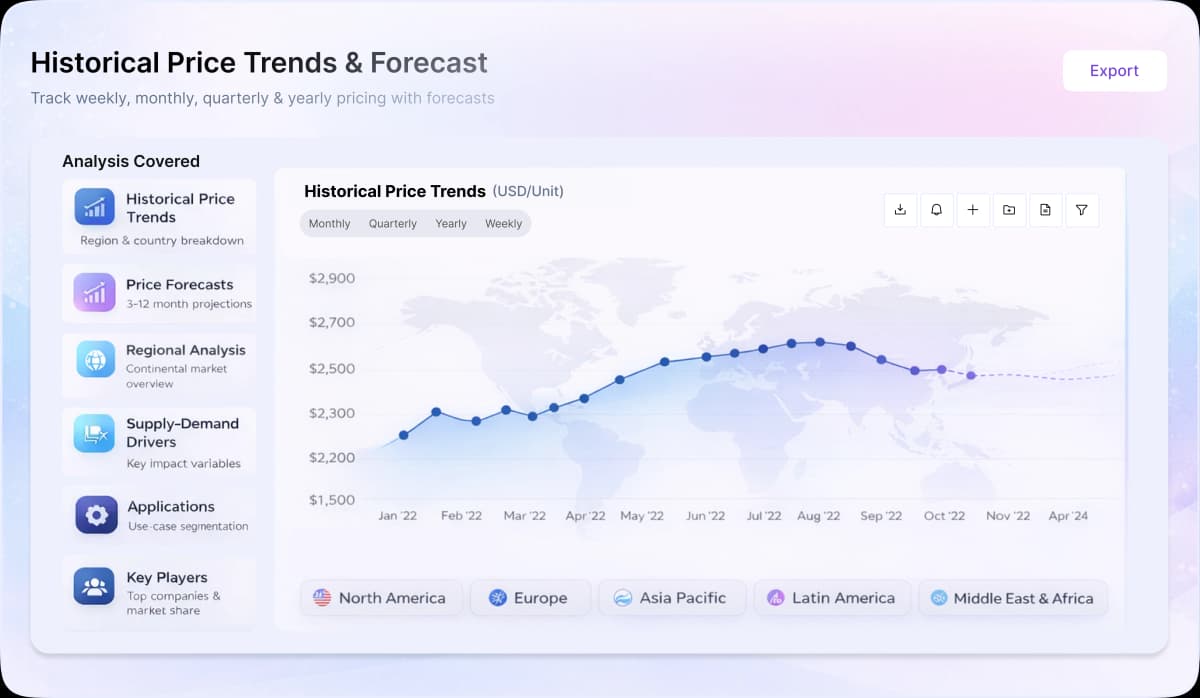
- Global indium prices moved upwards in Q1’26, driven by tightening supply conditions and strong speculative activity in China, a major player.
- Feedstock constraints remained critical as indium, a byproduct of zinc processing, faced structural supply inelasticity alongside declining exports from key producers.
- Downstream demand strengthened from semiconductors, touchscreens, and solar technologies, reinforcing the bullish market sentiment despite elevated prices.
The prices of Indium experienced an increase in Q1'26, mainly due to tight supply conditions and bullish sentiment in Chinese exchanges. China, which provides almost 70% of the global production of indium, indicated that its exports decreased significantly, indicating constrained availability in international markets. Additionally, South Korea, contributing around 17% of global production, faced limited spot market availability, further tightening supply. Supply factors were rather limiting because indium is a byproduct of zinc production, hence inelastic to the ups and downs in the economy. On the demand side, strong drivers included growth in the semiconductor industry, clean energy applications, including indium tin oxide for highly efficient solar cells and electronics, and demand from other strategic sectors. For instance, the U.S. Defense Logistics Agency’s solicitation for purchasing up to $125 million in indium ingots.