

Udeesha Tomar
AVP - Strategy and Solutions
Leading procurement research solutions across chemicals, materials, and food & beverages, with expertise in price forecasting and market analytics.

Asia
Throughout 2024, the price of Methyl Ester Sulphonate in the Asian market exhibited a steady trend with marginal fluctuations. In H1, prices were primarily influenced by the feedstock and palm oil markets. The initial rise in feedstock prices during the winter months, driven by high demand, put pressure on manufacturers by tightening profit margins. However, as demand softened during the summer, the prices stabilized, leading to a more balanced market.
In H2, the market saw continued stability with occasional fluctuations, primarily linked to shifts in palm oil pricing. While global supply chains faced disruptions, the region’s pricing remained relatively steady, supported by consistent demand from downstream industries. Overall, the prices of Methyl Ester Sulphonate followed a stable trajectory with occasional variations in response to raw material price movements.
Europe
The European market experienced a fluctuating trajectory in 2024, influenced by both raw material costs and geopolitical factors. In H1, palm oil prices remained a key determinant, but additional market challenges, including logistical disruptions and supply chain constraints, impacted the price movement. The war between Russia and Ukraine and ongoing geopolitical tensions led to increased freight costs and occasional supply shortages, contributing to price volatility.
During H2, the market remained sensitive to external shocks, including disruptions in major shipping routes such as the Red Sea. The region, being heavily reliant on palm oil imports, faced intermittent supply chain disruptions, causing fluctuations in Methyl Ester Sulphonate prices. Despite these challenges, the overall price trend remained elevated due to geopolitical uncertainties and logistical bottlenecks.
North America
In North America, Methyl Ester Sulphonate prices mirrored global market trends, primarily tracking feedstock and palm oil price movements. H1 saw a stable pricing environment with minor fluctuations, driven by steady supply and demand dynamics. However, logistical constraints, such as delays caused by the drying of the Panama Canal and rising freight costs, pushed prices higher during certain periods.
H2 followed a similar trend, with supply chain disruptions continuing to play a role in price volatility. While demand remained relatively inelastic, logistical inefficiencies added upward pressure to prices. Despite these challenges, the overall market maintained a steady trajectory with occasional fluctuations linked to global trade dynamics and feedstock availability.
Analyst Insight
According to Procurement Resource, the prices of Methyl Ester Sulphonate are likely to experience fluctuations in the coming months, and the cost of feedstocks will remain a key factor influencing the pricing trend of this commodity for the remainder of the year.
Related Report
Need Latest Methyl Ester Sulphonate Prices?
Get real-time price assessments, periodic trends, forecasts and price driver insights across key global markets.
Our Clients































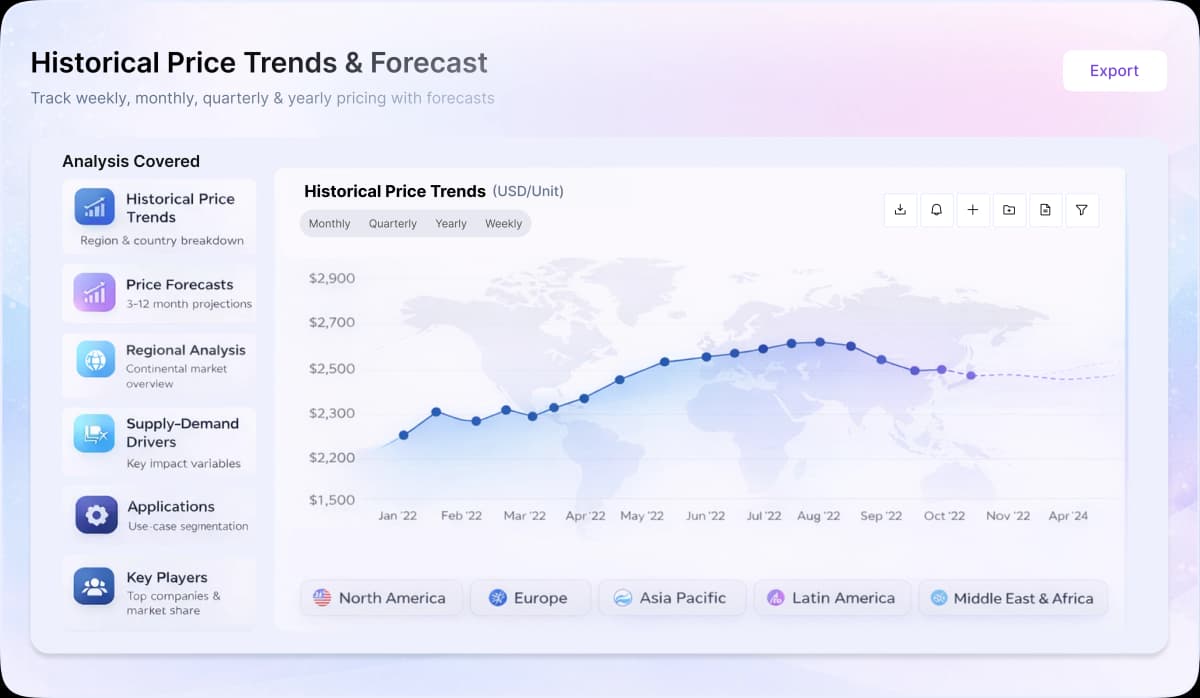
Turn price intelligence into action with the Procurement Resource Database. Log in or subscribe to unlock live price trends, historical charts, supplier databases, cost curves, and analyst-backed insights across chemicals, agriculture, energy, packaging, and more. Use these tools to benchmark your contracts, plan budgets with confidence, and stay ahead of market moves on every product you buy.
0
+Products
0
+Regions
0
+Subscriptions
Asia
In the final two quarters of 2023, the methyl ester sulphonate market in Asia experienced a blend of trends. Initially robust in October, prices rose due to the upward movement of palm oil feedstock costs. However, a sharp decline occurred in the latter half of the quarter, influenced by both palm oil prices and demand from downstream industries like detergents and cosmetics. Despite initial strong demand, the holiday season led to decreased market needs, resulting in overall modest price variations.
Europe
In Europe, methyl ester sulphonate trends mirrored those of Asia. Trade disruptions, notably from conflicts like the Russia-Ukraine and Israel-Hamas wars, significantly impacted prices. Amid a global industrial slowdown and falling crude oil prices, methyl ester sulphonate prices tended towards the lower end of the spectrum.
North America
Similarly, in North America, methyl ester sulphonate market dynamics paralleled those of other global regions. The market's trajectory followed palm oil feedstock prices, contributing to a subdued atmosphere. Suppliers faced pressure to reduce production due to existing inventory levels, leading to fluctuating price trends overall.
The chemical 2-(N-morpholino) ethanesulfonic acid is known as Methyl Ester Sulphonate (MES). A morpholine ring is present in its chemical structure. In biology and biochemistry, MES is employed as a buffering agent. At 20 °C, it has a pKa of 6.15. In water, MES is very soluble. This chemical compound has a melting point of around 300 ° C.
C6H13NO4S
Non-coordinating buffer
Chemithon Corporation, Wilmar International Limited, KLK Oleo, Stepan Company, Lion Corporation, Zanyu Technology Group CO., Ltd.
CurrencyUS$ (Data can also be provided in local currency)
Supplier Database AvailabilityYes
Customization ScopeThe report can be customized as per the requirements of the customer
Post-Sale Analyst Support360-degree analyst support after report delivery
Note: Our supplier search experts can assist your procurement teams in compiling and validating a list of suppliers indicating they have products, services, and capabilities that meet your company's needs.
Transesterification is carried out first in this process using palm oil and methanol to produce methyl ester, which is then sulphonated to produce methyl ester sulphonate.
Our Price Analysis Methodology
AVP - Strategy and Solutions
Leading procurement research solutions across chemicals, materials, and food & beverages, with expertise in price forecasting and market analytics.
Experience how Procurement Resource transforms raw material price data into clear, decision ready intelligence. Optimise your performance with reliable, expert market data and analysis. Schedule your demo today to experience a live walk-through where our experts will showcase interactive price charts, forecasted prices, and insights driving the prices for your key commodities, tailored to your workflows. Contact us now!
Our Team will be happy to assist you
We are just a text away
Still Need Help?
Unlock full access to Procurement Resource's price databases, interactive charts, and short-term forecasts for thousands of commodities. Elevate your sourcing decisions by comparing prices across regions, downloading historical data, and layering in analyst-backed insights, all with our flexible plans that scale as your portfolio grows.
Still have any Questions
Contact Us



Price Trend Dashboard - What's Included
Price trends across a diverse portfolio of categories and products, spanning board to niche chemicals
Coverage extendable to grade-specific chemicals based on procurement requirements
Regular price tracking supported by robust historical datasets
News, policy updates, and key market drivers impacting price movements
Short-term and long-term price outlooks and forecasts
Supply–demand dynamics and capacity-driven market analysis

Track prices, market movements, supply-demand dynamics, and industry developments across hundreds of commodities through a centralized intelligence platform built for informed procurement decisions.

Understand market fluctuations using analyst-backed forecasts, historical pricing patterns, and evolving industry trends to strengthen sourcing strategies and budget planning.

Leverage cost models, pricing benchmarks, and procurement insights to evaluate purchasing opportunities, improve negotiations, and enhance operational efficiency.
Access region-specific price trends, trade activities, capacity changes, and supply chain developments influencing commodity markets worldwide.