

Udeesha Tomar
AVP - Strategy and Solutions
Leading procurement research solutions across chemicals, materials, and food & beverages, with expertise in price forecasting and market analytics.

Particle board is an engineered wood product made from wood chips, sawdust, and industrial wood waste bonded with formaldehyde based adhesives and compressed under heat and pressure. It is a cost effective alternative to solid wood and plywood across furniture manufacturing including cabinetry, desks, wardrobes, and shelving, as well as floor underlays, partition panels, and insulation boards. Pricing tracks wood raw material and resin costs, exposing it to forestry and chemical sector dynamics.
In H1 2026, particle board prices held a firm tone, extending the upward trajectory of late 2025. India's mandatory BIS certification framework continued to restrict non compliant and lower cost imports, keeping supply disciplined in a key consuming market. Formaldehyde based resin costs stayed elevated on sustained cross industry demand, adding persistent pressure to production costs. In Southeast Asia and parts of Europe, procurement was measured early in the year as buyers managed inventory amid economic caution, though organised furniture sector demand provided consistent support. Residential construction, commercial interior fit out, and organised retail furniture offtake stabilised consumption, with housing development in emerging Asian economies a reliable anchor, and some markets reported tighter lead times than the prior year.
Analyst Insight
According to Procurement Resource, particle board prices should hold firm through H2 2026, underpinned by sticky resin input costs, regulatory driven supply discipline in key markets, and sustained furniture and construction demand. Meaningful softening would require a broad easing in formaldehyde based adhesive costs or a decisive slowdown in downstream construction activity.
Need Latest Particle Board Prices?
Get real-time price assessments, periodic trends, forecasts and price driver insights across key global markets.
Our Clients































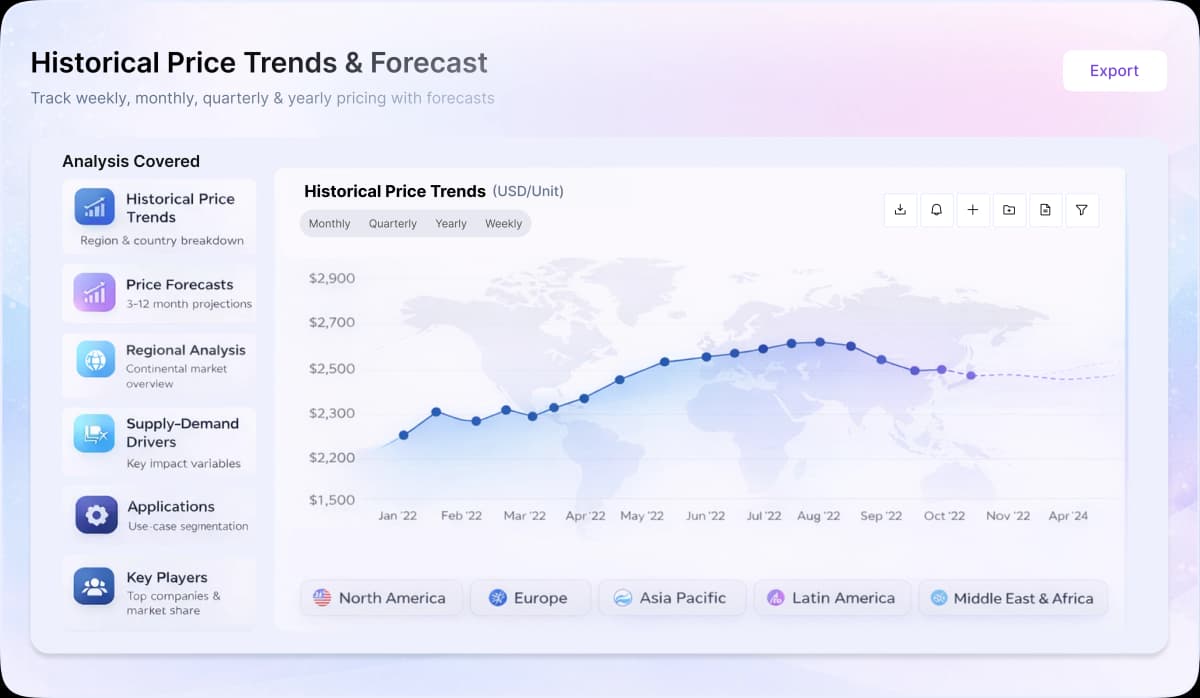
Turn price intelligence into action with the Procurement Resource Database. Log in or subscribe to unlock live price trends, historical charts, supplier databases, cost curves, and analyst-backed insights across chemicals, agriculture, energy, packaging, and more. Use these tools to benchmark your contracts, plan budgets with confidence, and stay ahead of market moves on every product you buy.
0
+Products
0
+Regions
0
+Subscriptions
During 2025, the particle board market exhibited a generally firm to upward trend, shaped by regulatory changes, raw material dynamics, and evolving downstream demand. In the first half of the year, the implementation of mandatory BIS certification in India reduced the presence of non-compliant manufacturers and limited low-cost imports, tightening supply and supporting domestic producers. While timber availability improved due to redirected supplies, elevated costs of adhesives, chemicals, energy, and freight kept production expenses high. Demand showed gradual improvement, driven by housing, office expansion, and government-led infrastructure projects.
In the second half of 2025, prices strengthened further as rising formaldehyde-based resin costs increased the overall manufacturing cost structure. Producers responded with price revisions, while some temporarily withheld orders to align with updated pricing levels. Supply remained controlled amid cost pressures, and buyers adopted cautious procurement strategies. Demand from furniture, interior decoration, and construction sectors remained steady, providing consistent support to the market despite slower inventory turnover in certain regions.
Particle board is an engineered wood panel produced by compressing wood particles, sawdust, and wood chips with synthetic resins under high pressure and temperature. It provides a cost-effective alternative to solid wood and is widely used for furniture, construction, and interior applications. Different grades are produced based on density, strength, and moisture resistance requirements.
Chipboard, Wood Particle Board, Flakeboard, Composite Wood Panel
Kronospan Limited, EGGER Group,West Fraser Timber Co. Ltd., Weyerhaeuser Company, Kastamonu Entegre, Swiss Krono Group
CurrencyUS$ (Data can also be provided in local currency)
Supplier Database AvailabilityYes
Customization ScopeThe report can be customized as per the requirements of the customer
Post-Sale Analyst Support360-degree analyst support after report delivery
Note: Our supplier search experts can assist your procurement teams in compiling and validating a list of suppliers indicating they have products, services, and capabilities that meet your company's needs.
Particle board production involves preparation of wood particles, resin blending, mat formation, hot pressing, and surface finishing. Manufacturers control particle size, resin content, density, and moisture levels to produce panels suitable for furniture, construction, and industrial applications.
Particle board is mainly used in furniture manufacturing, including cabinets, shelves, tables, and office furniture. It is also used in interior decoration, flooring substrates, wall panels, and kitchen fixtures. Laminated particle boards are widely used in residential and commercial construction due to their affordability and ease of processing.
Our Price Analysis Methodology
AVP - Strategy and Solutions
Leading procurement research solutions across chemicals, materials, and food & beverages, with expertise in price forecasting and market analytics.
Experience how Procurement Resource transforms raw material price data into clear, decision ready intelligence. Optimise your performance with reliable, expert market data and analysis. Schedule your demo today to experience a live walk-through where our experts will showcase interactive price charts, forecasted prices, and insights driving the prices for your key commodities, tailored to your workflows. Contact us now!
Our Team will be happy to assist you
We are just a text away
Still Need Help?
Unlock full access to Procurement Resource's price databases, interactive charts, and short-term forecasts for thousands of commodities. Elevate your sourcing decisions by comparing prices across regions, downloading historical data, and layering in analyst-backed insights, all with our flexible plans that scale as your portfolio grows.
Still have any Questions
Contact Us



Price Trend Dashboard - What's Included
Price trends across a diverse portfolio of categories and products, spanning board to niche chemicals
Coverage extendable to grade-specific chemicals based on procurement requirements
Regular price tracking supported by robust historical datasets
News, policy updates, and key market drivers impacting price movements
Short-term and long-term price outlooks and forecasts
Supply–demand dynamics and capacity-driven market analysis

Track prices, market movements, supply-demand dynamics, and industry developments across hundreds of commodities through a centralized intelligence platform built for informed procurement decisions.

Understand market fluctuations using analyst-backed forecasts, historical pricing patterns, and evolving industry trends to strengthen sourcing strategies and budget planning.

Leverage cost models, pricing benchmarks, and procurement insights to evaluate purchasing opportunities, improve negotiations, and enhance operational efficiency.
Access region-specific price trends, trade activities, capacity changes, and supply chain developments influencing commodity markets worldwide.