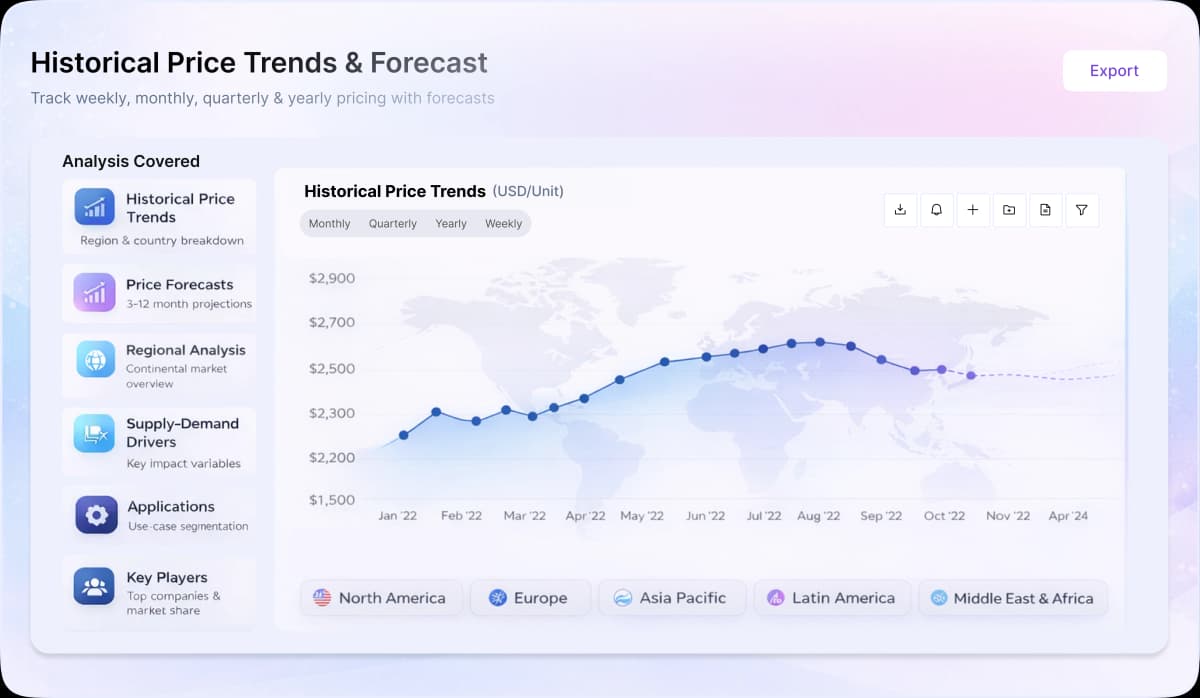
- Platinum prices showed a declining trend in Q1’26 despite geopolitical tensions, as weak demand and higher supply weighed on the market.
- Supply conditions remained comfortable due to higher mine output and increased recycling, which led to downward pressure on prices.
- Downstream demand weakened, especially from the automotive sector, while the shift toward electric vehicles reduced consumption.
The prices of platinum dropped during Q1'26 in the European region. The prices were about ~EUR 2,213/troy ounce in January, reducing to around ~EUR 1,952/troy ounce (Spot FD) in March, representing a drop of approximately 11.8%. The fall in prices was caused by lower demand from the automotive industry and decreased investor interest, resulting in price reductions. Although Iran-related tensions and the Middle East conflict increased uncertainty, platinum did not gain significantly as its demand is more industrial than safe-haven driven, which justified the declining trend. Other factors that contributed to the falling trend include recycling activities and higher supply, creating a surplus situation and thus pushing prices further down. In 2024, the total production of platinum through global mines stood at about 170,000 kg, resulting in a surplus that was dragged down in the current year. Overall, the platinum market remained weak with minimal recovery during the quarter.