Polypropylene (PP) Price Trend Analysis 2026: Supply Demand Analysis, Historical Prices, Price Drivers, Latest News & Market Insights

Procurement Resource Database

Laptop screen

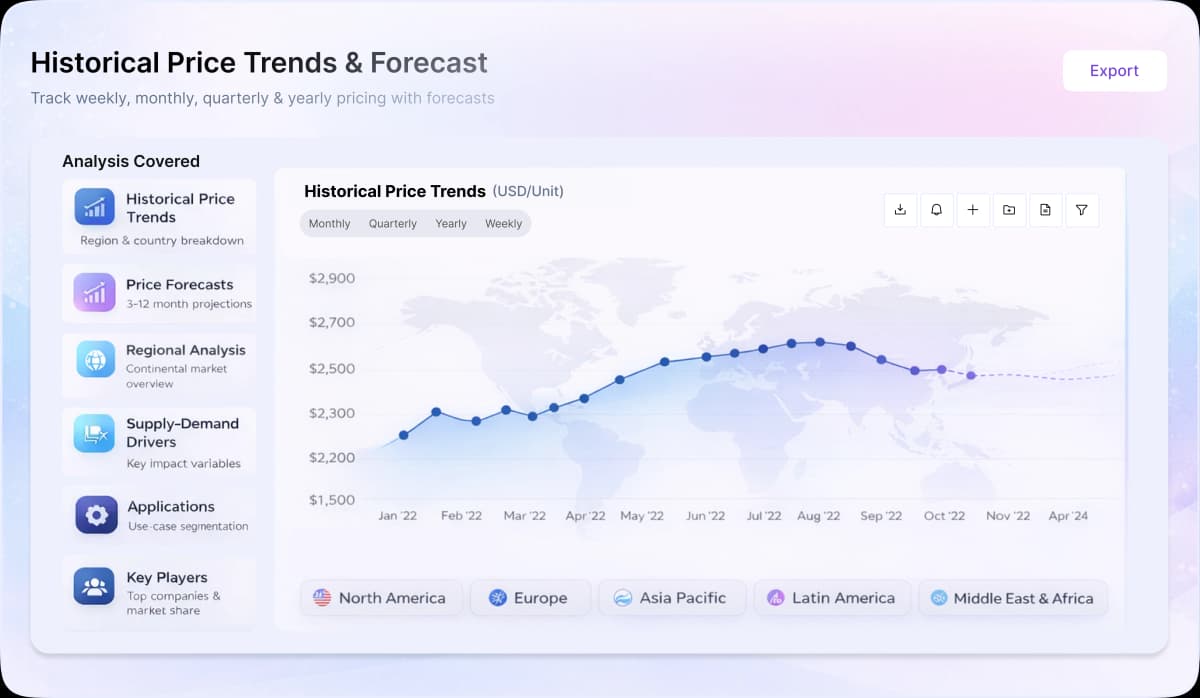
Turn price intelligence into action with the Procurement Resource Database. Log in or subscribe to unlock live price trends, historical charts, supplier databases, cost curves, and analyst-backed insights across chemicals, agriculture, energy, packaging, and more. Use these tools to benchmark your contracts, plan budgets with confidence, and stay ahead of market moves on every product you buy.

Polypropylene (PP) Dashboard Inclusions

Polypropylene (PP) Price Dasboard

0

+

Products

0

+

Regions

0

+

Subscriptions

Product Category Region Price Last Updated Month
Polypropylene (PP) Packaging China 1022 USD/MT June 2025

Stay updated with the latest Polypropylene (PP) prices, historical data, and tailored regional analysis
 

Asia

In Q2’25, polypropylene (PP) prices in Asia, especially China, remained under consistent downward pressure. Despite rising production costs due to expensive imported propane following China's imposition of high tariffs on US cargoes manufacturers could not raise product prices. Demand stayed sluggish across key downstream industries like plastic weaving and packaging. Operating rates at PDH plants and plastic processing units declined steadily, driven by rising feedstock costs and poor profit margins.

Many Chinese buyers turned to Middle Eastern propane, but switching supply sources increased freight, insurance, and logistical costs. Domestic PP production also declined slightly through the quarter, yet oversupply persisted due to low consumption and weaker export orders. Overall, bearish sentiment dominated the Asian PP market throughout Q2. The spot prices settled at around 1022 USD/MT in the Chinese domestic market during the end of the said period.

Europe

In Europe, PP prices continued to slide during Q2’25, driven by persistent weak demand and reduced feedstock costs. Even with some plant outages in Spain, Portugal, and France, supply remained ample as imports from Asia and the Middle East increased. Buyers postponed purchases due to uncertain trade dynamics and expectations of further price drops. The May contract price for propylene fell, adding additional downward pressure on PP contract pricing.

Recycled PP showed mixed trends—black pellets gained strength from supply tightness and steady demand, while natural pellets faced weaker interest. Spot market prices declined sharply in April and May, with little support from any recovery in downstream sectors like automotive or construction. The overall European PP market reflected cautious buyer sentiment and growing concerns about oversupply.

North America

In North America, PP prices were more volatile through Q2. After winter-related disruptions eased, domestic production improved, and inventory levels started to recover. However, downstream demand from sectors such as housing and packaging remained soft. Export flows stayed active, limiting some domestic availability but not enough to lift prices meaningfully.

PP producers continued to face cost pressures from upstream propylene markets, though easing infrastructure constraints helped stabilize the supply chain. Overall, the North American PP market experienced a slow and uneven recovery in supply, while demand lagged behind expectations.

About Polypropylene (PP)

Polypropylene or PP is basically a thermoplastic polymer that is utilised in a wide variety of applications. It is prepared via chain-growth polymerisation from the monomer propylene. Polypropylene belongs to the group of polyolefins and is partially crystalline as well as non-polar. Its characteristics are similar to that of polyethylene, but it is slightly harder and more heat resistant.

Polypropylene (PP) Product Detail
Industrial Uses

Packaging, Engineering plastic, Plastic parts

Synonyms

Polypropene, 9003-07-0, Polipropene 25 [USAN], Propene polymers, Propylene polymers

Supplier Database

LyondellBasell Industries Holdings B.V., SABIC, Exxon Mobil Corporation, DuPont de Nemours, Inc., INEOS Capital Limited., Total S.A., Formosa Plastics Corporation, LG Chem Ltd., Sumitomo Chemical Co., Ltd., Eastman Chemical Company, BASF SE, Braschem S.A., Borealis AG, PetroChina Company Limited, Reliance Industries Limited, Sasol Limited, Sinopec Zhenhai Refining & Chemical Co.

Regional Coverage

Asia Pacific

China, India, Indonesia, Pakistan, Bangladesh, Japan, Philippines, Vietnam, Iran, Thailand, South Korea, Iraq, Saudi Arabia, Malaysia, Nepal, Taiwan, Sri Lanka, UAE, Israel, Hongkong, Singapore, Oman, Kuwait, Qatar, Australia, and New Zealand

Europe

Germany, France, United Kingdom, Italy,Spain, Russia, Turkey, Netherlands, Poland, Sweden, Belgium, Austria, Ireland Switzerland, Norway, Denmark, Romania, Finland, Czech Republic, Portugal and Greece

North America

United States and Canada

Latin America

Brazil, Mexico, Argentina, Columbia, Chile, Ecuador, and Peru

Africa

South Africa, Nigeria, Egypt, Algeria, Morocco

CurrencyUS$ (Data can also be provided in local currency)

Supplier Database AvailabilityYes

Customization ScopeThe report can be customized as per the requirements of the customer

Post-Sale Analyst Support360-degree analyst support after report delivery

Note: Our supplier search experts can assist your procurement teams in compiling and validating a list of suppliers indicating they have products, services, and capabilities that meet your company's needs.

Polypropylene (PP) Production Processes

  • Polypropylene Production via Gas Phase Polymerisation; via Slurry Polymerisation; and via Bulk Polymerisation.

In the gas phase polymerisation process, propene is passed over heterogeneous catalyst particles to finally produce polymer in a powdered form, which is further transformend into pellets.

Our Price Analysis Methodology

Schedule Demo

Schedule A Demo

Experience how Procurement Resource transforms raw material price data into clear, decision ready intelligence. Optimise your performance with reliable, expert market data and analysis. Schedule your demo today to experience a live walk-through where our experts will showcase interactive price charts, forecasted prices, and insights driving the prices for your key commodities, tailored to your workflows. Contact us now!

Our Team will be happy to assist you

We are just a text away

Still Need Help ?

Europe & Africa

+44 7573 171117

[email protected]

USA & Canada

+1 307 363 1045

[email protected]

APAC

+91 8850629517

[email protected]

Other Related Reports

Polypropylene Production through Bulk Polymerisation

The report is the study of economics of polypropylene production by bulk polymerization method.

Unlock full access to Procurement Resource's price databases, interactive charts, and short-term forecasts for thousands of commodities. Elevate your sourcing decisions by comparing prices across regions, downloading historical data, and layering in analyst-backed insights, all with our flexible plans that scale as your portfolio grows.

Still have any Questions

Contact Us
Mastercard
Wire
VISA
Stripe

Related News

View All

Why Procurement Database

Extensive Commodity Price Database

Extensive Commodity Price Database

Track prices, market movements, supply-demand dynamics, and industry developments across hundreds of commodities through a centralized intelligence platform built for informed procurement decisions.

Reliable Price Forecasting & Market Outlooks

Reliable Price Forecasting & Market Outlooks

Understand market fluctuations using analyst-backed forecasts, historical pricing patterns, and evolving industry trends to strengthen sourcing strategies and budget planning.

Data Driven Cost & Procurement Optimization

Data Driven Cost & Procurement Optimization

Leverage cost models, pricing benchmarks, and procurement insights to evaluate purchasing opportunities, improve negotiations, and enhance operational efficiency.

Global Coverage with region-specific Market Insights

Global Coverage with region-specific Market Insights

Access region-specific price trends, trade activities, capacity changes, and supply chain developments influencing commodity markets worldwide.

1/4