

Udeesha Tomar
AVP - Strategy and Solutions
Leading procurement research solutions across chemicals, materials, and food & beverages, with expertise in price forecasting and market analytics.

Asia
Asian pyrolysis oil markets remained stable to firm during Q2'26 as disruptions to conventional petrochemical feedstocks improved the relative attractiveness of recycled hydrocarbon streams. Naphtha availability became particularly important because Asia remained heavily dependent on Middle Eastern cargoes, and disruptions around the Strait of Hormuz increased freight, insurance and replacement risks. This encouraged refiners and petrochemical companies to consider alternative circular feedstocks, including plastic-derived pyrolysis oil. However, demand did not accelerate enough to create a sharp rise because chemical-recycling capacity remained limited and buyers continued evaluating product quality, contaminants and upgrading requirements.
Europe
European pyrolysis oil conditions remained stable to slightly soft during Q2 as weak demand for circular feedstocks outweighed elevated energy and logistics costs. Refinery-grade material remained better supported than lighter fractions, while buyers resisted higher offers because downstream commitments for circular polymers remained limited. Chemical recyclers also faced pressure from weak offtake agreements and high operating expenses. Although this capacity was not available during Q2, expectations of additional supply reduced concerns about structural scarcity and restrained stronger producer leverage.
North America
North American pyrolysis oil markets remained cost-supported but commercially cautious during Q2. Higher crude values improved the relative economics of recycled hydrocarbon feedstocks, but high waste-plastic collection, upgrading and plant-operating costs continued to challenge project profitability. Refinery and petrochemical demand remained selective because quality consistency and upgrading requirements varied significantly between suppliers.
Analyst Insight
According to Procurement Resource, pyrolysis oil markets are expected to remain mixed, with fossil-feedstock volatility supporting recycled alternatives while weak offtake commitments and expanding future capacity limit stronger gains.
Related Report
Need Latest Pyrolysis Oil Prices?
Get real-time price assessments, periodic trends, forecasts and price driver insights across key global markets.
Our Clients































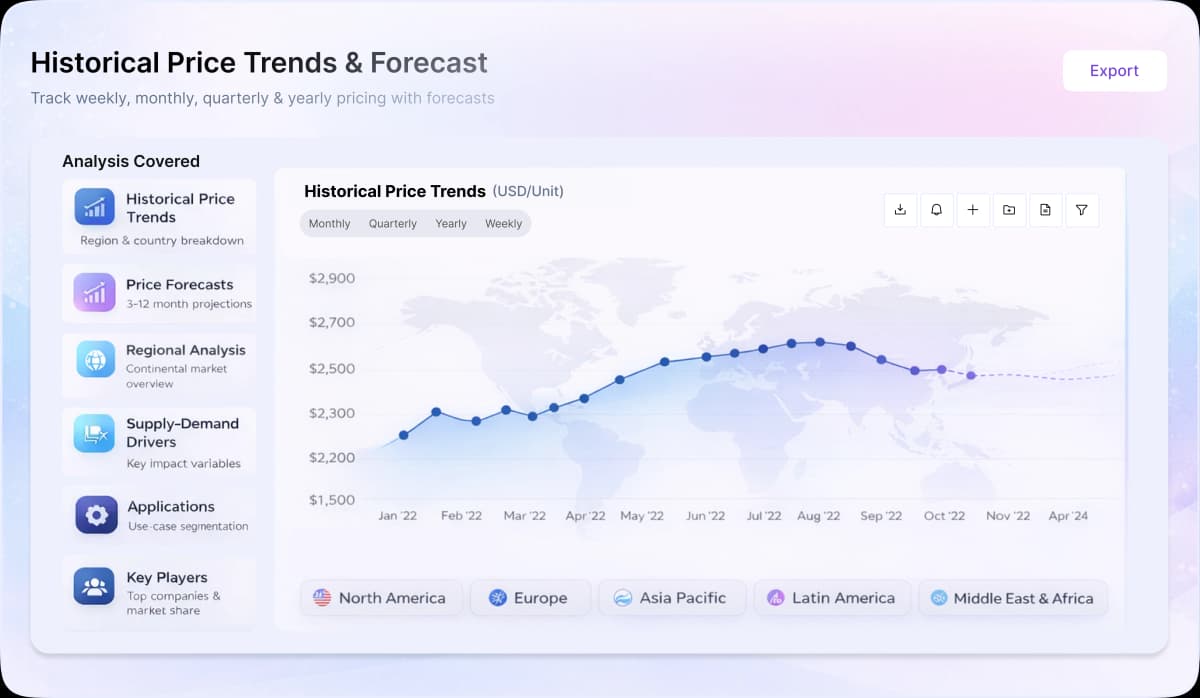
Turn price intelligence into action with the Procurement Resource Database. Log in or subscribe to unlock live price trends, historical charts, supplier databases, cost curves, and analyst-backed insights across chemicals, agriculture, energy, packaging, and more. Use these tools to benchmark your contracts, plan budgets with confidence, and stay ahead of market moves on every product you buy.
0
+Products
0
+Regions
0
+Subscriptions
Asia
In Asia, pyrolysis oil prices showed firmer movement in Q1 2026 as naphtha disruption raised interest in alternative feedstocks. The region was highly exposed to Middle East supply routes, with crude and product flows through Hormuz falling from around 20 mb/d to very limited movement after the conflict. Asian steam crackers faced direct pressure, with a South Korean naphtha-fed cracker reducing operations by 20.0% to 63.0%-65.0% from 83.0%-85.0% in February. This supported pyrolysis oil demand as a circular feedstock, but reduced cracker operating rates also limited immediate spot offtake.
Europe
Europe recorded a firmer pyrolysis oil trend, supported by stronger demand for circular feedstocks and new advanced recycling capacity. A large liquefied waste plastic upgrading facility in Finland was commissioned with capacity of up to 150,000 tons/year, while a French advanced recycling plant started operations with 15,000 tons/year of processing capacity. These projects improved regional supply availability but also confirmed stronger downstream demand from packaging, food-contact plastics, and petrochemical applications. The market remained cost-sensitive because crude-linked feedstocks, freight, and energy markets were disrupted by the Middle East conflict.
North America
North America stayed more balanced than Asia and Europe because local petrochemical feedstock access and Gulf Coast logistics remained stronger. Chemical container exports from the US Gulf Coast rose 12.0% in March, and 20.0% surge capacity was available to manage supply-chain disruptions. This supported export opportunities as buyers sought alternatives to disrupted petrochemical flows. Demand from circular plastics and refinery-linked upgrading remained steady, but regulatory uncertainty kept procurement cautious.
Pyrolysis oil is obtained via heating of biomass or plastic waste material in the absence of oxygen. The process of thermochemical breakdown converts these materials into dark, viscous liquid which can be used in several industrial processes. This oil serves as a renewable source of energy and also as a chemical feedstock, soil conditioner.
Heating and power generation, Transportation fuel, Chemical Feedstock, Asphalt Binder, Carbon Black Production
Twence, Green Fuel Nordic Oy, Bioenergy AR Cote-Nord, New Hope Energy, Pyrocell
CurrencyUS$ (Data can also be provided in local currency)
Supplier Database AvailabilityYes
Customization ScopeThe report can be customized as per the requirements of the customer
Post-Sale Analyst Support360-degree analyst support after report delivery
Note: Our supplier search experts can assist your procurement teams in compiling and validating a list of suppliers indicating they have products, services, and capabilities that meet your company's needs.
Our Price Analysis Methodology
AVP - Strategy and Solutions
Leading procurement research solutions across chemicals, materials, and food & beverages, with expertise in price forecasting and market analytics.

Experience how Procurement Resource transforms raw material price data into clear, decision ready intelligence. Optimise your performance with reliable, expert market data and analysis. Schedule your demo today to experience a live walk-through where our experts will showcase interactive price charts, forecasted prices, and insights driving the prices for your key commodities, tailored to your workflows. Contact us now!
Our Team will be happy to assist you
We are just a text away
Still Need Help?
The Study Offers a Detailed Cost Analysis of Fuel Oil Production From The Fractional Distillation Of Crude Oil. In Addition, the Report Incorporates the Manufacturing Process With Detailed Process and Material Flow, Operating Costs Along With Financial Expenses and Depreciation Charges.
This report presents a detailed cost analysis of diesel production from crude oil using the fractional distillation.
Petroleum Jelly Manufacturing Plant Project Report thoroughly focuses on every detail that encompasses the cost of manufacturing. Our extensive cost model meticulously covers breaking down expenses around raw materials, labour, technology, and manufacturing expenses. This enables precise cost structure optimization and helps in identifying effective strategies to reduce the overall cash cost of manufacturing.
Unlock full access to Procurement Resource's price databases, interactive charts, and short-term forecasts for thousands of commodities. Elevate your sourcing decisions by comparing prices across regions, downloading historical data, and layering in analyst-backed insights, all with our flexible plans that scale as your portfolio grows.
Still have any Questions
Contact Us



Price Trend Dashboard - What's Included
Price trends across a diverse portfolio of categories and products, spanning board to niche chemicals
Coverage extendable to grade-specific chemicals based on procurement requirements
Regular price tracking supported by robust historical datasets
News, policy updates, and key market drivers impacting price movements
Short-term and long-term price outlooks and forecasts
Supply–demand dynamics and capacity-driven market analysis

Nokian Tyres' New Romanian Factory For Passenger Car Tire Production Will Increase Demand For SBR And PBR In Central Europe
.png&w=1080&q=75)
High-Speed Diesel Supply in Europe Is Likely to Fall Due to Lower Offtake from Russian Federation

Despite Record Sales, IKEA's Carbon Emissions has Dropped since the COVID-19 Outbreak

Track prices, market movements, supply-demand dynamics, and industry developments across hundreds of commodities through a centralized intelligence platform built for informed procurement decisions.

Understand market fluctuations using analyst-backed forecasts, historical pricing patterns, and evolving industry trends to strengthen sourcing strategies and budget planning.

Leverage cost models, pricing benchmarks, and procurement insights to evaluate purchasing opportunities, improve negotiations, and enhance operational efficiency.
Access region-specific price trends, trade activities, capacity changes, and supply chain developments influencing commodity markets worldwide.