Udeesha Tomar
AVP - Strategy and Solutions
Leading procurement research solutions across chemicals, materials, and food & beverages, with expertise in price forecasting and market analytics.
Asia
In the Asian market, the prices of sodium silicate were relatively stable to slightly weak during the fourth quarter of 2025. This was because the demand from the key industries of detergents, construction chemicals, and paper remained moderate. The prices of raw materials were relatively stable, with silica prices remaining comfortable due to smooth mining activities. At the same time, the prices of caustic soda remained stable across the Asian markets. In China, the demand for sodium silicate remained cautious, with many consumers preferring to consume the existing stocks instead of ordering new ones. In India, the market performed relatively better, driven by the stability of the industrial output. However, the demand from the Asian market remained relatively low, not sufficient enough to increase the prices.
Europe
In the European market, the prices of sodium silicate moved within a narrow range in the fourth quarter. The demand for the product in the construction, coating, and special chemical sectors was stable, but the demand growth was not robust. Buyers were selective in their purchases in view of the uncertain economic scenario, and the focus was entirely on the short-term market. The supply side was well covered, driven by stable silica supply and energy costs at manageable levels. Although the demand for high-grade silicates in the special chemical sector was providing support, it was not impacting the overall price trend in any significant manner.
North America
In North America, sodium silicate prices were relatively stable in Q4’25, with some slight downward pressure in certain regions. The natural slowdown in construction and related end-user markets dampened buying interest towards the end of the quarter. However, sodium silicate manufacturers operated at stable production rates, and raw material availability was secure, so there was no concern of any shortages. Demand from the detergents and industrial cleaning agents’ markets was steady, although buying behaviour was subdued.
Analyst Insight
According to Procurement Resource, Sodium Silicate prices are likely to be stable to slightly lower, depending on the rate of recovery in construction and industrial markets.
Related Report
Get real-time price assessments, periodic trends, forecasts and price driver insights across key global markets.
Unlock Price Insights NowOur Clients

Turn price intelligence into action with the Procurement Resource Database. Log in or subscribe to unlock live price trends, historical charts, supplier databases, cost curves, and analyst-backed insights across chemicals, agriculture, energy, packaging, and more. Use these tools to benchmark your contracts, plan budgets with confidence, and stay ahead of market moves on every product you buy.

0
+Products
0
+Regions
0
+Subscriptions
Asia
In Asia, Sodium Silicate prices showed mixed movement through the third quarter of 2025. Early in the quarter, market sentiment was weak due to low demand from the construction and detergent sectors. Heavy rains and flooding in parts of China slowed construction activity, reducing silicate consumption. At the same time, oversupply of silica and stable caustic soda production kept raw material availability high, creating downward pressure on prices.
By mid-quarter, slight improvements were seen as orders from the solar and electronics industries picked up, supported by rising silicon and polysilicon activity. Producers in northern China adjusted output to manage inventories, while export activity in Southeast Asia improved moderately. By late September, the Asian market stabilized, though weak demand in non-industrial sectors continued to limit price recovery. The prices settled at around 303 USD/MT (FOB) in the Chinese domestic market towards the end of September’25.
Europe
In Europe, the Sodium Silicate market remained steady but cautious during Q3’25. The region faced slow demand from glass and construction applications, while higher energy and transportation costs weighed on production margins. Some manufacturers reduced operating rates to avoid stock buildup as orders from downstream users stayed muted. Dependence on imported silica and fluctuating trade conditions added to uncertainty, especially as buyers remained watchful of Chinese export trends. Shipping disruptions at certain ports briefly increased costs but did not significantly change overall market direction. By the end of the quarter, European prices had softened slightly due to seasonal slowdown and lack of new industrial demand, leaving the market quiet and balanced.
North America
In North America, Sodium Silicate prices stayed largely stable during the quarter. Domestic producers benefited from steady operations, supported by reliable feedstock supply and low energy costs. Demand from detergents, adhesives, and water treatment applications was consistent but not dynamic. Interest from the solar and electronics industries offered some support, though it was not enough to create major upward momentum. Inventories remained manageable, and buyers continued to make purchases based on short-term needs rather than forward stocking. The balanced supply-demand situation kept price changes minimal through the quarter.
Analyst Insight
According to Procurement Resource, Sodium Silicate prices are likely to remain steady in the coming months, with little change expected unless demand from construction or solar sectors picks up soon.
Sodium silicate is produced by mixing silicon dioxide (SiO2) and sodium oxide (Na2O). This water-soluble, colorless compound has stabilizing, binding, and adhesive qualities. Numerous industrial applications of sodium silicate include employment as a cement additive, a flame retardant in textiles, a component of detergents, and a binder in building materials. When combined with acids, it can produce a solid gel, making it useful in a variety of industrial applications.
Na2SiO3
Adhesives and binders, Foundry and metal castings, Water treatment, Paints and coatings, Electroplating, Textile and fabric treatment
PQ Corporation, CIECH Group, Kiran Global Chem Limited, Occidental Petroleum Corporation, BASF SE
CurrencyUS$ (Data can also be provided in local currency)
Supplier Database AvailabilityYes
Customization ScopeThe report can be customized as per the requirements of the customer
Post-Sale Analyst Support360-degree analyst support after report delivery

Note: Our supplier search experts can assist your procurement teams in compiling and validating a list of suppliers indicating they have products, services, and capabilities that meet your company's needs.
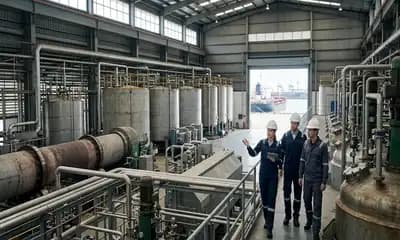
The reaction between silica sand and caustic soda in a superheated steam flow reactor leads to the production of sodium silicate via pulverization and heating.
Silica sand and soda ash reaction at around 851°C with applied pressure through steam gives sodium silicate.
Udeesha Tomar
AVP - Strategy and Solutions
Leading procurement research solutions across chemicals, materials, and food & beverages, with expertise in price forecasting and market analytics.
Our Price Analysis Methodology

Experience how Procurement Resource transforms raw material price data into clear, decision ready intelligence. Optimise your performance with reliable, expert market data and analysis. Schedule your demo today to experience a live walk-through where our experts will showcase interactive price charts, forecasted prices, and insights driving the prices for your key commodities, tailored to your workflows. Contact us now!


Our Team will be happy to assist you
We are just a text away
Still Need Help?
The study offers a detailed cost analysis of Sodium Silicate Production from Silica Water and Caustic Soda. In addition, the report incorporates the manufacturing process with detailed process and material flow, operating costs along with financial expenses and depreciation charges.
The study offers a detailed cost analysis of Sodium Silicate Production from Reaction of Silica Sand and Soda Ash. In addition, the report incorporates the manufacturing process with detailed process and material flow, operating costs along with financial expenses and depreciation charges.
Unlock full access to Procurement Resource's price databases, interactive charts, and short-term forecasts for thousands of commodities. Elevate your sourcing decisions by comparing prices across regions, downloading historical data, and layering in analyst-backed insights, all with our flexible plans that scale as your portfolio grows.
Still have any Questions
Contact Us


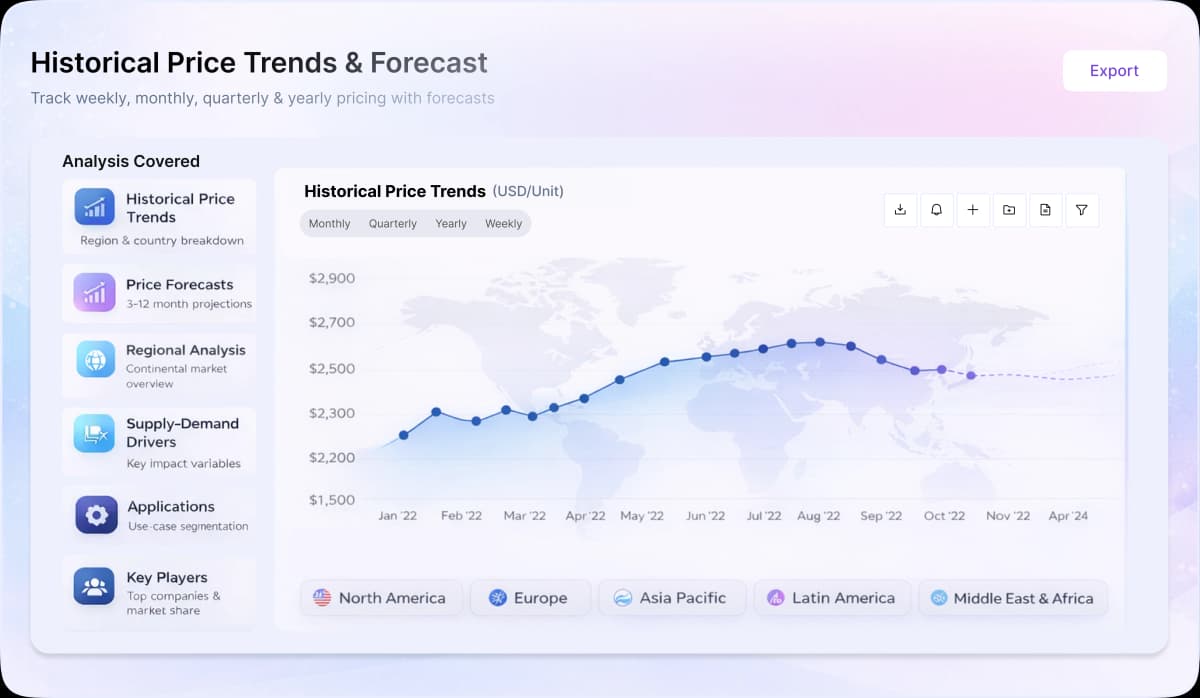
Price Trend Dashboard - What's Included
Price trends across a diverse portfolio of categories and products, spanning board to niche chemicals
Coverage extendable to grade-specific chemicals based on procurement requirements
Regular price tracking supported by robust historical datasets
News, policy updates, and key market drivers impacting price movements
Short-term and long-term price outlooks and forecasts
Supply-demand dynamics and capacity-driven market analysis