Udeesha Tomar
AVP - Strategy and Solutions
Leading procurement research solutions across chemicals, materials, and food & beverages, with expertise in price forecasting and market analytics.

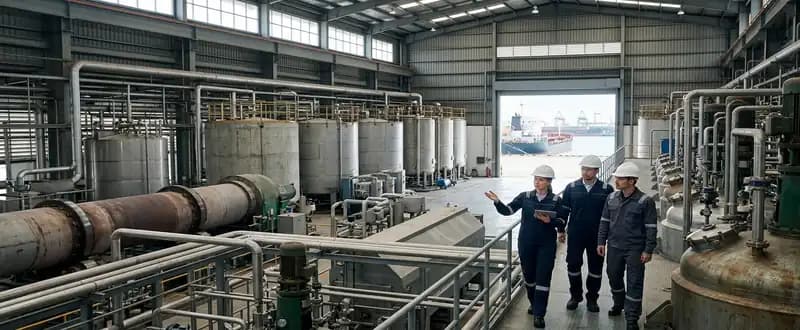
Sodium silicate prices moved differently across regions in June, giving buyers a chance to review sourcing options. The product is used in detergents, pulp and paper, water treatment, construction chemicals, adhesives, foundry binders, and silica production. Because it is often bought regionally, local feedstock and energy costs can matter as much as global trade.
June pricing data showed North America at USD 0.47 per kilogram, unchanged. Northeast Asia was listed at USD 0.44 per kilogram, down 4.3%. Europe was at USD 0.54 per kilogram, up 1.9%, and India was at USD 0.51 per kilogram, down 3.8%.
For procurement teams, the regional split creates room for negotiation. Buyers in Europe may face firmer supplier offers, likely tied to energy, furnace economics, and regional cost pass-through. Buyers in Northeast Asia and India may have better leverage if local demand remains soft or if inventories are comfortable.
Request the Latest Sodium Silicate Prices Data - Access Price Insights Now
The main caution is delivered cost. Sodium silicate can be supplied as liquid or solid material, and logistics economics differ sharply. Liquid shipments carry water weight, making long-distance freight less attractive. Solid sodium silicate may travel better, but buyers need dissolution capability, storage readiness, and quality checks. A lower regional price does not always mean lower delivered plant cost.
Buyers should also match silicate ratio and form before comparing offers. Sodium oxide to silica ratio affects performance in detergents, binders, paper, and construction formulations. Changing ratio or concentration can disrupt downstream recipes. Suppliers should provide consistent specifications, technical data sheets, and batch certificates.
For June procurement, buyers can use regional softness in Asia and India as a benchmark, but local freight and conversion needs must be included. European buyers should ask for cost breakdowns tied to soda ash, silica sand, power, and natural gas rather than accepting blanket increases.
AVP - Strategy and Solutions
Leading procurement research solutions across chemicals, materials, and food & beverages, with expertise in price forecasting and market analytics.



We are Just a Text away