

Udeesha Tomar
AVP - Strategy and Solutions
Leading procurement research solutions across chemicals, materials, and food & beverages, with expertise in price forecasting and market analytics.

The standard plate market during the fourth quarter witnessed a declining price trajectory as supply-demand fundamentals remained imbalanced throughout the period. Early in the quarter, the traditional peak season failed to generate the anticipated surge in consumption, with downstream sectors including construction, shipbuilding, and machinery manufacturing demonstrating measured procurement activity. Raw material dynamics exerted mixed pressure, as iron ore supplies remained adequate while coking coal prices fluctuated, providing limited cost support to producers.
Production levels remained elevated across the quarter, with mills maintaining high operating rates despite weakening profit margins and subdued demand signals. The construction sector, a primary consumer of standard plates, continued to face structural challenges as real estate activity remained constrained. Industrial and infrastructure projects showed selective activity, though overall consumption patterns reflected cautious buyer sentiment. Manufacturing sectors, including automotive and heavy machinery, demonstrated stable but modest demand growth. Export activity maintained relative stability despite global economic uncertainties, though international demand remained selective.
Analyst Insight
According to Procurement Resource, looking ahead, standard plate prices are expected to stabilize within a narrow range as winter stockpiling provides temporary support.
Need Latest Standard Plate Prices?
Get real-time price assessments, periodic trends, forecasts and price driver insights across key global markets.
Our Clients































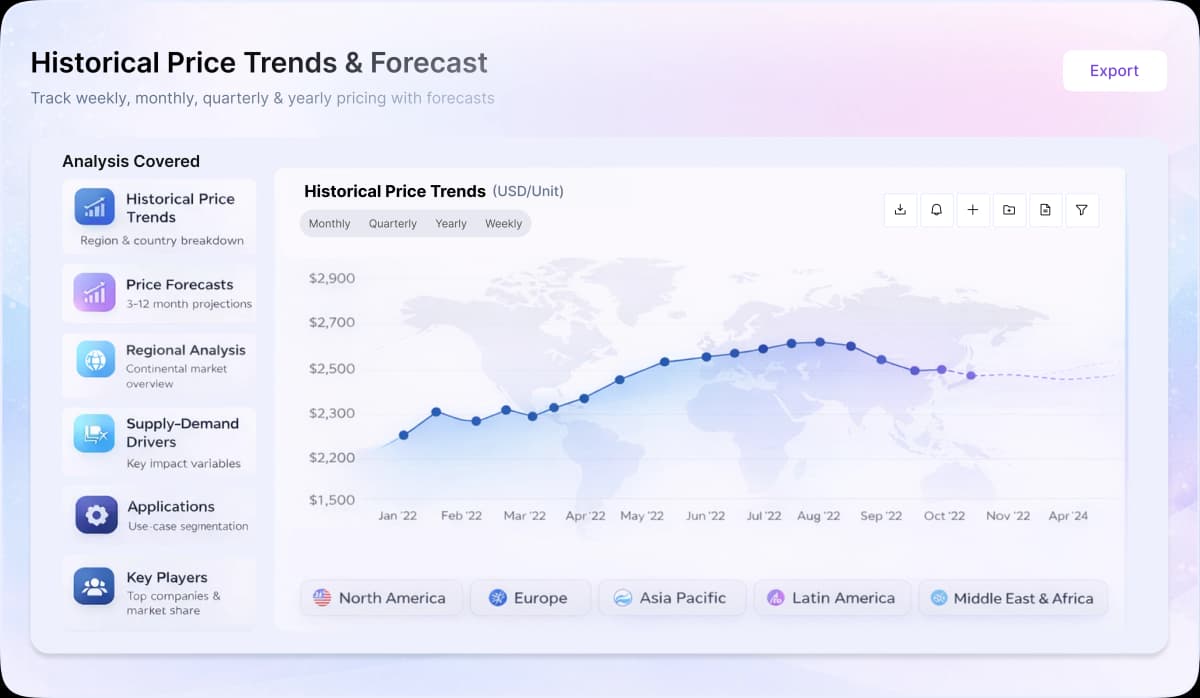
Turn price intelligence into action with the Procurement Resource Database. Log in or subscribe to unlock live price trends, historical charts, supplier databases, cost curves, and analyst-backed insights across chemicals, agriculture, energy, packaging, and more. Use these tools to benchmark your contracts, plan budgets with confidence, and stay ahead of market moves on every product you buy.
0
+Products
0
+Regions
0
+Subscriptions
In the third quarter of 2025, Asia’s standard plate market recorded limited price movement, with fluctuations largely contained by steady supply and cautious demand. Early in the quarter, prices edged higher, supported by firm raw material costs and stable production. However, weaker downstream activity, particularly in construction and manufacturing, restricted further gains. Production schedules remained steady, as mills showed limited willingness to cut output. Inventory levels eased slightly, reflecting modest consumption and controlled replenishment. Traders focused on short-term transactions, avoiding bulk procurement amid uncertain end-user demand. Liquidity pressures and restrained investment sentiment further influenced buying patterns across major markets.
Upstream cost factors, including nickel ore and ferroalloy prices, provided mild support. Although supply concerns persisted due to policy adjustments in Indonesia, output normalization reduced upward pressure on input costs. Freight rates and energy expenses remained stable, keeping overall production costs manageable. Trade flows were mixed. Export volumes from regional producers saw slight improvement on competitive pricing, while import demand weakened in several consuming nations due to sluggish manufacturing output. Overall, Q3 2025 reflected a balanced market where cost stability offset weak demand.
Standard plates are flat, rectangular materials with specific and standard dimensions and properties. They are produced by a variety of different materials such as metals, plastics, or glass and are of standards which are intended according to their industrial use. These plates also serve as the benchmark of accuracy and consistency in measurements which are essential in scientific research and engineering and manufacturing processes.
Material testing, Chemical Analysis, Manufacturing and quality control, Metrology, Optics
Posco, LISCO, Acerinox, Tisco, Baosteel, AK Steel, Jindal, Yusco
CurrencyUS$ (Data can also be provided in local currency)
Supplier Database AvailabilityYes
Customization ScopeThe report can be customized as per the requirements of the customer
Post-Sale Analyst Support360-degree analyst support after report delivery
Note: Our supplier search experts can assist your procurement teams in compiling and validating a list of suppliers indicating they have products, services, and capabilities that meet your company's needs.
Our Price Analysis Methodology
AVP - Strategy and Solutions
Leading procurement research solutions across chemicals, materials, and food & beverages, with expertise in price forecasting and market analytics.
Experience how Procurement Resource transforms raw material price data into clear, decision ready intelligence. Optimise your performance with reliable, expert market data and analysis. Schedule your demo today to experience a live walk-through where our experts will showcase interactive price charts, forecasted prices, and insights driving the prices for your key commodities, tailored to your workflows. Contact us now!
Our Team will be happy to assist you
We are just a text away
Still Need Help?
Copper Plate Manufacturing Plant Project Report thoroughly focuses on every detail that encompasses the cost of manufacturing. Our extensive cost model meticulously covers breaking down expenses around raw materials, labour, technology, and manufacturing expenses. This enables precise cost structure optimization and helps in identifying effective strategies to reduce the overall cash cost of manufacturing.
Unlock full access to Procurement Resource's price databases, interactive charts, and short-term forecasts for thousands of commodities. Elevate your sourcing decisions by comparing prices across regions, downloading historical data, and layering in analyst-backed insights, all with our flexible plans that scale as your portfolio grows.
Still have any Questions
Contact Us



Price Trend Dashboard - What's Included
Price trends across a diverse portfolio of categories and products, spanning board to niche chemicals
Coverage extendable to grade-specific chemicals based on procurement requirements
Regular price tracking supported by robust historical datasets
News, policy updates, and key market drivers impacting price movements
Short-term and long-term price outlooks and forecasts
Supply–demand dynamics and capacity-driven market analysis

Track prices, market movements, supply-demand dynamics, and industry developments across hundreds of commodities through a centralized intelligence platform built for informed procurement decisions.

Understand market fluctuations using analyst-backed forecasts, historical pricing patterns, and evolving industry trends to strengthen sourcing strategies and budget planning.

Leverage cost models, pricing benchmarks, and procurement insights to evaluate purchasing opportunities, improve negotiations, and enhance operational efficiency.
Access region-specific price trends, trade activities, capacity changes, and supply chain developments influencing commodity markets worldwide.
