Steel Wire Rod Price Trend Analysis 2026: Price Drivers, Supply Demand Analysis, Historical Prices, Latest News & Market Insights

Rakesh Nandi profile photo
Written ByRakesh Nandi

Procurement Resource Database

Laptop screen

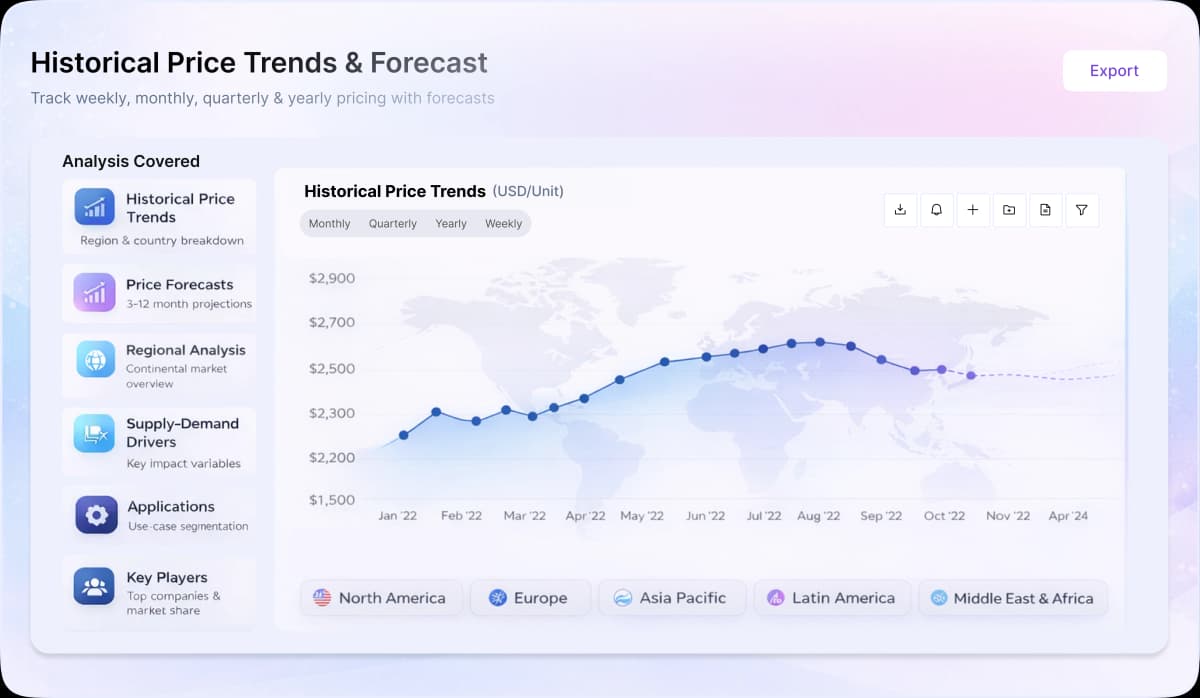
Turn price intelligence into action with the Procurement Resource Database. Log in or subscribe to unlock live price trends, historical charts, supplier databases, cost curves, and analyst-backed insights across chemicals, agriculture, energy, packaging, and more. Use these tools to benchmark your contracts, plan budgets with confidence, and stay ahead of market moves on every product you buy.

Steel Wire Rod Dashboard Inclusions

Steel Wire Rod Price Dasboard

0

+

Products

0

+

Regions

0

+

Subscriptions

Asia

in China, the steel wire rod prices exhibited volatility throughout the third quarter of 2024. Initially, steel wire rod prices rose in early July due to imbalances in supply and demand, compounded by supply constraints linked to Indonesia's nickel ore export restrictions. However, by mid-August, prices dropped significantly due to weak demand from the construction sector, customs inspections disrupting shipments, and low-priced non-VAT offers.

A decline in property investment and construction activity exacerbated the market’s weakness, while new steel quality standards posed additional supply-side challenges. Despite these pressures, the market retained some optimism that further price declines would be limited.

Europe

In Germany, the market displayed mixed trends. Initially, prices increased due to limited supply and rising demand from the automotive sector and government contracts, such as significant defence orders from the German Ministry of Defence. However, as the weeks progressed, weak demand, particularly from the automotive industry, caused slight price declines by mid-August. Oversupply and reduced order volumes from mills, along with competition from Turkish producers, further pressured prices. Despite these challenges, elevated production costs and stable downstream consumption patterns sustained the market’s overall stability.


North America

In the USA, prices experienced a gradual decline, driven by weak demand, particularly from the automotive and housing sectors, as well as oversupply. Factors such as economic uncertainties, subdued business activity, and a dip in vehicle sales contributed to the bearish market sentiment. Despite this, US mills maintained their base prices, leveraging shorter lead times and controlling capacity to balance market pressures. However, the housing market faced challenges due to elevated borrowing costs, which directly impacted steel wire rod consumption.

About Steel Wire Rod

Steel billets or blooms that have been hot rolled are used to make steel wire rods, a semi-finished metal product. It is characterized by its small diameter, which normally ranges from 5.5 to 14 millimeters, and by having a round cross-section. Steel wire rods are extensively employed in a variety of sectors, including manufacturing, automotive, and construction.

They act as the main raw material for creating a variety of steel wire goods, including reinforcement materials, nails, screws, fencing, and springs. The performance and durability of the finished product are greatly influenced by the characteristics and quality of steel wire rods.

Steel Wire Rod Product Detail

Hs Code
7213
Industrial Uses

Automotive components, Welding electrodes, Cables and wires, Mesh and netting

Supplier Database

ArcelorMittal S.A., Bridon-Bekaert Ropes Group, Heico Companies Metal Processing Group, HBIS Group, KOBE STEEL LTD, WireCo World Group Inc, JFE Steel Corporation, Nippon Steel Corporation

Regional Coverage

Asia Pacific

China, India, Indonesia, Pakistan, Bangladesh, Japan, Philippines, Vietnam, Iran, Thailand, South Korea, Iraq, Saudi Arabia, Malaysia, Nepal, Taiwan, Sri Lanka, UAE, Israel, Hongkong, Singapore, Oman, Kuwait, Qatar, Australia, and New Zealand

Europe

Germany, France, United Kingdom, Italy,Spain, Russia, Turkey, Netherlands, Poland, Sweden, Belgium, Austria, Ireland Switzerland, Norway, Denmark, Romania, Finland, Czech Republic, Portugal and Greece

North America

United States and Canada

Latin America

Brazil, Mexico, Argentina, Columbia, Chile, Ecuador, and Peru

Africa

South Africa, Nigeria, Egypt, Algeria, Morocco

CurrencyUS$ (Data can also be provided in local currency)

Supplier Database AvailabilityYes

Customization ScopeThe report can be customized as per the requirements of the customer

Post-Sale Analyst Support360-degree analyst support after report delivery

Note: Our supplier search experts can assist your procurement teams in compiling and validating a list of suppliers indicating they have products, services, and capabilities that meet your company's needs.

Steel Wire Rod Production Processes

The first step in the process is to process the raw metal material known as billets, which are created using the casting method. After being rolled using powerful machinery, the billets are then cooled down and coiled into various shapes and sizes in accordance with the needs or requirements of the various markets.

Frequently Asked Questions

Global steel wire rod prices stayed mixed in Q1 2026, with feedstock and freight costs providing a floor while weak downstream demand capped any strong upward movement.
Steel wire rod prices are expected to stay steady to slightly firm, supported by feedstock and freight costs. Limited buying interest across construction and manufacturing sectors may continue to cap any strong price increase.
The steel wire rod supply chain begins with the mining of iron ore and coking coal, which are processed through blast furnaces or electric arc furnaces into crude steel, then rolled into wire rod at dedicated rolling mills. The finished product moves downstream to construction, wire drawing, fastener manufacturing, and engineering end-users across global markets.
Prices are influenced by iron ore and coking coal costs, energy and freight expenses, currency movements, geopolitical disruptions, trade tariffs, and construction demand cycles. Mill utilisation rates and shipping route disruptions further shape regional price dynamics.
Steel wire rod demand is driven by construction, wire drawing, fasteners, and engineering sectors. Weak construction activity across Asia and Europe in Q1 2026 kept consumption selective, limiting price recovery despite firm cost support.
Rising SHFE inventories and elevated mill stock levels signal weak offtake and pressure prices downward. In Q1 2026, inventory build-up in China amid slow construction demand kept mills from raising offers, reinforcing range-bound pricing.
China accounts for over half of global steel production, making its output levels, export volumes, and demand cycles a primary global price driver. Seasonal slowdowns and export competitiveness from Chinese mills directly shape pricing across Asia and the Middle East.
Procurement Resource analyses metal price trends using primary market research, trade data, supply-demand analysis, and feedstock tracking. The methodology also evaluates inventories, freight costs, and macroeconomic factors, supported by continuous market monitoring and cross-verification.

About the Author

Rakesh Nandi profile photo

Rakesh Nandi

Team Lead - Market Research

Leading procurement-focused market intelligence across chemicals, composites, advanced materials, aerospace & defense, and energy, delivering commodity forecasts, supply chain analysis, and competitive benchmarking to support sourcing decisions.

Our Price Analysis Methodology

Schedule Demo

Schedule a demo

Experience how Procurement Resource transforms raw material price data into clear, decision ready intelligence. Optimise your performance with reliable, expert market data and analysis. Schedule your demo today to experience a live walk-through where our experts will showcase interactive price charts, forecasted prices, and insights driving the prices for your key commodities, tailored to your workflows. Contact us now!

Our Team will be happy to assist you

We are just a text away

+1

Still Need Help?

Europe & Africa

+44 7573 171117

[email protected]

USA & Canada

+1 307 363 1045

[email protected]

APAC

+91 8850629517

[email protected]

Unlock full access to Procurement Resource's price databases, interactive charts, and short-term forecasts for thousands of commodities. Elevate your sourcing decisions by comparing prices across regions, downloading historical data, and layering in analyst-backed insights, all with our flexible plans that scale as your portfolio grows.

Still have any Questions

Contact Us
Mastercard
Wire
VISA
Stripe

Why Procurement Database

Commodity Market Intelligence

Commodity Market Intelligence

Track prices, market movements, supply-demand dynamics, and industry developments across hundreds of commodities through a centralized intelligence platform built for informed procurement decisions.

Price Forecasts & Market Outlooks

Price Forecasts & Market Outlooks

Understand market fluctuations using analyst-backed forecasts, historical pricing patterns, and evolving industry trends to strengthen sourcing strategies and budget planning.

Cost & Procurement Optimization

Cost & Procurement Optimization

Leverage cost models, pricing benchmarks, and procurement insights to evaluate purchasing opportunities, improve negotiations, and enhance operational efficiency.

Global & Regional Market Insights

Global & Regional Market Insights

Access region-specific price trends, trade activities, capacity changes, and supply chain developments influencing commodity markets worldwide.

1/4